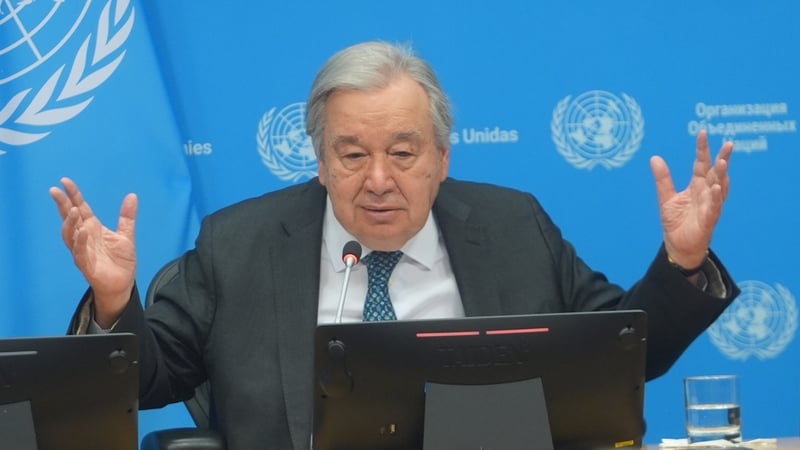

The UN Secretary General Antonio Guterres wrote a letter last week to the UN's 193 member states to "underscore the gravity of the current financial situation".
The organisation faced the very real prospect of "financial collapse," he wrote, adding that cash could run out as early as July.
Was the UN’s top man exaggerating?
"We've seen the job losses, we've seen the immense cuts on humanitarian development … food rations have been cut, services to refugees have been cut," Stéphane Dujarric, spokesman for the UN Secretary General, told RTÉ News.
"These are real life and death things, and I think the Secretary-General is saying it as it is," he added.
Senior UN sources described the closure of the UN's Manhattan headquarters this summer as a "distinct possibility".
To date, measures to lower operational costs at HQ have included reducing security stations, switching off escalators, turning down the heating, closing catering services and removing paper towels from the bathrooms.
Meanwhile, a reform and efficiency drive known as UN80, has been under way to slash 20% of the UN’s 35,000-person workforce, raising concerns about the organisation’s ability to carry out its core mission.
Across the organisation staff morale is at rock bottom.
There is palpable anger among many UN staff that senior leadership took a panicky "slash-and-burn" approach rather than a more strategic targeting of inefficiencies like duplication and bureaucratic bloating.
Some also pointed to the loss of junior and middle ranking jobs, while senior positions remained.
In response, a spokesperson for the UN Secretary General said: "We recognise that budget reductions affect people, teams, and the work we all care deeply about.
"Every effort is being made to minimise involuntary separations through lateral reassignments within and across entities, and when that's not possible, measures will be applied carefully, transparently and fairly."
But despite all of the cutbacks, the financial crisis deepened.
On Thursday, the UN Human Rights Chief Volker Türk said his office was in "survival mode," as he appealed for $400m (€340m) to cover funding shortfalls.
"These cuts and reductions untie perpetrators’ hands everywhere, leaving them to do whatever they please," he said in Geneva.
"With crises mounting, we cannot afford a human rights system in crisis."
There are two main reasons behind the UN’s financial woes.
One is the late or non-payment of membership dues.
The second is a complex financing rule which obliges the UN to pay back money it hasn’t collected in the first place.
More on that later, but first to the issue non-payment.
Every year, member states pay "assessed contributions" to the UN’s regular budget - roughly €3bn - based on a country’s capacity to pay. That is worked out through a combination of a country’s national income, debt and population size.
The peacekeeping budget of around €5bn is paid using the same formula but also takes into account a country’s troop contribution.
The scale of payments ranges from 0.001% of the budget to 22%, with the biggest economies shouldering most of the financial burden.
Ireland's assessed payments, for example, are 0.418% of the total budget.
Contributions for the least developed countries are capped at 0.01%.
Most of the rest of the UN’s funds that pay for agencies, like World Food Programme and United Nations Children’s Fund UNICEF, come from voluntary contributions.
The year 2025 closed with 38 UN member states in arrears on their mandatory contributions - many of them impoverished and war-torn countries such as Afghanistan and Yemen.
But leading the pack was the United States, traditionally the UN’s largest single donor, paying nearly a quarter of the UN’s regular and peacekeeping budgets and up to a third of voluntary contributions.
It is not unusual for the larger member states like China, Russia and the United States to pay their dues late, frequently sending the organisation into a liquidity crunch.
But last year the US, already in debt to the organisation, paid nothing at all.
The US now owes some €2bn in assessed contributions and roughly €1.5bn for peacekeeping.
"We ended 2025 with a record $1.568bn (€1.33bn) in outstanding dues - more than double those of the previous year," Mr Guterres wrote to member states.
Back to that complex financing rule.
The UN is obliged to return "unspent funds" to member states at the end of each budget cycle.
But here’s where it gets complicated: those returns are determined by the budget agreed at the beginning of the year based on the assumption that everyone will cough up - not the actual financial picture at the end of the year.
In other words, the UN must issue credits to member states for money that it did not collect in the first place.
Even seasoned UN observers find this hard to wrap their heads around, so it’s no wonder the UN chief described the situation in his letter as "Kafkaesque".
"Just this month as part of the 2026 assessment, we were compelled to return $227m - funds we have not collected," Mr Guterres wrote.
Across 2027, he noted, the UN would have to give back $1.3bn in uncollected funds.
"The combined effect of reduced spending due to cash shortages and returned cash due to unspent funds will snowball: from $89m returned last year to over $400m next year for the regular budget; and from $248m to over $900m for peacekeeping operations," he wrote.
"I think there is a real prospect of this organisation running out of money unless member states really make the changes they need to make," Mr Dujarric told RTÉ News.
But some member states fear being unfairly penalised for sticking to the rules. They don’t want to see their taxpayers’ funds being reallocated to plug a financial crisis not of their own making.
European Union countries as a bloc, for example, contribute more that the United States - and most of them pay on time.
Nevertheless, there is broad agreement that something needs to change.
The United States is certainly leading that charge.
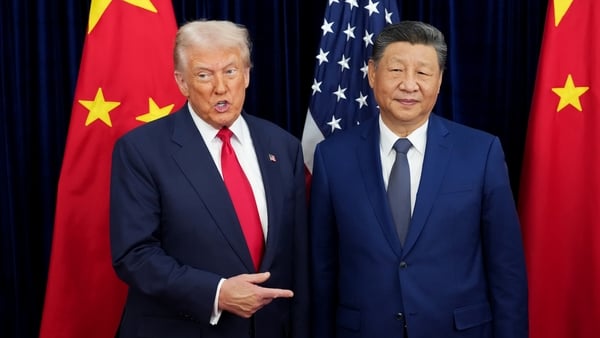
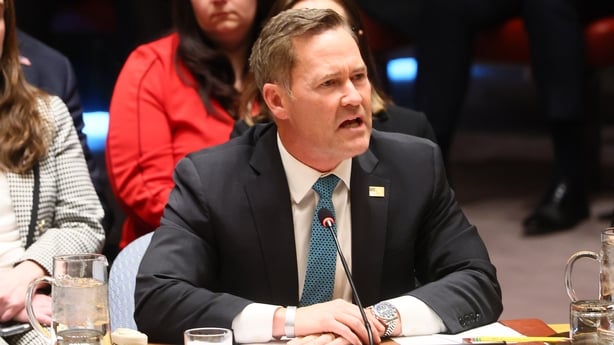
"President Trump has been clear," the US Ambassador to the United Nations Mike Waltz wrote on social media last week.
"The days of blank checks to the UN are OVER," he wrote, adding that they were shutting down "ideological waste" and "defunding the bloated UN system".
"The President is putting the UN on a DIET to help it realise its potential!" he added.
Previously, the US State Department, announcing a dramatic reduction to voluntary donations for UN humanitarian operations, said the UN had "increasingly failed to live up to its promise".
The announcement stated that US contributions had "skyrocketed" in recent years, reaching $8bn-$10bn each year. This year’s pledge by contrast was just $2bn.
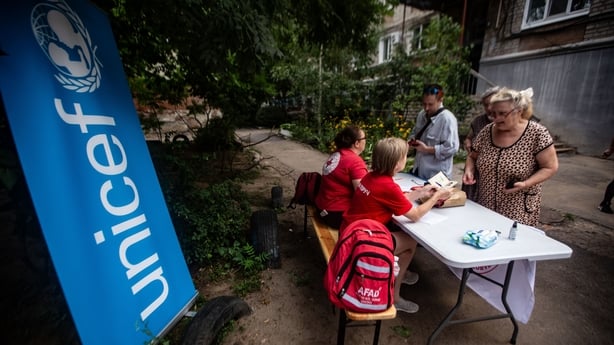
"Many UN bodies have abandoned their mission of promoting global peace and security," it stated, "too often espousing radical social ideologies, acting to undermine American interests and values, and undermining peace, sovereignty, and shared prosperity."
United Nations agencies would need to "adapt, shrink or die" the announcement concluded.
The United States already pulled out of several UN agencies including the cultural body UNESCO, the UN Population Fund, World Health Organisation and the Human Rights Council.
In some quarters, there is some sympathy for the US position on the bloated bureaucracy for example.
Things like business class flights for senior personnel - as well as university fees for their offspring - have become harder to justify.
But UN officials told RTÉ News that in the rush to make headline cuts, the core mission of the organisation - in humanitarian development, human rights and peace and security - is becoming harder to carry out. And that could have long-term consequences.
The US President Donald Trump signed a bi-partisan bill into law this week that would see US funding for the organisation secured, for this fiscal year.
But even if that comes through, there are fears that the damage has already been done.