When House of Cards hit Netflix in early 2013, its impact on viewers and the television industry was seismic.
The series, centred on American presidential politics, proved that prestige, quality drama could be credibly commissioned and produced by a streaming platform. It also introduced binge-watching, permanently disrupting scheduled appointment viewing and reshaping budget expectations for traditional broadcasters.
In a world where platforms continue to grow - with approximately 74% of Irish households now accessing video streaming services - how does a public service broadcaster such as RTÉ compete for audiences for its original drama?
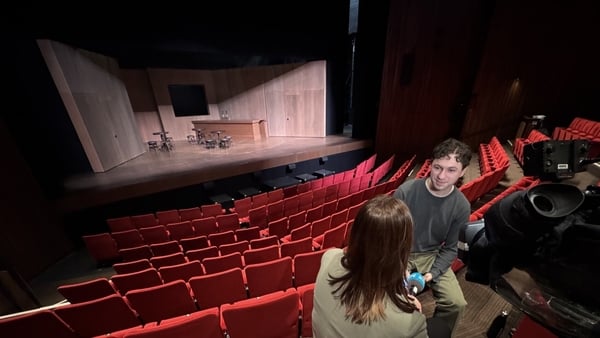
"The streamers are trying to drive subscriptions and we're trying to connect with audiences and serve our audiences, so they are very different starting points," David Crean, Head of Drama, RTÉ said.
Mr Crean was speaking as RTÉ’s latest original six-part comedy-drama, These Sacred Vows, created by John Butler, arrives on Irish television.
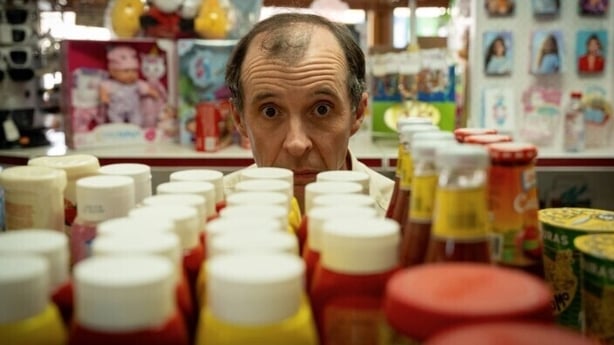
"Our USP is to find the best of Irish writing, directing and talent and show it to our audiences," he said, explaining that collaboration and experience are central to funding productions.
In 2025, RTÉ announced 142 hours of original drama across nine productions shot in Ireland and abroad, including Fair City, Hidden Assets, The Dry, The Walsh Sisters and These Sacred Vows.
The route from page to screen has become a complex jigsaw, raising the question of cost. While budgets are commercially sensitive and vary depending on ambition, there is a widely held understanding that an hour of TV drama costs at the least €1 million at the lower end.
Long-form series including soaps remain a cornerstone of broadcasters’ drama output. They require much smaller definable budgets, while offering stable employment for local crews and loyal audiences - all increasingly important in a fragmented content landscape.
Shorter-form drama series, however, can quickly run into the millions.
The journey from concept to screen typically takes a few years. It begins with a pitch, followed by securing interest and development commitment from either a broadcaster or a streamer.
Streamers, with deep pockets, can afford to develop and fully finance projects with the original creative team with its gaze firmly on connecting with a global audience.
For broadcasters, commissioning an early script marks the beginning of a collaborative process involving multiple partners focussed on its domestic audience.
Dermot Horan, RTÉ Director of Acquisitions and Co-Productions, explained that early support allows modest development funding.
"That allows us to release a relatively small amount of money - anywhere from €30,000 to €50,000 - to commission a script and a deck, which by drama standards is not that expensive," he said.
If the project proceeds, that script becomes episode one. "It comes off your budget, so you get your money back so it’s like a research and development phase," he noted.
For broadcasters, development is only the beginning of a production jigsaw that relies heavily on industry relationships, funding knowledge and timing.
The pressure on indigenous TV industries is intensifying.
Rising production costs, higher pay expectations from casts and crews who can opt for large international projects, and increasingly fractured audiences all add to the challenge.
Last year, Wolf Hall director Peter Kosminsky highlighted these pressures when he revealed that he, star Mark Rylance and others had to accept significant pay cuts to secure a second series, after no streamer agreed to co-fund the acclaimed BBC drama.
Bringing project from page to screen 'always a collaborative effort'
For Producer and Joint CEO of Dublin based Treasure Entertainment, Rebecca O’Flanagan "bringing a project from page to screen is always a collaborative effort, creatively and financially."
"There are no hard or fast rules," she said. "The budget will include the broadcaster’s investment, the sales agent - who might come in for about 30% - the tax incentives, and co-funding partners."
She pointed to the importance of Screen Ireland and the Coimisiún na Meán’s Sound & Vision fund in supporting TV drama too.
Mr Horan meanwhile said RTÉ’s approach to funding has evolved significantly.
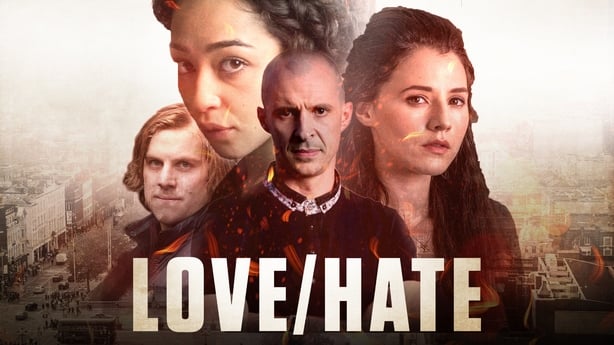
"Ten or fifteen years ago, RTÉ might fund one or two dramas almost entirely, together with tax relief, as was the case with Love/Hate. Now, to reach that level, we work closely with international partners."
Ireland’s Section 481 tax credit remains central to the financing landscape. The Revenue Commissioners confirmed in January 2026 that overall payments under the scheme in 2025 were a record €177 million.
This represents a 46% increase on 2024.
Both domestic productions and major international series, including Netflix’s Wednesday, have availed of the credit after filming in Ireland.
In 2024, Screen Ireland provided just under €4 million in loans for TV drama. Figures from 2024 state that RTÉ invested nearly €3 million in new drama commissions through its independent production unit, however this does not paint the full investment picture as David Crean pointed out that "not all our co-productions are commissioned through the IPU".
Since 2020, Coimisiún na Meán’s (formerly BAI) Sound & Vision fund has invested almost €20 million in TV and film drama projects.
Production companies point to the positive economic impact of their shows too. One example included RTÉ one's drama series 'Smother', that saw a large cast and crew move to live and work around the Lahinch area in Co Clare in the off season, to film three series of the show.
The collaborative nature of modern drama production is evident in the end credits.
Mr Crean cited creator Peter McKenna’s Kin as an example of a recent RTÉ drama that garnered critical acclaim and proved a successful international export.
The series was backed by RTÉ alongside BRON Studios, Headline Pictures, Screen Ireland, the BAI Sound & Vision Fund, Nordic Entertainment Group and Creative Wealth Media. AMC+ acquired rights in several territories, and the series later moved to Netflix in 2024 after airing internationally.
For Treasure Entertainment, financing remains a jigsaw.
"'These Sacred Vows began with a simple concept - an Irish wedding abroad - where location was integral to the story," said Rebecca O’Flanagan.
"Originally it was set in Spain, but when we looked into it, there was an attractive tax incentive in the Canaries offering 45% relief," she explained.
The production was filmed in Tenerife, with post-production completed in Ireland, separately qualifying for Section 481.
"The overall budget combined included RTÉ funding, Screen Ireland, Banijay (media group), the Irish tax credit 481, and Canary Islands tax relief," she outlined.
Another reason Treasure Entertainment works with broadcasters too is that "IP ownership as a key advantage of working with them".
A streamer will 'fully finance a project and own it outright'
A streamer will "fully finance a project and own it outright", she said explaining that "a broadcaster licenses it, allowing production companies to retain ownership and if the project succeeds, it can be sold internationally".
"A public broadcaster has a specific and unique interest in stories that reflect culturally who we are," Ms O’Flanagan said. "It offers creative freedom and the potential for a longer life beyond the initial broadcast."
Innovation is part of this too for broadcasters.
"We will be airing the first episode of 'These Sacred Vows" on Sunday night on linear, and then straight after we will drop EP 2 exclusively on the RTE Player," he said, explaining "that episode won't be on linear until next Sunday", week two. This is the "first time we've done this," said Mr Crean adding that "it will be fascinating to see how that lands".
Another part of the TV drama ecosystem for broadcasters is talent development.
Virgin Media has enjoyed success with original dramas such as ‘Faithless’ while also managing its Virgin Media Discovers initiative, that is run in partnership with Screen Ireland. That scheme fosters emerging talent with the most recent winning projects being premiered shortly at the Dublin International Film Festival in 2026.
TG4 too continues to support new TV Drama voices through its Céim Eile and Tús schemes, encouraging Irish-language drama and supporting creatives at an early stage of their careers.
Since 2009, RTÉ’s Storyland initiative, produced with Screen Ireland, has also acted as a launchpad for emerging Irish creative talent.
Mr Crean pointed to Storyland alumni who have progressed to larger-budget productions, for example "Mia Mullarkey who directed the Wrapped short film for Storyland and went on to direct two episodes on Hidden Assets gaining an international directing credit," he noted.
According to Screen Producers Ireland, sustainable public funding is essential though.
"TV drama is a cornerstone of European public service media," said Anthony Muldoon, Director of Strategic Policy, describing it as "essential to ensure that levels of public funding in our public service media are sufficient to enable them to invest in Irish stories that can continue to resonate both at home and internationally".
For Mr Crean and Mr Horan, long-standing industry relationships remain central to all their productions.
"The patchwork of alliances and how the finances are worked is a kind of secret sauce," Mr Crean said.
Mr Horan added: "We want companies to grow to a scale where they can employ new development executives and producers, generate strong ideas for us, and ultimately for other international partners as well."