
It is probably one of the more uncomfortable truths of Irish politics.
But the recent history of successive governments shows that major policy decisions are often dictated by international events.
This week there were further reminders that actions elsewhere can set the agenda as Grok and the US President's expansionary vision dominated political debate.
Global financial meltdowns, wars, and not to mention Covid have all triggered a raft of decisive domestic measures since 2008.
Notably the war in Ukraine was a significant factor in the cost-of-living crisis here.
So much so that it prompted the Government to allocate billions of euro in one-off payments to households.
Indeed, the impending general election of late 2024 seemed to turbo charge this spending.
Today, the war goes on in Ukraine, but the Government is adamant that the one-off payments are consigned to history.
It is now an almost sacred policy point that is not up for negotiation.
"We have no plans to alter the current budget," was the message from one of the Coalition's senior figures this weekend.
However, this entrenched position is not without consequences particularly for people with a disability.
They point out that it has resulted in a €1,400 cut to their income.
Ironically, when the Ukrainian President addressed the Oireachtas last month a meeting of the Disability Consultative Forum took place the same afternoon.
It was examining ways to deliver on the Programme for Government commitment to introduce a cost of disability support payment in the next budget.
A spokesperson for the Minister for Social Protection Dara Calleary said this payment is a top priority, and it would take account of things like the extra transport and medical costs incurred by people who have a disability.
A group called the Strategic Focus Network will bring a proposal to the minister in the first half of this year, and this should inform the final outline of the payment which is set to be revealed in October.
But that is some way off for many people with a disability who are acutely impacted by the absence of one-off payments.
Indeed, they brought that message to Leinster House during the week.
Disability organisations even watched from the Dáil public gallery as the Taoiseach faced calls to provide an emergency €400 payment.
The Social Democrats Cian O'Callaghan described the Government’s current stance as cruel.
He then put on the Dáil record the cases of people who had to stop getting their dialysis at home because they could no longer afford the electricity bills.
"This has a huge impact on their quality of life and well-being," he said.
There were also instances of people being forced to choose between heating their home and charging their electric wheelchairs and mobility aids.
One man had earlier told TDs and senators that the only way he could feed himself was to buy food which was going out of date.
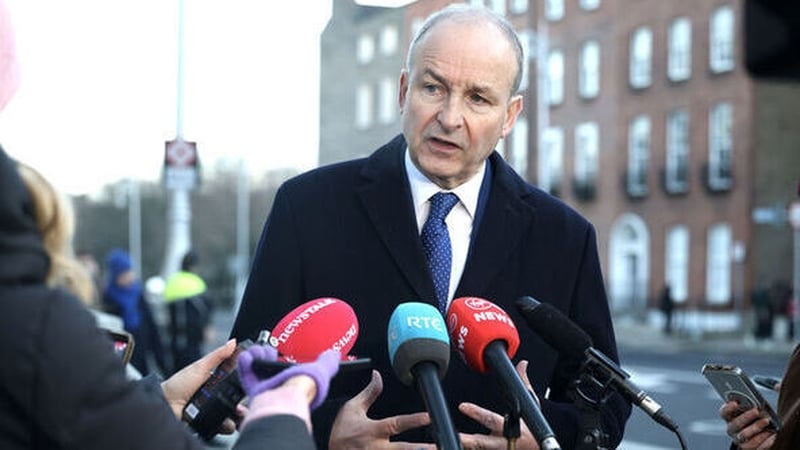
In his response, Micheál Martin detailed the extra €618 million allocated to disability services this year and rejected the assertion that the ending of one-off payments amounted to cuts.
He spoke too of increases to the Domiciliary Care Allowance, welfare rates and the expanded fuel allowance scheme.
"We must embed into the permanent social protection system, employment system, transport system, education system and health system, supports that are permanent for people with a disability. That is what I intend to do," the Taoiseach pledged.
In the meantime, the pressure is likely to remain on the Government to end its newly-found steadfast opposition to one-off payments.