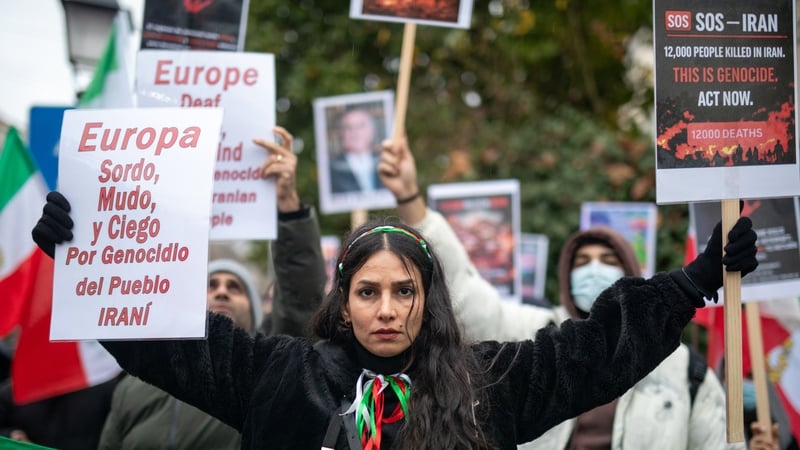

In recent days, thousands of Iranian protesters were gunned down by their rulers, according to rights groups.
Nobody is quite sure how many. A government-imposed internet blackout ensured that few details emerged.
But we do know that this is the most serious challenge to the Islamic regime since it took power in 1979 - bigger than the 'Green Revolution' in 2009 and the 'Woman, Life, Freedom' demonstrations of 2022 - prompting observers to wonder if this could be the beginning of the end for Iran's clerical rulers.
"With each suppressed protest movement, the Islamic Republic of Iran has turned more of its people against it," said Ellie Geranmayeh from the European Council on Foreign Relations.
What comes next, though, is a vexed question, with wildly differing opinions on how the rest of the world should react.
On Thursday, two Iranian dissidents made an impassioned plea to the UN Security Council for intervention.
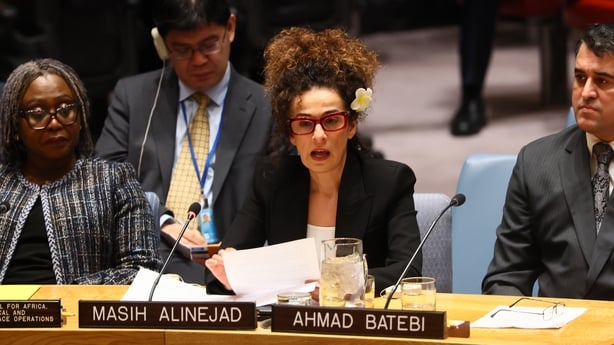
"The Iranian people are asking the world to help through action, not back-to-back meetings and empty condemnation," said Masih Alinejad, an Iranian-American journalist and women's rights activist.
Fighting back tears, she read out the names of some of the protesters she said she had been in touch with before they were killed.
Addressing the Iranian envoy sitting on the opposite side of the horseshoe table, Ms Alinejad said: "You have tried to kill me three times - I have seen my would-be assassin with my own eyes in front of my garden, in my home in Brooklyn."
In October last year two "high-ranking members of the Russian mob" according to federal prosecutors, were sentenced to 25 years in prison for their participation in a "murder-for-hire plot" orchestrated by the Iranian government - targeting Ms Alinejad.
Her testimony was followed by an address by the human rights activist and journalist Ahmad Batebi, who told the council he had been tortured by the regime.
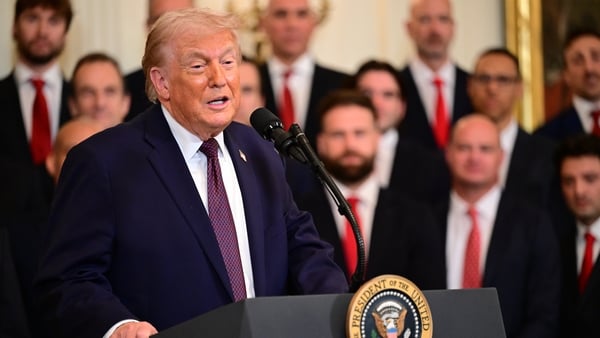
He called on US President Donald Trump - who on Tuesday urged Iranians to keep protesting, saying "help is on the way" - to follow through.
"You encouraged them, and they are in the street ... don’t leave them alone," he said, adding "if you leave them alone, we cannot change regime in Iran, and we continue this mass killing and genocide in Iran".
But by that stage, it had already become clear that no US action was imminent.
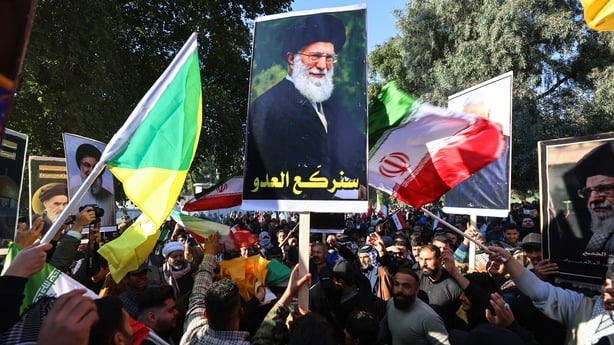
The protests were started by shopkeepers in late December over the collapse of the currency. They soon spread across the country, exposing a groundswell of grievances over the cost of living, soaring unemployment and runaway inflation.
This was, analysts said, a genuine outpouring of opposition to Iran's repressive theocratic leaders’ misrule.
International sanctions, over Iran's nuclear programme and sponsorship of regional proxies like the Houthis in Yemen and Hezbollah in Lebanon, hastened Iran’s economic collapse.
"Death to the dictator," chanted citizens in the streets and bazaars of Iranian towns and cities. But it was met with merciless, state-sponsored violence.
State television broadcast footage of rows of body bags laid out in a Tehran morgue. Video of families desperately searching for their loved ones among the dead also circulated online.
That was when Mr Trump sounded like he was about to take action - envisioning something similar perhaps to the US military operation to capture Venezuela’s leader Nicolas Maduro just two weeks ago.
US troops stationed at a base in nearby Qatar - a likely target for Iranian retaliatory strikes - were evacuated. And an American aircraft carrier, the USS Abraham Lincoln, was reportedly diverted from drills in the South China Sea to the Middle East.
But midweek, Mr Trump had a change of heart.
The White House had heard from "very important sources on the other side" that executions of protesters would not go ahead, he said.
"They’ve said the killing has stopped and the executions won’t take place," he said.
Abbas Araghchi, Iran’s foreign minister went on Fox News to say there were no plans to hang protesters. But in the same interview he blamed the violence on an "Israeli plot" to drag the US into a conflict.
At the same time, the Gulf states - major US allies - were applying pressure on Mr Trump not to intervene.
Saudi Arabia, Oman, Qatar and Egypt engaged in top-level diplomacy to warn him off.
Although no fans of their Islamic Republic neighbour, being seen to side with a popular uprising against autocratic rule was perhaps too close to home for them.
The prospect of regional chaos was a major concern, analysts said.
Fear of Israel filling the regional power vacuum in the event of Iranian regime collapse was another.
Israel too was wary about potential Iranian retaliation, which Prime Minister Benjamin Netanyahu reportedly communicated to the White House.
Analysts also warned that outside interference could backfire.
"Attempts by the US and Israel to forcefully impose change risk deeper turmoil," said Ms Geranmayeh.
Indeed, history offers some cautionary tales.
In 1953, Iran’s democratically elected prime minister Mohammad Mosaddegh was overthrown in a coup supported by US and British intelligence agencies, following the nationalisation of Iran’s oil industry. The pro-western - but authoritarian - Shah was reinstated.
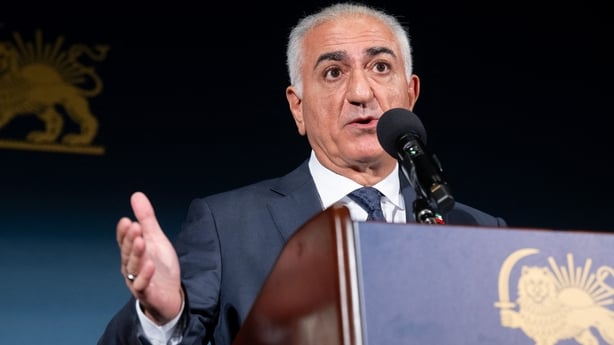
His son, Reza Pahlavi, who lives in exile in the United States, has put himself forward as the next leader of Iran and this week called for US "surgical strikes". The level of support for the prince among protesters is hard to gauge. Certainly, the repression of his father’s rule has not been forgotten.
More recently, when the US bombed Iran - during last year’s 12-day war, sparked by Israeli attacks on Iran’s nuclear facilities - Iranians rallied around the flag, albeit temporarily.
After all, bombs dropped from the sky don’t discriminate between supporters and opponents of the regime.
Perhaps the US administration decided in the end, that the chances of a clean regime-decapitation, Caracas-style, were slim.
But, as is clear by now, a hallmark of the Trump presidency is unpredictability.
It’s impossible to say for certain if the White House has dropped the idea of intervention altogether, or if it remains under consideration - quietly.
According to Trita Parsi, from the Quincy Institute for Responsible Statecraft, a Washington DC-based think tank, Mr Trump’s decision to pull back from the precipice "left his pro-Israel supporters in the US infuriated, and they will pressure him to go back to war".
"A small window may exist for diplomacy to resolve the conflict between Tehran and Washington, but that will require flexibility from all sides and a willingness from Tehran to talk directly to Trump himself," he added.
At the Security Council on Thursday, Iran’s deputy ambassador to the UN Gholamhossein Darzi didn’t sound like the envoy of a nation ready to talk.
"The United States regime is attempting to portray itself as a friend of the Iranian people, while simultaneously laying the groundwork for political destabilisation and military intervention under a so-called humanitarian narrative," he told the council.
He added that these claims were "particularly cynical" given what he called America’s long and well-documented record of unlawful military interventions, regime-change operations and systematic violations of international law and the Charter of the United Nations.
Iran’s allies, Russia and China, agreed.
"No action that defies international law can be tolerated," said China’s ambassador Sun Lei.
China is Iran’s biggest trading partner and oil importer. Russia and Iran are close military and economic partners.
In the absence of military intervention, the US settled on more sanctions, targeted at five Iranian officials accused of being involved in the crackdown, in addition to the 25% tariff already announced on goods the US imports from countries that do business with Iran. China called the tariff "illicit unilateral" action.
The EU is expected to follow up with its own sanctions.
"The Islamic Republic can no longer provide adequate economic welfare, the middle class is hollowed out and corruption is rampant," said Ms Geranmayeh.
"The security apparatus that used to protect Iranians from the conflicts ravaging their neighbours can no longer do so," she said.
But, citing the views of some activist groups behind the protests, she said any new social contract can only be decided by those inside Iran.
While many observers believe this could be the moment the Ayatollah’s 46-year rule comes to an end, there’s fear it could happen amid more bloodshed.
"In the final death pangs … they are at their most dangerous," said Omid Djalili, the British-Iranian comedian, actor and critic of the regime.