
For generations, Greenlanders felt protected by the US - the superpower that had helped defend them during World War II and maintained a reassuring military presence ever since.
Now, with US threats and uncertainty looming, Deputy Foreign Editor Edmund Heaphy speaks to residents in Nuuk about what comes next.
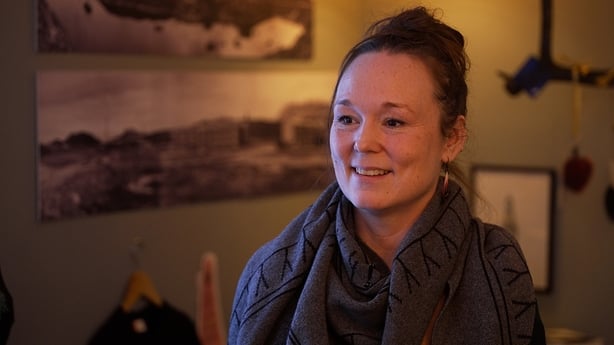
Tillie Martinussen's grandmother used to come home with Wrigley's chewing gum from the US soldiers stationed at Greenland's military bases.
"That was exotic, and America was a hero to us," Ms Martinussen, a former member of Greenland's parliament, said.
For generations, Greenlanders felt protected by the US - the superpower that had helped defend them during World War II and maintained a reassuring military presence ever since.
Today, US threats to seize the Arctic island have turned that trust to fear.
"For the first time since Donald Trump has been in office, we're worried," Ms Martinussen said.
The fear has become so acute that she is considering fleeing the country with her family.
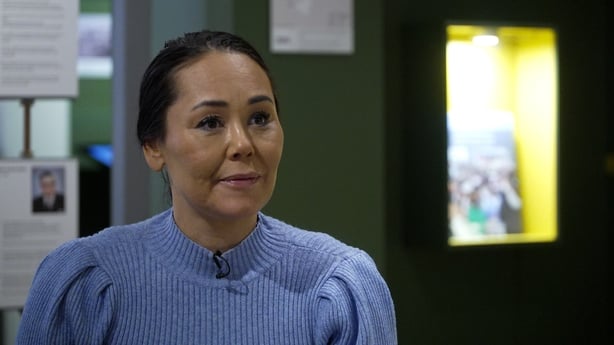
"We were discussing whether we should take my stepson and the old lady that I know, and the few family members that we have here, and move them to Denmark just in case," she said.
"I'm considering if I should leave," Ms Martinussen said, the words catching in her throat.
"Oh, I'm sorry. I'm almost crying. I don't want to leave. I have to think of my family, right? But I don't want to leave my people."
When news first emerged that US Secretary of State Marco Rubio would meet with Danish and Greenlandic representatives this week, Ms Martinussen felt a flicker of hope that diplomacy might prevail.
But media reports suggesting President Trump had asked the US military to draw up invasion plans have turned that hope to dread.
"We're thinking, is the whole Marco Rubio thing a (ruse)? And they're going to invade us in the coming week?" she asked.
A special relationship forged in war
The relationship between Greenland and the United States was forged during World War II, when US forces arrived to establish military bases after Denmark fell to Nazi occupation in 1940.
"We didn't really see any conflict, because we were so remote and we were protected by Denmark and America, which is why it's so absurd that we're in this situation now," Ms Martinussen said.
Ujammiugaq Engell, director of the Nuuk Local Museum, said the US presence transformed Greenlandic society in unexpected ways.
"While the rest of the world was burning, the Greenlandic people were being exposed to a new freedom," she said.
The Americans sent Sears catalogues to Greenlandic households, built cinemas, and brought new music, films, fashion and food - influences that were not restricted by Danish colonial authorities.
"For the first time ever, they had access to all outside influences," Ms Engell said.
"The Americans weren't at all concerned with preserving the Greenlandic culture. They just wanted to buy and sell whatever they could."
A culture of peace
Part of what makes the current situation so difficult for Greenlanders is that confrontation runs counter to everything in their cultural DNA.
Ms Martinussen explained that Inuit culture has always valued peace above all else.
The traditional drum dance, she said, exemplifies this approach.
When conflicts arose, they were often resolved by members of the tribe expressing their grievances through dance, attempting to make fun of each other in front of other members of the tribe.
It was a way to settle disputes without actual fighting.
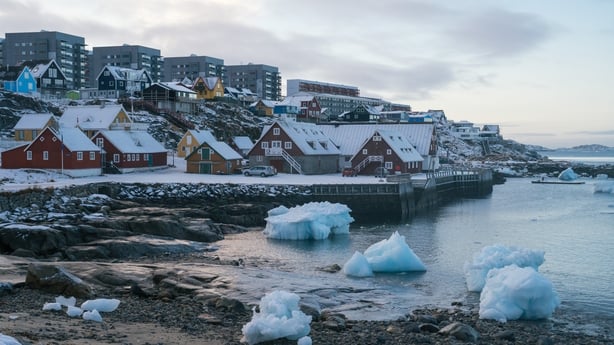
In a small Arctic community where survival depended on everyone fulfilling their role, lives could not be spared. Hunters needed those who sewed their warm clothing, while everyone needed the hunters to prevent famine.
"It's a long time since we did it that way, but it's still so ingrained in our soul," Ms Martinussen said.
The legacy is visible in modern Greenland: a quiet, peaceful society where, as Ms Martinussen put it, "you might think that (the people) were simple" if you didn't understand the culture.
Running around "telling people how strong we are with guns and military" simply is not the Greenlandic way.
The country has no military capabilities of its own, relying instead on Denmark for defence.
'Naive' and unprepared
Ms Martinussen, who served in Greenland's parliament from 2018 to 2021 as the only representative of the Cooperation Party she co-founded, believes the territory's political leaders are dangerously unprepared for what is coming.
Greenlandic politicians have always been able to shout at Denmark and have always felt protected by the US, she said.
They cannot fathom that the world is changing.
The overconfidence is showing, she believes.
Greenland's Foreign Minister has floated the idea of negotiating with the US alone, bypassing Denmark, which is constitutionally responsible for the island's foreign policy, entirely.
Meanwhile, tensions between Danish and Greenlandic parliamentarians erupted this week in an angry video call, with Greenland accusing Denmark of "neo-colonial" behaviour.
"I think Greenlandic politicians tend to be a little bit naive," she said.
"I don't think that our political leaders quite understand just how big and bad the world actually is."
Read more: Greenland showdown at 'decisive moment' after Trump threats - Danish PM
She believes Donald Trump is "crazy enough" to deploy special forces to the island without congressional approval, catching Greenland completely off guard.
For now, all she can do is appeal to the outside world.
"I hope the rest of the world, including maybe Ireland, will try and tell the American people that nobody wants it in Greenland," she said.
"Please leave us alone. We're a peaceful people."