
US President Donald Trump has built his political brand on "telling it like it is" - cutting through diplomatic niceties to say what others won't.
In a three-hour interview with the New York Times on Wednesday, he did exactly that about Greenland.
Asked why he wanted to take over the territory, Mr Trump was remarkably candid.
"Ownership is very important," he said.
"Because that's what I feel is psychologically needed for success."
Those, of course, are extraordinary comments - not least because Mr Trump acknowledged that, under America's existing 1951 treaty with Denmark, the US already has the right to establish military bases in Greenland.
His country’s security needs are already met. But he apparently needs ownership - not for strategic reasons, but for psychological ones.
When pressed on whether Greenland or NATO mattered more, Mr Trump said simply: "It may be a choice."
This confirms what his advisors have been signalling all week.
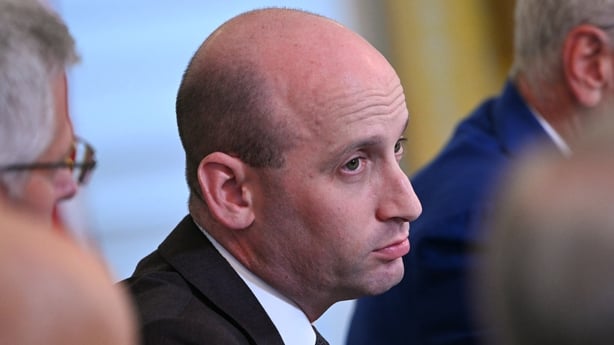
Stephen Miller, his deputy chief of staff, declared that America should "conduct itself as a superpower" - by which he means demonstrating power through force.
This isn’t about specific threats or interests. Rather, it’s about power assertion as an end in itself.
Mr Miller has openly dismissed what he calls "international niceties" - the treaties and multilateral frameworks that have governed relations since World War II.
Maduro seizure showed US could defy international law
Last week’s seizure of Venezuelan President Nicolás Maduro wasn't just about Venezuela.
It was a proof of concept - demonstrating that the US could defy international law without immediate consequences.
For the Trump administration, Venezuela offered something valuable: a chance to test the limits of American power against a target where the costs seemed manageable.
Mr Maduro was an international pariah, so the potential blowback appeared limited.
But if Venezuela was low-risk theatre, Greenland would have immediate, catastrophic consequences.
This isn’t about defying international norms in a vacuum - it’s about threatening a NATO ally, which would trigger the collapse of the Western security architecture that’s existed since 1945.
Even Mr Trump’s closest European ally sees this.
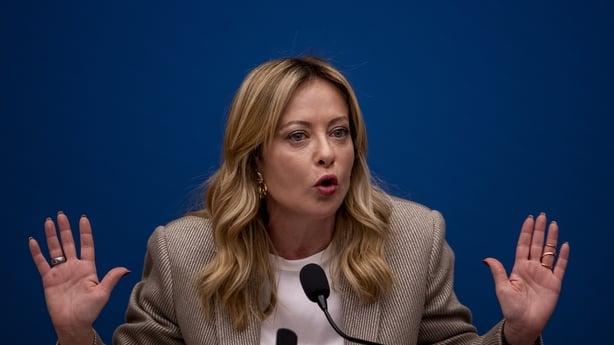
Italian Prime Minister Giorgia Meloni - the only EU leader invited to his inauguration, someone who shares his views on immigration and nationalism - felt compelled to warn today that military action against Greenland would have "grave consequences for NATO".
"I continue not to believe in the hypothesis that the United States would launch a military action to take control of Greenland," Ms Meloni said at her press conference.
But she added that she would "clearly not support" such an action.
"I believe it would not be in anyone’s interest. I think it would not even be in the interest of the United States of America, to be clear," she said.
Ms Meloni is often described as a bridge between Brussels and Washington - a "Trump whisperer".
That she felt the need to underline the consequences today indicates just how dangerous this moment is.
Yet her confidence that Mr Trump won’t use military force may prove to be wishful thinking.
Mr Trump told the New York Times that he doesn’t "need international law".
His White House has explicitly said military options remain on the table.
After Venezuela, after his admission that this is about psychological need rather than strategy, can anyone confidently predict what Mr Trump will or won't do?
Europe faces impossible choice
All of this underscores the impossible choice that Europe faces: defend international law or defend its transatlantic alliance.
It can’t do both. If European nations deploy troops to deter American action, they risk provoking Mr Trump and fracturing NATO themselves. If they do nothing, they accept that sovereignty means nothing when confronted with superior force.
The strategy being discussed in Brussels remains the same - somehow make it too costly enough for him to intervene militarily.
But it’s hard to see how that will work on a leader who has openly admitted he doesn’t need international law, and who says he is considering sacrificing NATO for a psychological need.
This isn’t strategy or logic. It’s the psychology of possession applied to foreign policy.
The tragedy is that all the practical goals Mr Trump claims to pursue could be achieved through cooperation with Denmark, a willing ally spending billions on Arctic defences.
But cooperation doesn’t satisfy the psychological need Mr Trump describes.
And that’s why, even with one of his closest European allies warning of grave consequences, Greenlanders are genuinely fearful that he is not bluffing this time.
Read more:
Meloni does not believe US will make military move on Greenland
A short history of US interest in Greenland