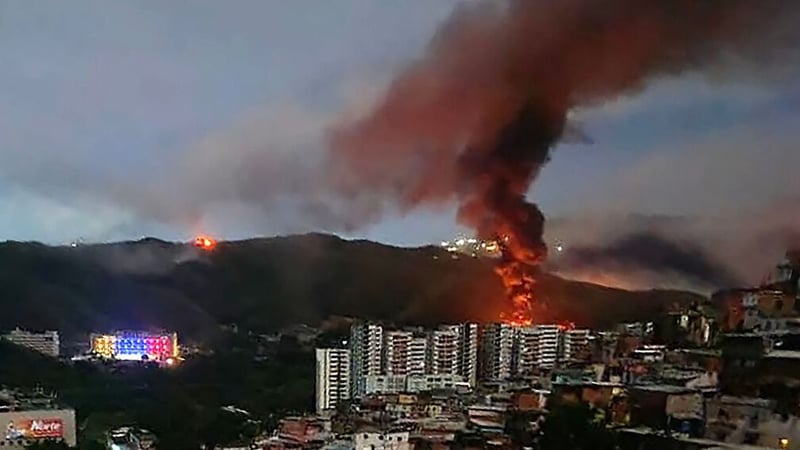

On Friday, Nicolas Maduro ruled Venezuela with an iron fist. Yesterday, fists cuffed together, he shuffled across the tarmac into American federal detention.
Few, it has been said, will shed tears for a man who clung onto power when democratic elections would have seen him thrown from it, who routinely jailed and tortured political opponents and who systematically violated the human rights of Venezuelan citizens.
But if being a controversial strongman is enough to get you taken out in a pre-dawn US special ops raid, then the list of potential candidates is long.
In fact, far more of the world’s people today live under autocratic leaders than democratically elected ones.
But Washington isn’t interested in overthrowing dictators and spreading democracy, something former administrations - like that of George W. Bush - said they were.
This administration under Donald J. Trump is interested in Venezuela’s oil, of course, just as his predecessor was interested in Iraq’s - although, unlike former US presidents, the current one is prepared to say that bit out loud.
"We're going to have our very large US oil companies, the biggest anywhere in the world, go in, spend billions of dollars, fix the badly broken infrastructure, the oil infrastructure, and start making money for the country," he said yesterday.
The 'Donroe Doctrine'
But later in that same press conference he articulated another reason why Venezuela is considered strategically important to Washington.
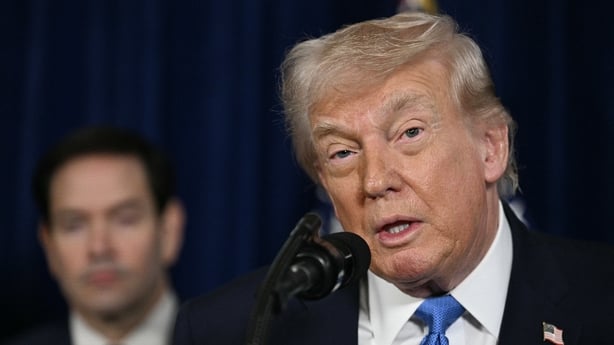
"They now call it the 'Donroe Doctrine,'" he told reporters.
"We sort of forgot about it, it was very important, but we forgot about it," he went on.
"We don't forget about it anymore. American dominance in the Western hemisphere will never be questioned again," he said.
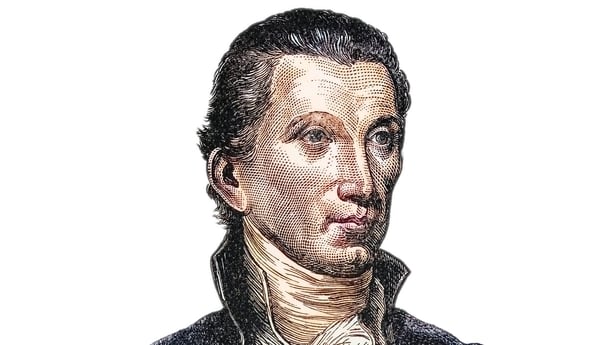
He was referring to the latest iteration of the 'Monroe Doctrine' established by US President James Monroe in 1823.
It held that the US would dominate the Western hemisphere, warning European colonial powers to stay out of Latin America.
Subsequent administrations reinforced the doctrine, laying the basis for a string of US-backed coups d’etat in Latin America throughout the Cold War to sweep democratically elected leftist governments from power in favour of pro-Washington - and usually autocratic - leaders.
In modern times several members of the US cabinet - particularly Secretary of State Marco Rubio, who is of Cuban descent - see the world through this prism.
A warning to others in Latin America
Mr Rubio has long sought to crush Cuban influence in Latin America. If he were one of Cuba’s leaders, following the Venezuelan government’s decapitation, he intimated yesterday, he’d be concerned "at least a little bit".
In less diplomatic language, Mr Trump said the Colombian President Gustavo Petro should "watch his ass".
For the White House vision tying all of this together, look no further than the US National Security Strategy published in early December.
In black and white, it was an assertion to enforce a "Trump Corollary" to the Monroe Doctrine.
"We want a hemisphere that remains free of hostile foreign incursion or ownership of key assets, and that supports critical supply chains," the document stated.
"We want to ensure our continued access to key strategic locations."
This language reflects the modern geopolitical landscape. There’s little regard for the sovereign interests of other countries, especially smaller ones, but instead a focus on great power competition and hemispheric dominance.
In that regard, it’s no longer European powers the US seeks to eject from what it sees as its own backyard.
It’s Russia and China.
Moscow and Beijing offered a lifeline to the Maduro regime, largely through oil purchases, helping it survive economically while under heavy Western sanctions.
A steady supply of Russian-made weapons propped up Venezuela’s military.
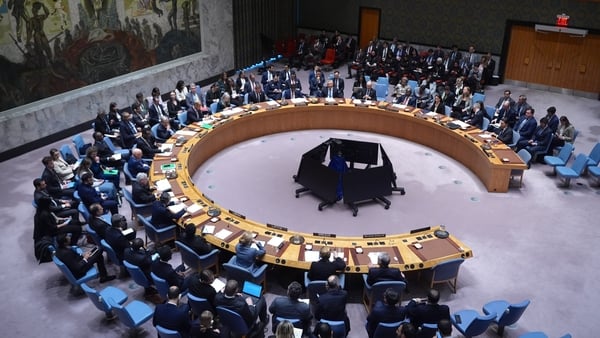
Voting patterns at the United Nations show strong diplomatic agreement too.
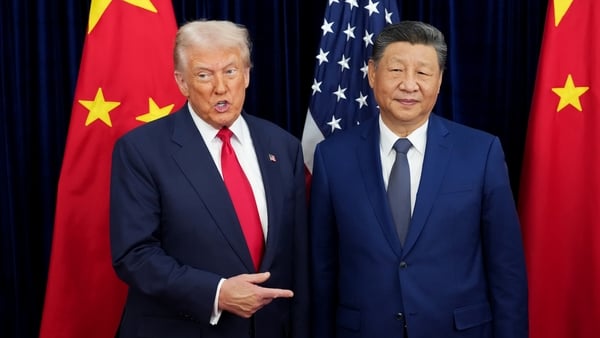
It has not gone unnoticed that in the hours before Friday’s raid, a Chinese delegation led by Qiu Xiaoqi, China’s special representative for Latin American and Caribbean Affairs was in Venezuela, meeting the soon-to-be-captured Maduro.
"I had a pleasant meeting with Qiu Xiaoqi, Special Envoy of President Xi Jinping," Mr Maduro wrote afterwards.
"We reaffirmed our commitment to the strategic relationship that is progressing and strengthening in various areas for building a multipolar world of development and peace," he added.
No wonder China said it was "deeply shocked" by the raid.
Beijing condemned "hegemonic acts" by the US that "seriously violate international law and Venezuela's sovereignty and threaten regional peace and security".
The question now is how much further the US administration is prepared to go to assert the 'Donroe Doctrine'.
The White House has explicitly and repeatedly linked the European territory of Greenland, for example, to America’s national security concerns.
One thing we can now be sure of is that the US administration is putting its National Security Strategy into action.
And that has consequences far beyond Venezuela.