In the years after the 2003 capture of Saddam Hussein in Iraq, the West absorbed a hard lesson: forcible regime change was too messy, too costly and too unpredictable.
The NATO-led intervention in Libya in 2011, which ultimately led to the overthrow of Muammar Gaddafi, only reinforced the lesson. The state collapsed. Civil war followed.
By the time Barack Obama had to consider intervention in Syria in 2013, a quiet consensus had formed: forcible regime change was off the table, no matter how brutal the dictator.
That consensus died before dawn this morning in Caracas.
By now, it's become a bit exhausting to write about the ways in which Donald Trump has torn up the rulebooks, flouted norms, upended precedent, ignored allies, violated conventions, bulldozed constraints, treated consensus as optional - pick your editorial cliché.
On the surface, the Venezuela operation is nothing like the massive operations in Iraq or Libya.
The more obvious parallel, of course, is Panama in 1989.
American forces invaded the country to depose military strongman Manuel Noriega, also on drug charges, also in Latin America.
But that operation deployed 26,000 troops and dragged on for a fortnight until Noriega, who had sought sanctuary in the Vatican embassy, surrendered. Some 23 US troops were killed.
By comparison, the raid on Nicolas Maduro’s home inside the heavily guarded Fort Tiuna military installation in Caracas was surgical.
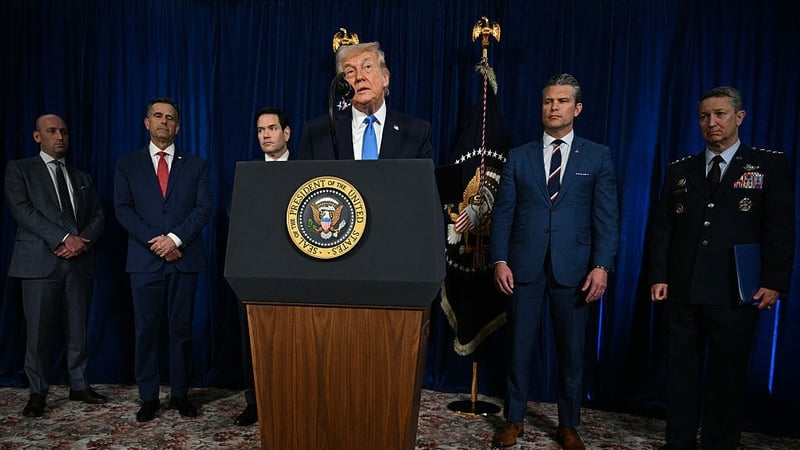
"It was an incredible thing to see," Mr Trump said this afternoon.
"Not a single American service member was killed. And not a single piece of American equipment was lost."
On those terms alone, the swift capture of Maduro would mark a clean break from the messy occupations of the past.
But Donald Trump has made it clear that the mission doesn’t end there.
The United States, he said, will run Venezuela until "a just transition" can be achieved.
He spoke of making the Venezuelan people "rich, independent and safe", of ending their suffering.
Like past US expeditions, the rhetoric of liberation is there, the pretence of nation building.
And so is the oil calculation.
When asked who would run Venezuela, Mr Trump spoke immediately about American energy companies rebuilding the country’s infrastructure - and making money from it.
"We are going to run the country right," he said.
"It’s going to make a lot of money."
As Mr Trump described it, this morning’s operation sounded less like a one-off raid and more like the opening act - and he didn’t leave much to the imagination.
Mr Trump warned that the US is prepared to launch "a second and much larger attack" on Venezuela if it is deemed necessary.
"We’re not afraid of boots on the ground if we have to have them," Mr Trump said.
But what will reverberate beyond Venezuela is the principle he invoked to justify it.
This, he said, isn’t just about Maduro. It’s about US dominance of the Western hemisphere - and reviving a two-century-old doctrine first articulated by James Monroe, the fifth American president.
In 1823, President Monroe warned European powers against intervention in the Americas - effectively declaring them America’s sphere of influence.
"Under the Trump administration, we are reasserting American power in a very powerful way in our home region," Mr Trump said today, claiming the US had forgotten about the Monroe doctrine.
"But we don’t forget about it anymore. Under our new national security strategy, American dominance in the Western hemisphere will never be questioned again. It won’t happen."
In other words, Mr Trump has declared that the US reserves the right to unilaterally determine who governs in the Americas - and by force, if necessary.
The pretence of respecting sovereignty in Latin America is over, and the post-Iraq consensus died with it.
In his first term, Mr Trump tried sanctions and diplomacy. Now he’s shown he’ll use direct action. The authoritarian leaders of Cuba and Nicaragua will have taken note.
But so too will America’s rivals beyond the hemisphere.
If the US can do this to Venezuela, what’s the principle that says China can’t do it to Taiwan’s president, or Russia to a leader in the Baltics?