
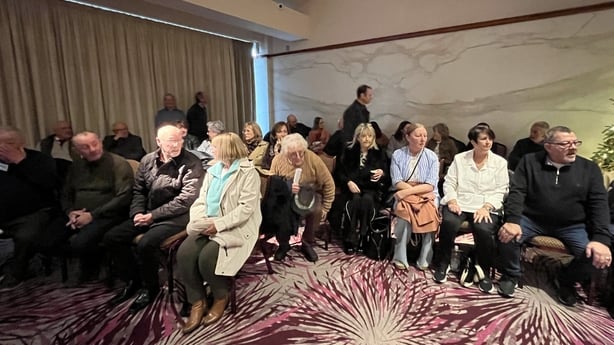
Something striking happened at the Kenova families' news conference and I watched it unfold.
When their solicitor, Kevin Winters, last addressed the media, none of the families accompanied him.
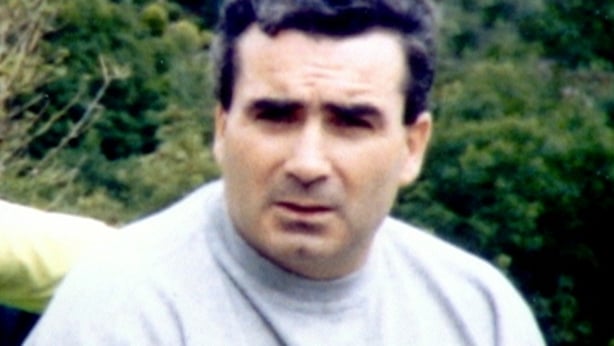
They had lost loved ones to the British army agent Stakeknife - widely believed to be Belfast man Freddie Scappaticci - who is now dead.
Scappaticci’s job had been to hunt informers in the ranks of the IRA.
The cruel irony of it all was confirmed by the findings of the report.
This time, Mr Winters was flanked at the table by representatives of two families; others were in the room.
And it was an intervention by a woman who spoke from the floor which made journalists snap round to see.
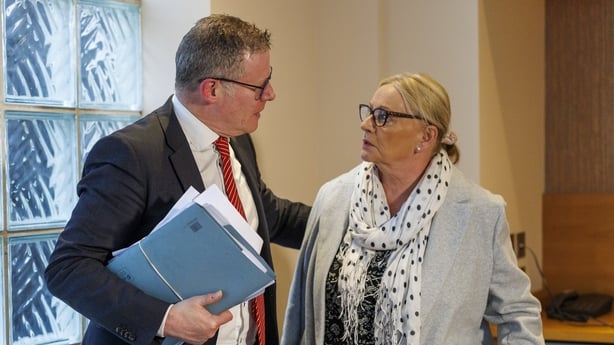
Claire Dignam’s husband Johnny was not killed by Stakeknife - by then the agent was under suspicion and his influence in the IRA’s internal security unit had waned.
It was others who had abducted, tortured and murdered Johnny Dignam in the early 90s.
But for 30 years, Claire had lived with the shame of being branded a "tout’s" widow and the belief that her murdered husband could have been saved.
Sparked by what she heard at the news conference, she spoke out.
She said: "I hid for years because I believed my husband was an informer, I believed all the things that he’d done.
"I just had to live my life with that fear at the back of it.
"And then to find out that the Brits knew - that they could have saved him, that he left me with a baby in my belly to go through the birth while he’s lying in a grave.
"The shame, the guilt, the trying to fit in, feeling that you’re nobody. Well now I feel alive and I’m not going to hide again, I’m not going to hide.
"My husband was Johnny Dignam. I don’t care what anybody says about him in the past, what torture he’s put my children through.
"My husband was innocent."
Claire and the other families were finally laying aside the stigma and stepping out of the shadow of Stakeknife and his ilk.
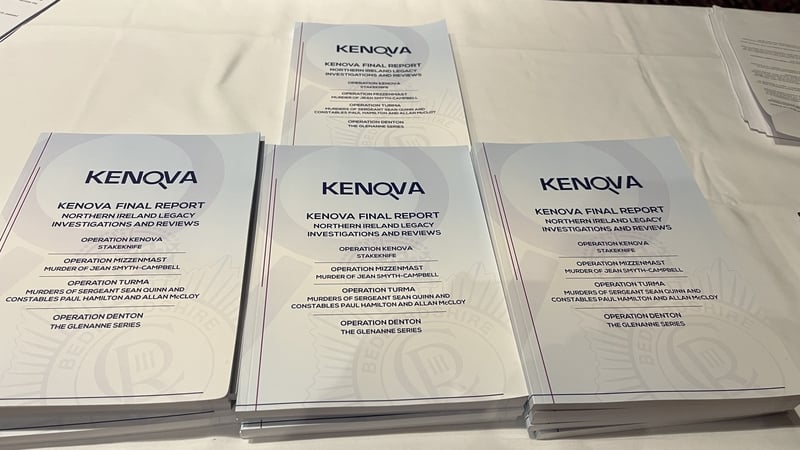
The Kenova Report, published this week, was the culmination of almost a decade’s work and £47m of public money.
It was commissioned by the PSNI on the direction of the Northern Ireland Public Prosecution Service.
It was a huge undertaking covering four separate investigations. At its heart were two big issues.
A claim that there was a top British army agent - Stakeknife - operating at a senior level in the IRA.
And that there had been security force collusion in 127 deaths linked to loyalist attacks on Catholics in the early 70s, including the 1974 Dublin-Monaghan bombings which claimed 34 lives.
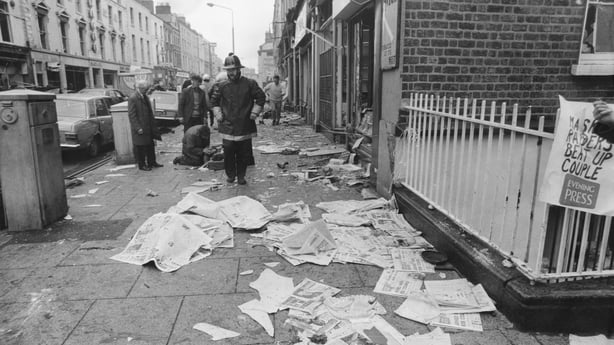
The 164-page report found there had been "deplorable collusion" by some members of the RUC and Ulster Defence Regiment with a Mid-Ulster UVF gang in the 70s but no evidence of "high level state collusion".
On Stakeknife, the report painted a picture of a violent man operating with impunity.
He had been protected by his handlers, directed by the British state and lavishly rewarded.
He had been linked to 14 murders and 15 abductions. The report concluded that his activities had probably cost more lives than they had saved.
What the report did not state was that Scappaticci was Stakeknife, even though, as one solicitor put, it "the dogs in the street" know it.
The British government blocked that, quoting a policy of 'neither confirming nor denying' the identity of agents - known colloquially as NCND.
Taoiseach Micheál Martin said the Kenova Report was a "catalogue of tragedy".
The Stakeknife findings were a sobering reminder of the violence inflicted by the IRA on the nationalist community.
The British state working hand in glove with their top agent raised very serious questions.
The collusion between security force members and loyalists in multiple murders in the 70s was "seismic".
The questions Mr Martin alluded to are important because Northern Ireland is about to embark on another legacy process.
It is a framework agreed between the British and Irish governments, based on an expectation of candour and co-operation with a new Legacy Commission, especially by those who hold records and intelligence.
The role of the British security service MI5 exposed in the Kenova Report has raised questions about whether it will ever be prepared to disclose what it knows.
Read more:
Top IRA agent Stakeknife protected by British handlers, report finds
UVF 'independently capable' of Dublin-Monaghan attacks, report finds
Report finds no evidence of collusion in Dublin-Monaghan bombings
The Kenova team had a difficult relationship with MI5. Some of the things they had done could be interpreted as obstructing the investigation, running down the clock, and concealing the truth.
The Irish Government will, in due course, draft Dáil legislation on legacy.
It wants to see faithful implementation of the framework agreement into UK law first.
The sequencing is important. Irish law will have to interlock with the final version of the British one.
All the while, the interstate case Ireland took against the UK at the European Court of Human Rights over the botched legacy plan adopted by a previous Tory government, remains live and is a reminder of the need for an agreed outcome.
A new garda legacy unit will be established before Christmas to co-operate with future Legacy Commission investigations.
So where does all this leave the people at the centre of what the Taoiseach described as the "sordid story" of the secret war involving collusion, agents and security agendas?
The families of those killed by loyalists in collusion with serving members of the RUC and UDR only got a summary report. They await the publication of the full one next year.
The families bereaved by the activities of Stakeknife continue to push for a public inquiry.
It seems unlikely when the two governments have committed themselves to the new legacy plan that envisages the Legacy Commission and a separate fact-finding body as the only avenues for Troubles related cases.
But it will not stop dogged solicitors and determined relatives from trying to use the courts to make more progress.
The British government’s refusal to name Stakeknife is a farcical fig leaf.
A decision by the UK Supreme Court in an associated case next week may prompt a change in the position.
PSNI Chief Constable Jon Boutcher has had a long career in undercover policing.
He also led the Kenova team for much of its time, relinquishing responsibility when he became chief constable in Northern Ireland.
He understands the need for NCND but argues that it does not apply in the Stakeknife case.
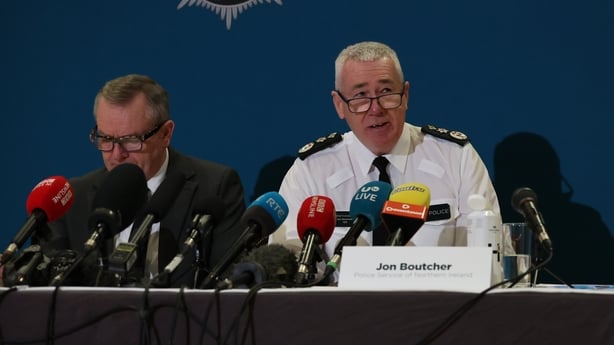
He said Scappaticci is dead. NCND is not a law and it is a policy that should not be automatically applied.
He told a human rights group this week that for some in UK government and security circles it had become a "implacable dogma" and a default position sometimes used to shield wrongdoing.
Kenova had shown that legacy cases could be investigated "rigorously and compassionately", he said.
But it took courage, he added, and a willingness to change policies that stood in the way of truth and justice.
If legacy is about truth and justice then the chance of justice looks vanishingly thin.
Thirty-eight people were considered for prosecution as a result of Kenova. None were charged.
The head of MI5 issued a statement in the wake of the publication of the Kenova Report.
Director General Ken McCallum offered his sympathies to the families of those who were tortured and shot by the IRA’s internal security team.
It brought a snort from the family members attending the news conference.
They pointed out that the unit had been run by one of MI5’s agents.
The apology was "hollow and irrelevant".
The security services know the truth, but they are still trying to stop it coming out, one said.