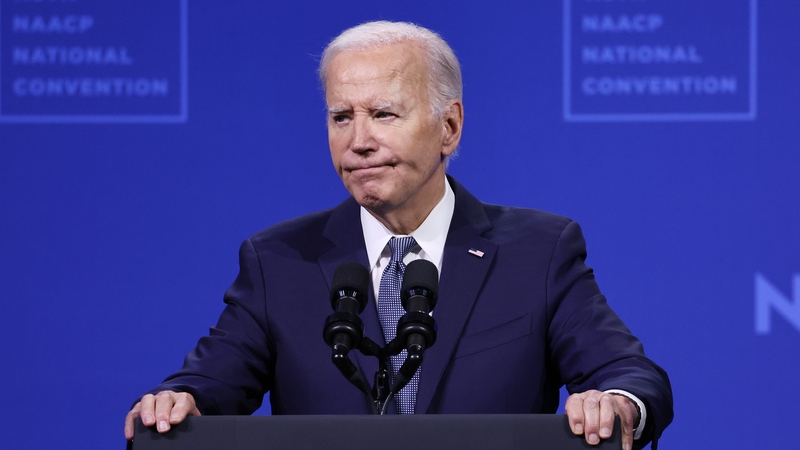

Joe Biden's withdrawal from the presidential contest was sudden, but not unexpected.
For more than three weeks he had endured a campaign from within the Democratic Party whose senior leaders had become increasingly concerned that Biden could not win the November election against Donald Trump, and that his continued presence on the ballot would damage Democrats standing for Congress, governorships and state house elections.
Now the Democratic party is scrambling to agree on a new presidential ticket just four weeks from its own nominating convention.
It's the latest chapter in a presidential campaign that is wild and getting wilder.
The Primary elections were effectively all over by the end of January. Trump, the Republican candidate, was convicted in a criminal trial and fined half a billion dollars in two civil cases, one of them for sexual assault.
Then he survived an assassination attempt. Now a sitting president has been forced to relinquish the nomination by his own party colleagues, worried about his cognitive decline and ability to carry on doing the toughest job in the world for another four years. What's next?
Vice President Kamala Harris has been endorsed by President Biden and many - but not all - senior Democrat political leaders.
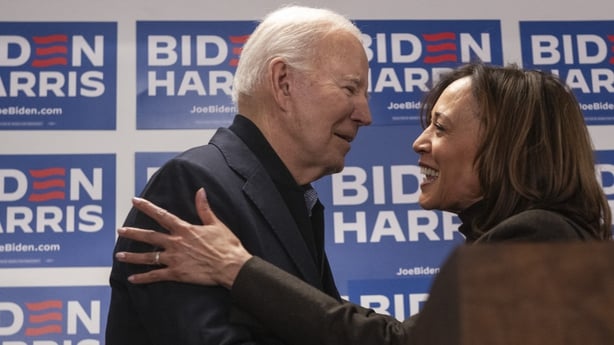
That undoubtedly puts her in pole position. But she is not a shoo-in.
While many in the Democratic Party want the presidential candidate picked before the convention next month, some want an open convention, in which several candidates would seek the nomination from the 4,000 plus delegates.
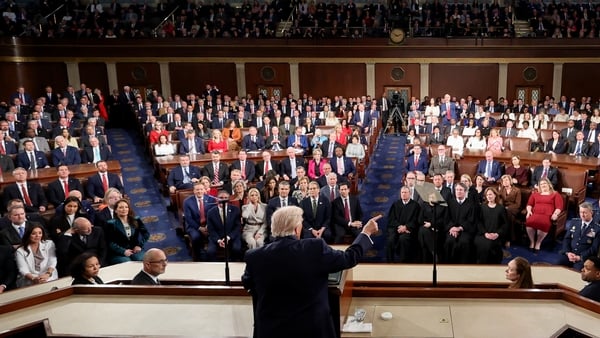
This has the potential to become a shambles, with nightly television showing a divided party scrapping with itself - the kind of inward-looking politicking that disgusts many ordinary Americans. It would certainly be the polar opposite of the slick, carefully staged display of unity the Republicans put on in Milwaukee last week.
That's why Harris and the top brass in the Democratic Party want to hold an early, online or virtual roll call vote of the delegations well before the 19 August start of the convention.
In their ideal world, Harris is locked down as the party nominee well before a single delegate gets to Chicago, allowing party bosses to craft their own message of party unity.
After all, the last time the Democrats held an open convention, it too was in Chicago in 1968, when the sitting president declined to run again. The convention was a fiasco, there were riots on the streets, and the eventual nominee - vice president Hubert Humphries - lost the election to Richard Nixon.
Yesterday, the vice president was reported to be hitting the phones hard, trying to line up as many congressional supporters as possible, and enjoyed significant success. But not everyone joined in, and one Texas representative openly called for an open convention.
All the Democratic Party state chairs have backed Harris, along with a number of the party’s more impressive governors - including a few who are frequently mentioned as potential vice presidential picks for Harris. One of the Democrats' two big power couples, the Clintons, also came out and endorsed Harris.
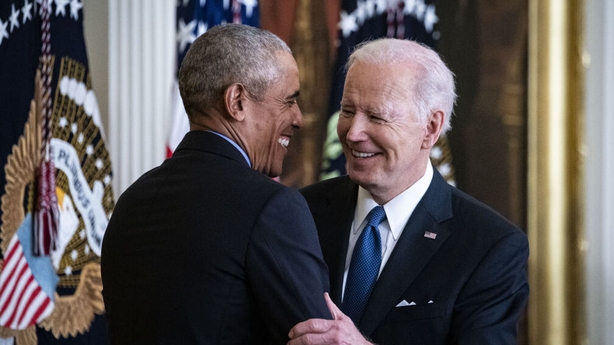
But the other big power couple, the Obamas, did not.
In a statement Barack Obama said: "We will be navigating uncharted waters in the days ahead, but I have extraordinary confidence that the leaders of our party will be able to create a process from which an outstanding nominee emerges."
Read More:
Joe Biden says 'best interest' for him to end White House bid
Biden's gruelling climb to the top of US political ladder
Which was interpreted as meaning Obama doesn't think much of Harris’s chances either.
On Fox News, former Republican speaker of the House Kevin McCarthy - who was himself ousted in an internal party coup last October - damned Obama with faint praise for his Machiavellian abilities:
"He's actually the smartest one in the room in the Democratic Party right now. Because he was, he was pulling the levers behind the scenes pushing this. Remember, he dumped Joe Biden when Joe Biden was his own vice president, but what he has done here is helped push Joe Biden out.
"He had (David) Axelrod come out a year ago, just knifing Joe Biden the entire time telling him he was going to lose, he started pushing members to come out against him. And now he's smart enough to take a pause, not to just jump where you go to Kamala Harris because he knows that could even be worse.
"For the ticket overall. Take a deep breath and wake up the next day. And let's think about what we're going to do. And Obama's the only one smart enough to say take a deep breath and pause for a second."
McCarthy also encouraged someone - anyone - to mount a legal challenge to the Biden-Harris campaign using its campaign funds to support the Harris presidential bid.
He argued the money was given to Biden by donors, not Harris, and ought to be returned to donors - or given to a so-called Super PAC (Political Action Committee) a support organisation separate from a candidate's official campaign that can raise and spend much more money than candidates' official campaigns are allowed to.
Even moving the money to a Super PAC would do damage, as official campaigns can buy TV airtime at a significant discount to PACs, so Harris would end up with less bang for her supporter's buck.
The idea of a legal challenge has obviously been war-gamed by Republican strategists as something to tie the Democrats up in.
Yesterday morning, well before the Biden announcement, the current Speaker of the House, Mike Johnson, told ABC News: "Well, these elections are handled at the state level. Every state has its own system. And in some of these, it's not possible to simply just switch out a candidate who has been chosen through the democratic, small D, democratic process over such a long period of time.
"Fourteen million Democrats voted to make Joe Biden the nominee. So, it would be wrong, and I think unlawful in accordance with some of these states' rules for a handful of people to go in a backroom and switch it out because they don't like the candidate any longer.
"That's not how this is supposed to work. So, I think they would run into some legal impediments in at least a few of these jurisdictions. And I think there'll be a compelling case to be made that that shouldn't happen. And so, I think they've got legal trouble if that's there you know, that's their intention and that's their plan."
So don't be surprised if there is a legal case or two in the coming weeks, challenging Harris and the Harris for President Campaign - which is already the new name for the Biden-Harris 2024 Campaign.
Assuming it is Harris. Assuming that she can lock down the nomination quickly and get the party to rally behind her.
She can certainly capitalise on the wave of relief among many Democrat supporters that Biden is no longer in the race and there has been a rebound in morale and energy levels among campaigners. But if Harris cracks under pressure before the convention, that enthusiasm may not last.
But an alternative view is that Obama is being cautious - he doesn't want to give the impression that the party big-wigs have cooked up a deal behind closed doors, and that Harris faces a coronation.
The same caution may lie behind House minority leader Hakeem Jeffries and Senate Majority leader Chuck Schumer - effectively the leaders of the Democrats "Parliamentary Party", also declining to endorse Harris.
Nor has Nancy Pelosi, the former speaker who continues to have her finger on the pulse of virtually every member of the House of Representatives.
All of them were involved in trying to persuade Biden to think again about pressing on with the campaign after his shockingly poor performance in the Presidential debate on 27 June.
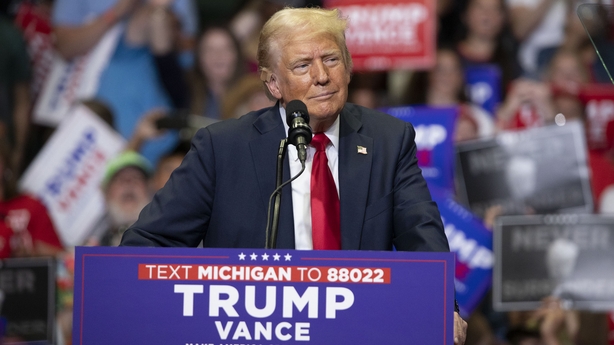
Expect too to hear more from Donald Trump focusing an attack on Kamala Harris.
He has done an interview with Fox News, bits of which have been aired before a full outing tonight. He is interviewed alongside JD Vance, who on Wednesday was challenged to a vice-presidential debate by Kamala Harris, but now does not know who he will face.
Nor too does Donald Trump know for sure who he will face at the next debate in September.
For now, the prime contender to fill that slot is two decades younger than Trump. The Democrat narrative is that as a former Attorney General of California, the election will be the Prosecutor v the Convicted Felon.
Her running mate is likely to be an experienced politician, possibly a Democratic Governor from a usually Republican voting state - someone who knows how to win over Republicans and independents with centre ground policies and governmental competence: Vance lacks both, and though bright and articulate could be exposed on detail.
Of 11 national polls taken since the 27 June Presidential debate and which offer Harris as an alternative presidential candidate, Harris leads Trump in just two polls, Trump leads Harris in nine - but ten of the 11 polls are within the margin of error. Only one poll, by British firm YouGov for the Economist Magazine, shows Trump with a five-point lead.
That may be close, but presidencies have not won on a national poll - they have won over 50 separate state elections, and in effect are decided by a handful of battleground states.
And in those states, Republicans insist their polls show Trump wins over Harris.
A more useful test will come when the Democrats have an actual candidate in the field.
But time is not on their side.