
The basics of this local election are in many ways simple.
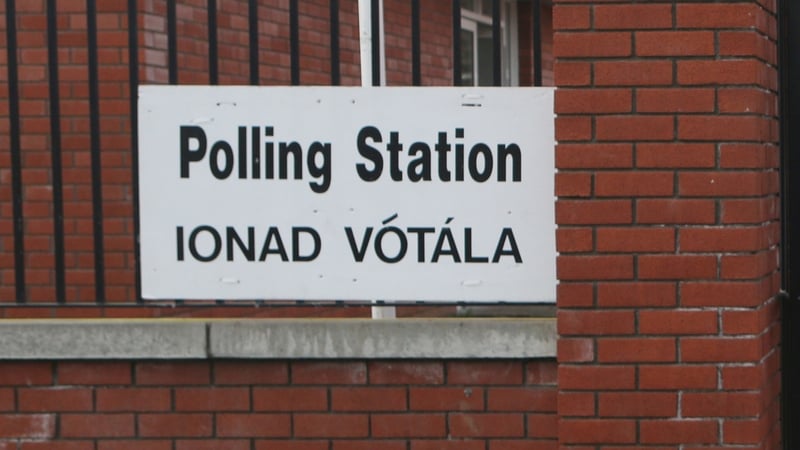
On 7 June people will vote to elect 949 councillors across 31 local authorities.
The political atmosphere pulsing through this election is less straightforward though.
Unquestionably the big issues are immigration, housing and investment in local communities.
But just how decisive will these factors be when people cast their vote in less than three weeks?
On Thursday, the party that won most of council seats in 2019 launched its local election campaign and confirmed that it will run 365 candidates.
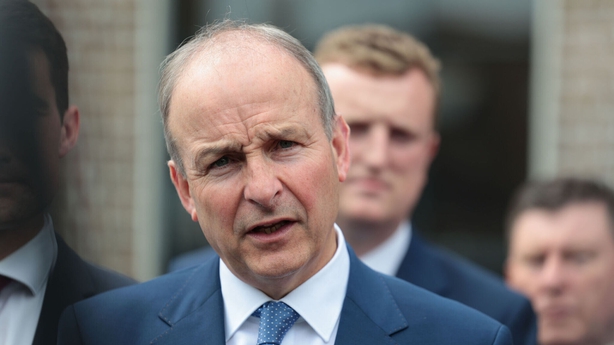
Finna Fáil leader Micheál Martin said his party's priorities are to increase housing, improve the quality of community life and to address environmental challenges.
He also said that "levels of migration" and the impact on communities are a concern for many people.
Indeed, many candidates from the government parties privately concede that it is the biggest issue on the doorsteps, and it may have the greatest bearing on the results.
Five years ago, Fianna Fáil won 26.9% of the first preference vote and 279 seats.
Consistent polling trends suggest that the party will fall short of those numbers this time.
It's a similar story for Fine Gael who won just over 25% of the vote in 2019, which resulted in the election of 255 councillors.
Again, the opinion poll data indicates that a repeat of those figures is unlikely.
However, the most recent Irish Times/Ipsos B&A poll suggests the party has found that most precious of political commodities, momentum.
Fine Gael has selected 339 candidates.
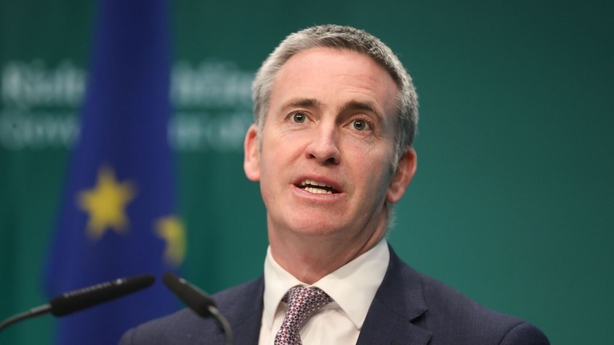
The party's director of local elections, Damien English, said migration was the issue that all most every voter wanted to talk about.
This is followed by housing, but he found the conversation on this issue is less heated than in it was five years ago.
The speed at which traffic is travelling through built up areas and the condition of rural roads also feature prominently in the campaign.
Five years ago, Sinn Féin won 9.5% of the vote and 81 council seats.
Interestingly, some sitting Sinn Féin councillors who lost their seats that day were elected to the Dáil just a few months later.
That fact illustrates that local elections do not always serve as a reliable forecaster of what will unfold in a general election.
Despite a dip in the party's support in some recent opinion polls, Sinn Féin is on course to make major gains in this election where it is running 335 candidates.
Those candidates say that housing remains the biggest issue for voters.
The other major talking points on the campaign trail are the cost of living and local services.
The party insists that immigration is "fairly far down" the agenda.
The Green Party won 49 seats on 5.6% of the vote in 2019 and it now wants to elect a candidate in every county for the first time.
It seems an ambitious target given some of the anti-green sentiment that has featured in this local election campaign.
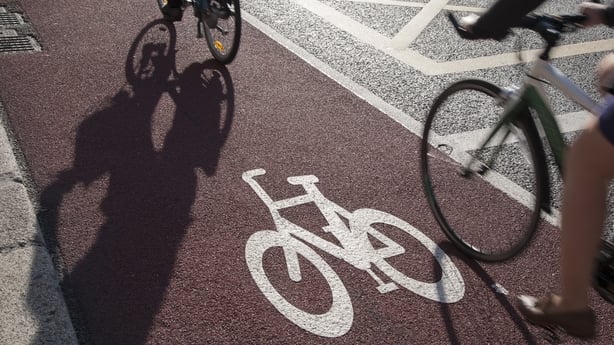
This have been sparked by the traffic disruption caused by the building of cycle lanes in cities coupled with rural fears about the future of farming.
The Greens top three priorities are: Restoring nature, better transport through more bus routes, cycle lanes and safer roads, along with ending dereliction to bring life back to town centres.
The party has selected 129 candidates.
In 2019, there were 57 Labour councillors elected on 5.7% of the vote.
As with every election since Labour's last time in government, this is a key test of its health, amid a prevailing feeling that its future could be in the balance.
Its ambition is not in question though and it is fielding 109 candidates.
The field will be helped by the fact that many of its sitting councillors are running again. It has been verified statistically that incumbency gives candidates an advantage.
The party's campaign is focusing on housing, tackling vacancy and dereliction, addressing community infrastructure such as roads, paths and cycle lanes, improving parks, pitches and local amenities.
Five years ago, the Social Democrats was a relatively new party when it won 19 council seats on just over 2% of the vote.
It has deeper political roots and a new high-profile leader in Holly Cairns this time around. The party, which is running 77 candidates, is expected to gain seats across the country.
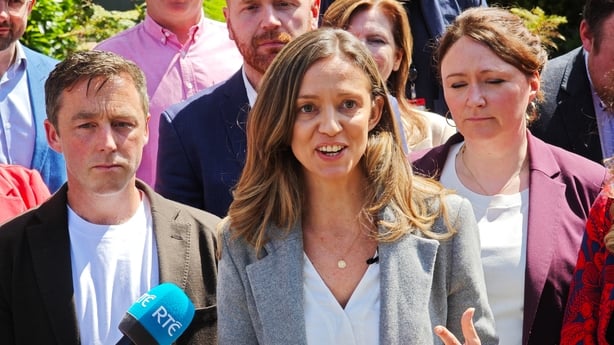
Its priorities include housing, childcare, local services and amenities.
People Before Profit-Solidarity returned 11 councillors on a little under 2% of the vote in 2019 and it has selected 52 candidate to contest this election.
People Before Profit TD Richard Boyd Barrett said the campaign is focused on delivering more social and affordable housing and this includes a greater use of compulsory purchase orders for derelict and vacant sites.
The is also a push to improve community amenities and sport facilities along with "ending Fianna Fáil and Fine Gael's control of councils."
Aontú won three council seats in 2019 just a few months after its was formed.
It is running 66 candidates and will be boosted by some strong polling data in recent months.
Party leader Peadar Tóibín said Aontú wants more accountability, proper balanced regional development and investment, along with the delivery of key public infrastructure, especially housing.
Local elections have always been a fertile ground for independent candidates who won around 20% of the first preference vote in 2019.
This time a party founded by two independent TDs is putting itself before the voters for the first time.
Independent Ireland is running 63 candidates.
Roscommon-Galway TD Michael Fitzmaurice, who joined the party in February, said the biggest talking point on the ground is housing, "particularly working people who cannot buy a house."
He believes that immigration is an issue, "but people are not anti-immigrant, it is just a concern about services and a failure of government policy."
Mr Fitzmaurice feels too that farmers are angry over the "green agenda" and they feel that "they are being punished for producing food."
Another new party is Rabharta, which describes itself as eco-socialist.
The party is running six candidates, and it is focused on housing, health and access to services.
Right to Change has selected two candidates and its founder, TD Joan Collins, said the campaign is concentrating on housing, health services and the climate issue.
While the precise offering from each party may vary considerably, this election campaign has thrown up a worryingly consistent theme.
That is the widespread intimidation of candidates.
At the lower end of the scale, there are a growing number of signs on doors with less than welcoming greetings for canvassers.
In this climate, some candidates are finding it difficult to get large numbers of supporters to accompany them on the increasingly fractious campaign trail.
Against this backdrop these elections are about more than choosing councillors.
Indeed, the remainder of the campaign and the results will tell a great deal about the health of the political system itself.