
A survey this week by the Medical Council has found that almost nine out of 10 people trust their doctor to tell the truth, but it also revealed some areas of concern - including that 25% of people have not seen a GP in the last year.
The Medical Council is an important statutory body, which has the responsibility of protecting the public interest, by ensuring high standards of conduct and competence among doctors.
As an ultimate penalty, it can recommend that a doctor be struck off the medical register.
All practicing medical practitioners here must be registered with the council and it also holds fitness to practice inquiries into doctors.
Before Covid-19, these were mostly held in public but now most are held remotely or online, via a dedicated platform - an issue that is also causing concern in some quarters.
High public trust
This week the Medical Council issued an updated ethical guide for doctors, plus a survey of over 1,000 people.
The findings were very interesting.
Despite a range of medical controversies in recent years - CervicalCheck, high profile failures in care and settlements in the courts, the recent issues over spinal surgery at Temple Street - doctors continue to be held in very high esteem by the public.
The council survey found that 89% of people trust their doctor to tell the truth. It ranks the medical profession as the second most trusted profession, second only to teachers.
I have looked at this issue before and it appears to be the case that on a personal basis most people have great faith in their own GP or consultant.
Sometimes when it comes to talking about doctors as a group, then opinions can vary depending on the issue under discussion.

Fewer GP visits
Patient campaigners have raised concerns about another finding in the survey, namely that one in four people have not visited their GP in the past year.
Some of this may be a hangover from Covid-19 precautions and practices.
Cost must also be a factor with patients often paying €60-80 for a consultation lasting 15-20 minutes.
Some GPs have retired, closed their lists to new patients due to workload pressures and patients report sometimes that it can take days to get a routine appointment.
The recruitment and retention of doctors is also having an impact in some parts of the country.
The landscape has changed in terms of quick access to some GPs, although urgent matters should always be seen on a same day basis.
Where this is not possible, it may result in patients going to emergency departments for care.
Rise in telemedicine
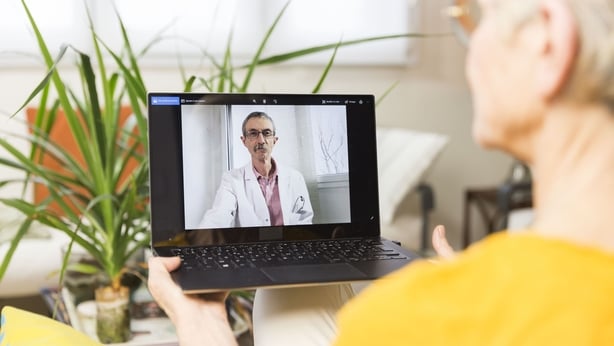
Covid-19 also fuelled the rise in telemedicine. The survey shows that 24% of patients now use these services.
Telemedicine usage is highest among 35-49 year olds and those residing in Dublin.
Patients say that when they have something quite obvious - such as a bad cold or flu - or when they need a repeat prescription or a minor change to a prescription, a telemedicine consultation makes more practical time-saving sense.
Also turning up in a packed medical practice with an infection is not ideal.
Private health insurers have been promoting online consultations for some time.
The new ethical guide for doctors provides advice on the use of telephones, websites, apps and software platforms to support telemedicine.
It tells doctors that if they provide telemedicine services to patients, they must observe the same standards of conduct and practice as would be expected if treating the patient in person.
Open disclosure of mistakes
Earlier this year, the Patient Safety (Notifiable Incidents and Open Disclosure) Act 2023 came into force.
It is a hugely important change in the law placing legal obligations on doctors.
The Medical Council guide has been updated noting that healthcare is complex, and sometimes things go wrong, which may result in harm to patients.
It says that open disclosure is an honest, open, compassionate, consistent and timely approach to communicating with patients, and, where appropriate, their family, carers and/or supporters, following patient safety incidents.
"It includes acknowledging what has happened, expressing regret for what has happened, keeping the patient informed and providing reassurance in relation to on-going care and treatment, how lessons will be learned from what happened, and the steps being taken by the health services provider to try and prevent a recurrence of the event," the guide says.
Public inquiries
One of the core functions of the Medical Council as a regulator is considering complaints against doctors.
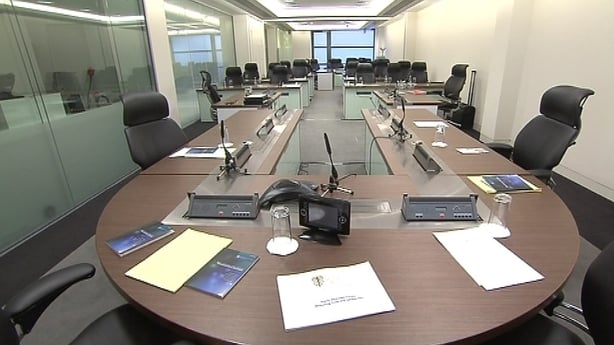
Changes in law under the Medical Practitioners Act 2007 paved the way for Fitness to Practise (FTP) inquiries to be held in public, allowing the public and the media to attend in person.
In 2021, the Council received 232 new complaints about doctors.
The impact of Covid-19 and social distancing meant that with the arrival of the pandemic, fitness to practise hearings were moved to remote/online proceedings.
In 2019, 14 inquiries were held in public with in-person proceedings, and 20 were held in private.
In 2021, 12 were held in public online and 13 were in private.
The reasons why an inquiry is held in private can vary and may be due to the doctors' health, respect for the privacy of the complainant and also the nature of the complaint.
Even during some public inquiries, witnesses or other participants' names may be anonymised.
Also some inquiries are part public, part private.
Call for full public in-person hearings
Now that the Covid-19 public health emergency has passed for some time, the Irish Patients Association has said it wants to see the council resume full public in-person hearings in the public interest.
Stephen McMahon of the IPA said that a complainant or family awaiting a FTP inquiry may have endured years of waiting and emotional stress.
"The hurdle to hold a FTP inquiry is high," he said.
"A public in-person inquiry is the least they deserve."
He said that in-person inquiries enable better communication and understanding through live face-to-face interactions, including non-verbal cues like body language and expressions.
Mr McMahon added that in-person inquiries offer advantages over virtual ones, allowing for efficient document review and immediate access to specific pages.
He said that virtual hearings mainly offer cost benefits, but lack the personal touch of a complainant or others seeking clarifications on contemporary evidence from a council liaison or advocate at an in-person hearing.
Public hearings allow patients and families of patients to attend a hearing into a doctor in person.
While the media are currently allowed access to remote hearings online, this system can pose challenges - especially for TV news reporting.
With public hearings, there is the arrival of the doctor who is before the inquiry, the patient and family in many cases, the lawyers for both sides and the expert witnesses.
These people may be filmed to assist with a TV news report allowing the wider public to see who the participants are, similar to court cases.
But with online proceedings, this type of coverage is not effectively possible for TV news.
The proceedings of a Medical Council inquiry cannot be recorded and this has always been the case.
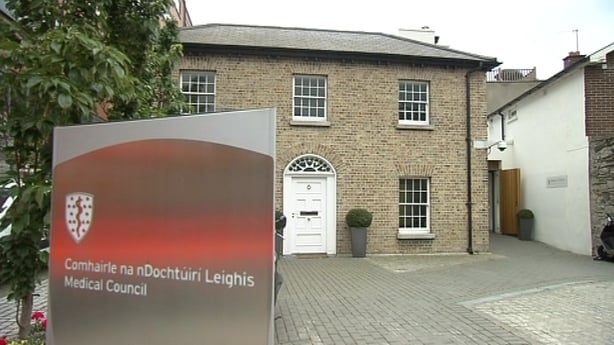
In a statement to RTÉ News on this issue, the council said that the holding of remote hearings is in accordance with the provisions of the Civil Law and Criminal Law (Miscellaneous Provisions) Act 2020, under which the council is a designated body.
It said that remote inquiries provide the council with greater scheduling capacity and flexibility and assists the Fitness to Practise Committee to complete inquiries in a timely manner.
"Other benefits to conducting inquiries remotely are that they are generally more accessible to patients' families, patients, doctors, and expert witnesses – in particular, those travelling from outside of Dublin, who do not have to travel to Dublin for one day or multiple days to provide expert opinion," the council said.
"In addition, at times inquiries can go on for longer than anticipated, and it has proven more manageable for doctors, patients, and those involved in giving evidence to join an inquiry remotely, rather than having to schedule additional time off work and away from family, etc."
The Medical Council said that as hearings are being held remotely, the inquiry details are emailed (where the particular inquiry is being heard in public and where such details have been requested by a member of the public/media) once the inquiry begins and where the members of the public/media are present at the inquiry.
It is the current position of the council that inquiries will continue to be held remotely and in-person when the need arises.
It said that as with all processes, this will be kept under review.
For those who are interested, the full new Medical Council Guide to Professional Conduct & Ethics can be viewed on the Medical Council website.