
How does a Government investigate a controversy without costing millions of euro and taking years to get answers?
That is the question now facing Minister for Justice Helen McEntee. It follows publication of the final report into a long-running investigation into Denis O'Brien's controversial purchase of business services company Siteserv in 2012.
The deal was controversial because it involved a State-owned bank, IBRC, writing off €118m of debt which was effectively money belonging to taxpayers.
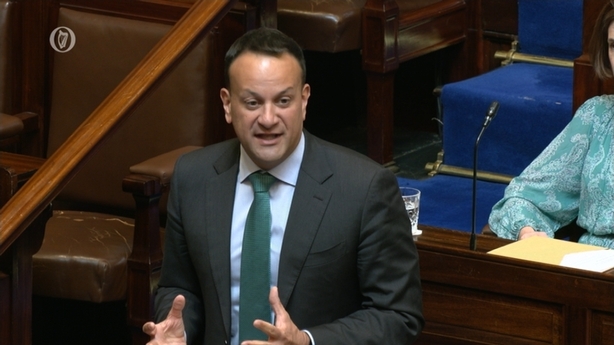
This week Taoiseach Leo Varadkar acknowledged that the process of holding investigations simply isn't working.
He said they took years, cost millions of euro and those who were insistent in calling for investigation were frequently unimpressed by the findings.
Judge Brian Cregan, who led the probe into Denis O'Brien's deal, said the current system makes it "impossible to conduct a commission of investigation in the modern era (involving, as most do, hundreds of thousands of documents) into a matter of public importance in an expeditious manner whilst complying with onerous requirements of fair procedures laid down by the courts."
This is a "highly undesirable state of affairs" and "frustrates the rights of people to investigate matters of urgent public importance," he said.
One of the issues he encountered was the Haughey judgment, a 1971 court case involving Jock Haughey, the brother of the late Taoiseach Charles Haughey.
Allegations were put to Jock Haughey in an Oireachtas Committee regarding arms importation.
He was not allowed legal representation to rebut the claims.
The courts subsequently found he should have counsel for his own defence and be allowed to see all of the evidence involved.
The judgment had significant implications for the commissions of investigations process.
In the probe into Denis O'Brien’s Siteserv deal, it meant that relevant parties had to receive 15,000 pages of documents which they had to review and assimilate before they gave witness statements.

Judge Cregan said: "Unsurprisingly, the process of taking evidence from witnesses...became very laborious indeed and contributed to the 250 days it took for the commission to hear evidence from all relevant witnesses."
In the Dáil this week the Taoiseach Leo Varadkar suggested business transactions could be investigated by the new Corporate Enforcement Authority which he established last year.
That may work with some investigations of commercial matters, but when the Government needs to inquire into other areas such as health or education it will have to rely on another form of examination.
At any one time there can be multiple processes under way, some are commissions of investigation while others are statutory inquiries.
The commission of investigation process was set up in 2002 by then Justice Minister Michael McDowell after the tribunals were seen to be lengthy and enormously expensive.
Instead of holding hearings in public, commissions work in private to deliver a speedier conclusion.
But the issues encountered by the investigation into Denis O'Brien's deal meant that the commission, which was meant to take one year to conclude, took seven years.
It also cost €19m according to Leo Varadkar.
That is a sizeable sum, not least because it amounts to 16% of the €118m IBRC debt write-off.
In his report this week Judge Cregan said there should be a permanent commission of investigation established with legal and IT resources.
Former Justice Minister Charlie Flanagan agrees there needs to be a permanent commission to operate consistently, with expertise built up into how to conduct probes, instead of starting from scratch each time.
Judge Cregan said: "Previous commissions have now had many years of experience of the difficult intricate task of conducting a commission of investigation ... All of this knowledge and expertise, which has been paid for at considerable expense by the State and by the Irish taxpayer is effectively lost as each commission finishes its work."
Other political sources express private reservations about a permanent commission of investigation being too powerful.
Not all commissions of investigation have been problematic.
Some have worked more efficiently than others, such as Judge Yvonne Murphy’s inquiry into abuse in the Dublin Archdiocese in 2009.
But the investigation into the Siteserv deal also ran into problems because it could not verify anonymous information given to some TDs.
Some of this dubious information also framed the commission’s terms of reference.
In many cases these allegations were "not true or were not true in substance, although some may have been partially factually accurate," Judge Cregan said.
Judge Cregan said terms of reference for future investigations should be founded on "fact".
These remarks regarding anonymous information given to TDs relate to allegations made by Social Democrats TD Catherine Murphy in the Dáil in 2015.
She raised serious concerns about the decision by state-owned IBRC bank to sell Siteserv to Denis O’Brien.
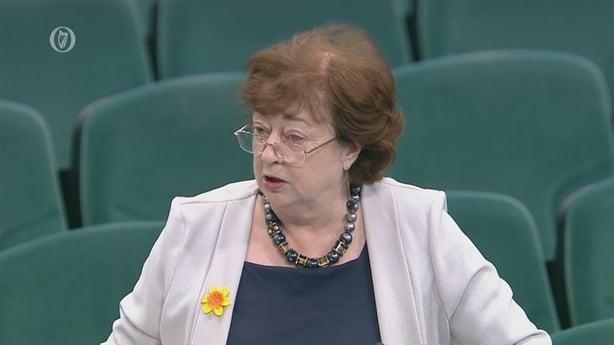
In a statement this week Denis O’Brien said her "abuse of Dáil privilege to make totally false and malicious allegations has cost the State, private companies and individuals in excess of €50m."
He said he was "completely exonerated" of "any impropriety or wrongdoing."
But Catherine Murphy defended her actions, saying Judge Cregan found that the Sitserv deal was "tainted by impropriety" from the perspective of the bank.
Charlie Flanagan says there is a need for politicians to exercise care in their use of parliamentary privilege.
But he adds: "Every Dáil term throws up a call for an investigation from the Opposition."
Aontú TD Peadar Tóibín, who was Sinn Féin’s enterprise spokesman in 2015, says the main concern about the Siteserv deal was that it gave rise to questions about "close relations between Government and the organs of the State."
In recent decades, calling in a legal expert to investigate a matter of controversy is a trusted mechanism to defuse the issue. But now that formula for solving political dilemmas is open to question.
The Government faces some tough choices in the wake of the judge’s report.