


US President Donald Trump has said that talks with Iran were ongoing, despite a report that Tehran had suspended indirect negotiations with the United States to end hostilities.
"Talks are continuing, at a rapid pace, with the Islamic Republic of Iran," Mr Trump said in a Truth Social post.
Iranian state news agency Tasnim reported earlier that Tehran was halting indirect negotiations with the US after Israel ordered troops to push deeper into Lebanon.
In telephone interviews with news outlets after that report, Mr Trump said he had not been told that Iran was suspending talks with Washington.
"They haven't informed us of that," Mr Trump said in an interview with NBC News.
Mr Trump said that silence between the two sides would be fine and he was willing to wait.
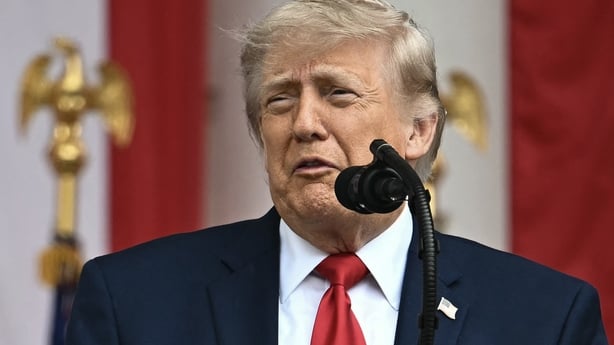
"I think we've been talking too much if you want to know the truth. I think going silent would be very good, and that could be for a long time," he told NBC.
A suspension in negotiations would not mean the US would start bombing Iran, Mr Trump told the network, adding that the US blockade of Iranian ports would remain in place.
In a separate interview with CNBC, Mr Trump had said he did not mind if the talks were over.
"I don't care if they’re over, honestly ... I couldn’t careless," CNBC quoted him as saying.
Shortly after those media interviews were reported, Mr Trump issued his social media post saying talks with Iran were continuing.
The reported halting of indirect talks by Tasnim poses a further obstacle to hopes of a swift end to the crisis, after Iran said it had attacked a US air base following weekend US strikes on Iranian military targets that put further strain on a fragile ceasefire.
Oil prices rose more than $5 a barrel after the Tasnim report.
Mr Trump had earlier reiterated on social media that he believed Tehran wants to reach a deal. But hopes of a breakthrough were tempered by comments by Iranian officials criticising the "constantly changing" US negotiating stance.
Iranian Foreign Minister Abbas Araqchi also raised Lebanon, where another ceasefire is in place, as a stumbling block.
"Violation on one front is a violation of the ceasefire on all fronts. The US and Israel are responsible for the consequences of any violation," he said on social media.
Fraying ceasefires
The war launched by the US and Israel on 28 February has killed thousands of people, mainly in Iran and Lebanon.
It has also caused global economic pain by pushing up energy prices since Iran effectively closed the Strait of Hormuz, a vital global supply route for oil and liquefied natural gas.
Iran and the US have sporadically traded blows despite their ceasefire, which has been in place since early April, while Pakistan has been trying to mediate a durable peace agreement.
The US military said it had at the weekend struck Iranian air defences, a ground control station and two drones that were threatening ships after "aggressive Iranian actions", including shooting down a US drone over international waters.
Iran's Islamic Revolutionary Guard Corps said it had targeted an air base used by the US in response to an attack on southern Iran.
It did not identify the base, but Kuwait activated air defences and denounced Iranian missile and drone attacks, which it said were undermining efforts to reduce tensions in the region.
US forces intercepted two Iranian ballistic missiles targeting American forces based in Kuwait late on Sunday, the US military said, adding that no American personnel were harmed.
Stop negative 'chirping'
In a late-night social media post yesterday, Mr Trump said Iran "really wants to make a deal".
He berated critics, including what he described as "seemingly unpatriotic Republicans", for negative "chirping" about the negotiations to end the conflict.
"Just sit back and relax, it will all work out well in the end - It always does!" he said.
But Iranian Foreign Ministry spokesperson Esmaeil Baghaei accused Washington of sending contradictory messages and said this would not work as a negotiating tactic.
"Negotiations have started amid severe suspicion and mistrust, and the exchange of messages is taking place in this atmosphere," Mr Baghaei said.
"The other party is constantly changing its views and putting forward new or contradictory demands...it is natural that this situation will prolong negotiations."
Mr Baghaei said Iran viewed Israeli actions in the region, including in Lebanon, as inseparable from those of the US.
Sides at odds on several issues
Mr Trump is under pressure to reopen the Strait of Hormuz and get US gas prices down before November congressional elections, as voters show increasing frustration over rising prices.
At the same time, he faces a potential backlash from Iran hawks in his own party over any concessions to Tehran.
Mr Trump has said his main aim in the war is to prevent Iran from developing a nuclear weapon with its highly enriched uranium. Tehran denies planning to develop a nuclear arsenal.
The sides are also at odds on other issues, such as Tehran's demands for the lifting of sanctions and the release of tens of billions of dollars of Iranian oil revenue frozen in foreign banks.
Iran also wants the US to lift a blockade of its ports, imposed after Tehran effectively blocked the Strait of Hormuz.
Read more:
Latest Middle East stories
Iranian state media reported that 15 vessels, including four oil tankers, had passed through the strait in the past 24 hours after obtaining permission and being coordinated and secured by the Revolutionary Guards Navy.
But shipping executives meeting in Athens said any peace deal would need to offer clear rules allowing vessels to resume normal business via the strait.
US plan for Israel and Lebanon
Israel's war in Lebanon with the Iranian-backed Hezbollah militia is another impediment to a deal.
Israeli Prime Minister Benjamin Netanyahu said he had ordered troops to move further into Lebanon in the battle against Hezbollah.
Mr Netanyahu ordered the military to attack targets in the Lebanese capital Beirut's southern suburbs, a Hezbollah stronghold. His office accused Hezbollah of repeated violations of a ceasefire agreed in late April.
US Secretary of State Marco Rubio spoke with both Lebanese President Joseph Aoun and Mr Netanyahu on the diplomatic negotiations between Israel and Lebanon and has proposed a plan to allow for "gradual de-escalation," a US official said.
