


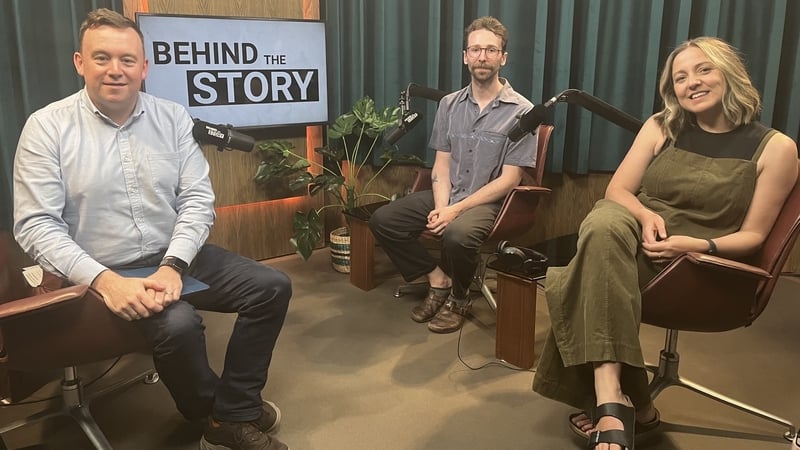
AI could influence the quality of information available to voters before elections, an expert has warned.
"People are more and more likely to go to chatbots for political information," Dr Eoghan Cunningham, a doctor in computer science, AI and machine learning and lead researcher at UCD, told the Behind the Story podcast.
Dr Cunningham led a study of AI chatbots in the weeks running up to the Galway West and Dublin Central byelections.
The study, entitled 'Auditing AI Chatbots During the Galway West and Dublin Central Byelections', looked at four AI chatbots: Anthropic’s Claude, OpenAI’s ChatGPT, Google’s Gemini, and X’s Grok.
Speaking on the podcast, Dr Cunningham explained that the study found that AI chatbots sometimes provided accurate information to voters on topics like when the election was being held and how people could vote.
However, it was less reliable in other areas, including explaining who the candidates were.
Listen to Behind the Story episode below:
We need your consent to load this rte-player contentWe use rte-player to manage extra content that can set cookies on your device and collect data about your activity. Please review their details and accept them to load the content.Manage Preferences
ChatGPT omitted at least six candidates from ballot listings, Dr Cunningham said.
Gemini reported that Independent Gerry Hutch won a seat in 2024.
Mr Hutch came fourth in first preferences but did not win a seat in Dáil Éireann. Dr Cunningham said Wikipedia was the top-cited source for most chatbots.
ChatGPT and Gemini never cited RTÉ, Gemini's top news source was Gript and Grok leaned heavily on social media.
Potential voters should think hard about using chatbots for voter advice and election information, he said.
One solution is AI regulation or making the sources of its output clearer to voters.
"One regulation or one change that you could make is to make the sources that you rely on and the search that's being performed a bit more transparent to users so they have some understanding of where the information is coming from," said Dr Cunningham.
The dilemma with AI is that it could influence the information feeding voters' decisions, he said.
Also speaking on the podcast, publisher of the Briefing.ie, a tech and democracy newsletter, Liz Carolan said: "I think this way that AI is ending up influencing just the broader quality of information is something that's really come on people's radars in the last few years."
Ms Carolan said the passing of the AI Act in Europe is moving in the right direction to tackle the issue, but it is moving slowly.
"We passed the AI Act in Europe last year and they've spent the year since watering it down," she said.
Changes to online political campaigning in the byelections were also highlighted by Ms Carolan.
She also said the impact of social media companies not taking election advertising also meant political parties ran campaigns virally, with successful campaigns focused on positive messaging.
"Meta and Google, who'd be the two biggest platforms like Facebook, YouTube, that Irish candidates would use, they decided to pull political ads from the Irish market and the European market altogether," said Ms Carolan.
She said there was "a scramble for virality" among political parties who had previously spent up to 30% of their "entire election budget on paid digital ads".
"It was so interesting to watch the parties suddenly try and sort of grapple with that … they were really leaning into this idea of virality … they had videos where it was like, 90s nostalgia … trying to trying to sort of tap into the way the internet works," she added.
Behind the Story also spoke to RTÉ Crime Correspondent Paul Reynolds about developments in the investigation into the disappearance and murder of the schoolboy Kyran Durnin after a woman in her 50s was arrested.
You can listen to Behind the Story on the RTÉ Radio Player.
You can also find episodes on Apple here, or on Spotify here.
