


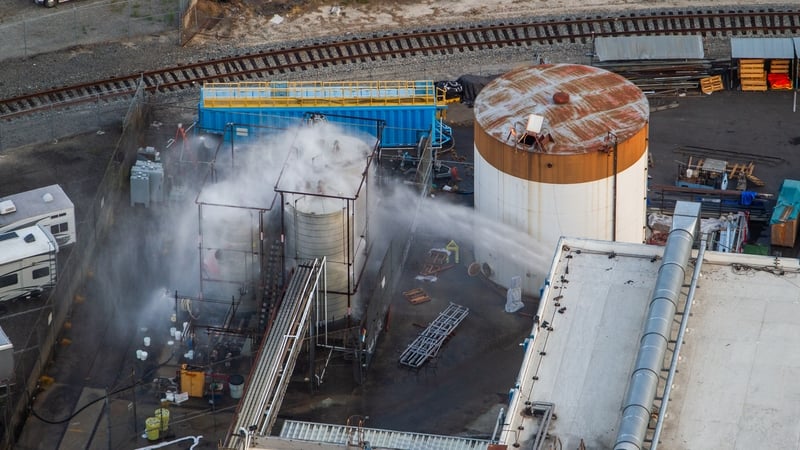
Authorities in California said they have discovered a crack in a damaged tank of toxic chemicals, potentially relieving pressure as the threat of an explosion has forced tens of thousands of residents to evacuate.
About 50,000 residents were ordered to leave their homes in the Garden Grove area of Orange County, southeast of Los Angeles on Friday, after the tank began to leak, sending fumes over a heavily populated area about 8km from Disneyland.
Federal regulators dispatched a team of experts to advise on possible outcomes, with Environmental Protection Agency (EPA) chief Lee Zeldin telling CNN yesterday that the "most catastrophic scenario" would be if one tank exploded and caused other tanks nearby to explode with it.
"That's the reason why you see such a big evacuation."
However, Mr Zeldin said "the most likely scenario is one of a low-volume release, where the local authorities are going to be able to monitor, neutralise and contain the threat."
Firefighters were working "to confirm that the pressure in the tank has been released" and that the threat of explosion is eliminated, TJ McGovern, interim fire chief for the Orange County Fire Authority, said in a video post on X.

On Saturday night, firefighters approached the tank to gather information and saw a "potential crack in the tank, which could potentially be relieving some of the pressure in there," Mr McGovern said.
"This operation that we did gave us positive intel to make educated decisions today in the positive light," he said, adding that experts are carefully studying the information collected.
"We're not there yet, but this was a step in a right direction."
There was no indication as to what caused the leak, which was initially reported on Thursday, and Mr McGovern did not comment on whether the crack was linked to the leak.
The tank contains 26,000 litres of methyl methacrylate, a volatile and flammable liquid used to make plastics.
California Governor Gavin Newsom declared a state of emergency for Orange County on Saturday.
The state's whole-of-government response in #GardenGrove includes real-time environmental monitoring, evacuations, traffic control, shelter operations, and community assistance as crews continue working to protect public safety. https://t.co/XTv6UNJ6jH
— Governor Newsom Press Office (@GovPressOffice) May 25, 2026
Firefighters had warned on Saturday that the tank was heating up, adding to fears of a catastrophic blast, and have been spraying water to cool the tank.
The tank is owned by GKN Aerospace, which operates 32 manufacturing locations in 12 countries - including China, India, Mexico, Turkey, Sweden and Germany - and has 16,000 employees, per its website.
The UK-headquartered company develops airplane technology and said in a statement yesterday that it is "working around the clock to mitigate the risk of a leak".
"We are acutely aware of the uncertainty this incident is causing and sincerely apologise for the ongoing disruption to the local community," the statement said.
As of yesterday, evacuees were still not allowed to return home, and more shelters were opened to accommodate them.
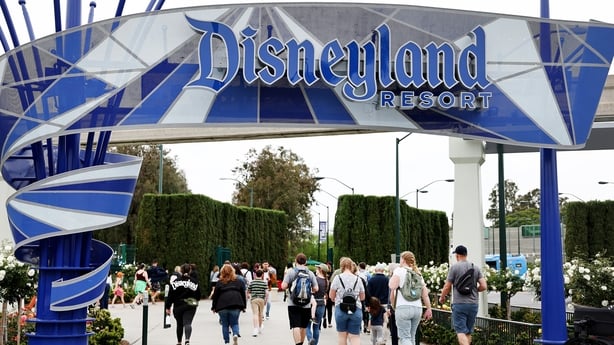
Disneyland officials said the "resort remains open to guests," and they were keeping a close tab on the matter.
The EPA says methyl methacrylate is irritating to the skin, eyes, and mucous membranes in humans. It can also cause respiratory and neurological reactions in cases of acute or prolonged exposure.
Responders were working to put containment barriers in place to prevent any spilled material from reaching storm drains or river channels that funnel into the ocean.
