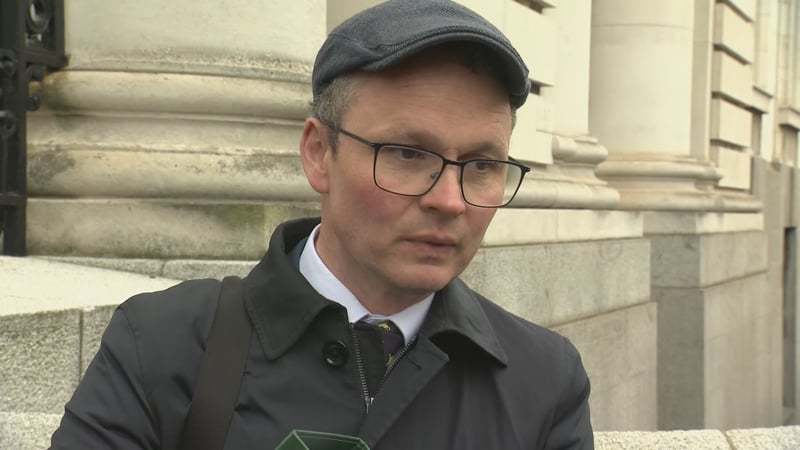

Minister for Communications Patrick O'Donovan complained to Ireland's media watchdog about a lack of balance in RTÉ's coverage of fuel protests after they happened in April.
The minister cited examples illustrating RTÉ's "lack of balance" ranging from guest selection on an RTÉ radio programme to the questioning of a junior minister on Prime Time.
In documents released to RTÉ News under the Freedom of Information, the minister cited what he saw as a string of examples of anti-Government bias during the fuel protests.
In the conversation the commissioner states the minister "cited examples of what he viewed as a lack of balance".
This included an RTÉ Radio 1 programme featuring "3 opposition spokespeople v 1 gov. representation", a reporter broadcasting from inside an "unauthorised portacabin" used by protesters and a Prime Time interview where protest figure James Geoghegan was treated "in a gentle way" while junior minister Timmy Dooley was "grilled".
And, "in general, the media only giving the side of the protestors in their news reports, and not the victims of the blockades".
The records are a rare glimpse behind the scenes of a serving Cabinet minister challenging the balance of RTÉ coverage and exploring whether the State's broadcasting regulator had any role in tackling that.
Minister O'Donovan contacted Coimisiún na Meán seeking advice on whether broadcasting laws contained a mechanism to examine the coverage.
According to a note by Rónán Ó Domhnaill Coimisinéir Forbartha na Meán, Mr O'Donovan talked to him by phone on Saturday, 11 April.
The phone call happened before the minister suggested that media coverage has been "lopsided" in favour of the fuel protest and that a "carte blanche was given to some people".
On 13 April, he said he would be asking Coimisiún na Meán to review the coverage from the national broadcaster, RTÉ and others.
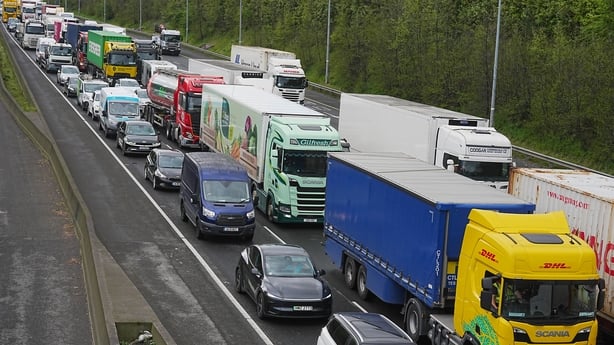
The note of the call between both men states that the minister expressed "concern regarding media coverage of the fuel protests" and asked "whether there was a mechanism for the minister within the legislation to ask for an examination of the broadcast coverage of the protests".
"The minister stressed that he was not speaking about editorial control but rather the need for coverage to be balanced, and that this needs to be addressed," the note reads.
During the call, he asked whether legislation gave him any route to seek an examination of the broadcasts in question.
Media commissioner Rónán Ó Domhnaill told the minister that Coimisiún na Meán's statutory complaints system was one mechanism available for complaints about broadcast content.
"The minister asked if Rónán would speak to the other commissioners seeking clarity about whether there was a mechanism in the legislation that allowed the minister to seek an examination about the broadcasts.
"Rónán said he would revert on Monday following discussions with other commissioners and mentioned that Coimisiún na Meán’s statutory complaints mechanism was one such mechanism for filing complaints," the note reads.
The documents show the minister's concerns were discussed days later by Coimisiún na Meán commissioners.
Commissioner Aoife MacEvilly informed Assistant Secretary Tríona Quill of Mr O'Donovan's request and both agreed that a meeting with the minister would be the appropriate next step.
Mr O'Donovan later told officials he had given interviews to Live95FM, Tipp FM and WLR FM.
Following discussions between commissioners and senior executives, Coimisiún na Meán's press office issued a response to media queries saying it was aware of the minister's concerns and outlining the statutory broadcasting complaints process.
The following day, Ms MacEvilly and Coimisiún na Meán executive chair Jeremy Godfrey met Mr O'Donovan, Ms Quill and other departmental officials.
Minister dropped call after watchdog explained broadcasting rules
Minister O'Donovan dropped his call for RTÉ coverage review the day Coimisiún na Meán explained broadcasting to him rules and fairness, objectivity and impartiality in news and current affairs.
Documents released to RTÉ from the minister's department show he sought a better understanding of media rules on governing fairness, objectivity and impartiality in news and current affairs from media watchdog officials.
The purpose of the meeting was, according to a note of the meeting, "to better understand their approach to the legislative framework for fairness, objectivity and impartiality in news and current affairs".
At the meeting, on 14 April, the minister met Jeremy Godfrey (Executive Chairperson, Coimisiún na Meán), Aoife MacEvilly (Commissioner, Coimisiún na Meán), Tríona Quill (Assistant Secretary, Department of Culture, Communications and Sport or DCCS), Michael O’Connor (Special Adviser, DCCS), Theresa Newman (Special Adviser, DCCS) and Adam Larragy (Principal Officer, DCCS).
In the official note of the meeting, released to RTÉ under the Freedom of Information Act, the minister "asked Coimisiún na Meán how best to guarantee that different voices are heard and fairness ensured, particularly at societal flashpoints".
In response to the minister's inquiry how balance is addressed in current affairs programming, Coimisiún na Meán indicated that "there is a requirement for a plurality of views in current affairs but there was not a strict requirement for 'equal time’".
The regulator also noted that the statutory standard for news is that it is objective and impartial and for current affairs is that it is fair to all interests.
Coimisiún na Meán also outlined details of the Broadcasting Act.
"Coimisiún na Meán set out they have developed codes under the Broadcasting Act including to provide for fairness, objectivity and impartiality, that the public may make complaints regarding breaches of codes (first to the broadcaster then to Coimisiún na Meán), and that Coimisiún na Meán also undertakes compliance monitoring.
"Coimisiún na Meán indicated that they take a risk-based approach to compliance monitoring focusing on areas with the highest risk of harm," the note from the meeting reads.
Coimisiún na Meán also said it had contacts from from the public about media coverage of the fuel protests and would follow up on any formal broadcasting complaints submitted.
Mr O'Donovan previously told RTÉ News he "made a hames" of expressing himself when saying he planned to "review" RTÉ’s coverage of the fuel price protests.
He said he has a "very good relationship" with the media regulator.