


Iran's foreign minister has met Pakistan's interior minister to discuss proposals to end the US-Israeli war, Iranian media reported, with Iran and the US still at odds over Tehran's uranium stockpile and controls on the Strait of Hormuz.
Two days after presenting the Iranians with the latest US message in the negotiations, Syed Mohsin Naqvi held another round of talks with Iranian Foreign Minister Abbas Araqchi in Tehran, the semi-official Tasnim and ISNA news agencies reported.
Mr Naqvi was facilitating communication to try and achieve a framework for ending the war and resolving differences, ISNA reported.
A senior Iranian source said yesterday that gaps had been narrowed, although uranium enrichment and the Strait of Hormuz remained among the sticking points.
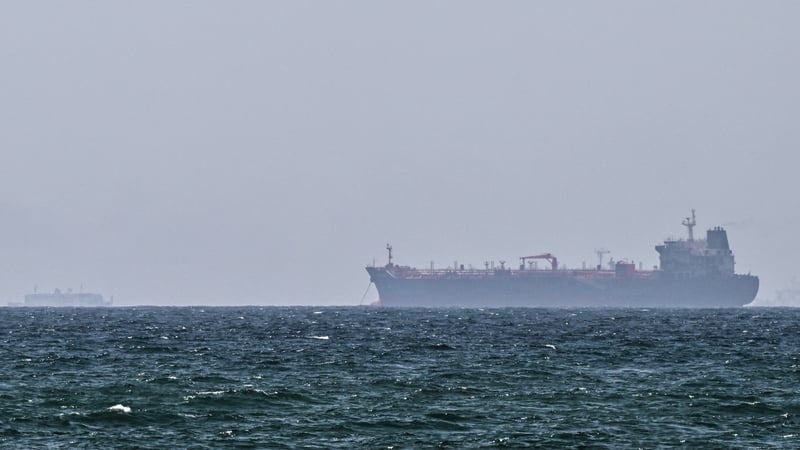
The war has wreaked havoc on the global economy, with the surge in oil prices stoking fears of rampant inflation. About a fifth of the world's oil and liquefied natural gas shipments travelled through the Strait of Hormuz before the war.
We need your consent to load this rte-player contentWe use rte-player to manage extra content that can set cookies on your device and collect data about your activity. Please review their details and accept them to load the content.Manage Preferences
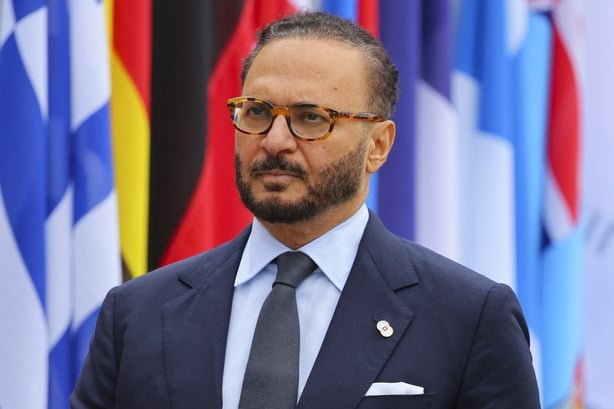
Meanwhile, a senior UAE official has said the US and Iran have just a "50-50" chance of reaching an agreement that would free up the Strait of Hormuz.
Presidential adviser Anwar Gargash urged Iran not to overplay its hand in the stop-start negotiations.
Iranian officials "have missed a lot of chances over the years because there's a tendency to overestimate their cards", Mr Gargash told the GLOBSEC Forum in Prague.
"I hope they don't do that this time."
The oil-rich UAE, which hosts US military facilities, was targeted by about 3,300 drones and missiles during 40 days of war from 28 February onwards, Mr Gargash said, with only around 4% getting through.
He said the Iran-blockaded Hormuz, which normally carries a fifth of global oil production, must go back to normal, and cautioned against an inconclusive ceasefire.
"Negotiations just to reach a ceasefire and sow the seeds for further conflict in the future is not what we're seeking," he said.
"And I think that the Strait of Hormuz clearly has to go back to the status quo and this should be an international waterway."
With US negotiators focusing on Iran's potential development of an atomic weapon, Mr Gargash said: "The Iranian nuclear program was our second or third worry, now it's our first worry."
"We see that Iran is capable of using any weapon that it has in its hands, which is what we learned," he added.
The US dollar was near its highest level in six weeks this morning amid the uncertainty over the peace talks, while oil prices climbed as investors doubted the prospects of a breakthrough.
US President Donald Trump has said the US would eventually recover Iran's stockpile of highly enriched uranium - which Washington believes is destined for a nuclear weapon though Iran says it is intended purely for peaceful purposes.
"We will get it. We don't need it, we don't want it. We'll probably destroy it after we get it, but we're not going to let them have it," Mr Trump told reporters at the White House.
Iranian Supreme Leader Ayatollah Mojtaba Khamenei issued a directive yesterday that the uranium should not be sent abroad.
The US president also railed against Iran's intentions to charge fees on ships using the strait.
"We want it open, we want it free. We don't want tolls," Mr Trump said. "It's an international waterway."
Mr Trump faces domestic pressure ahead of November midterm elections, with Americans angry over the surge in fuel prices and his approval rating near its lowest level since he returned to the White House last year.
Iran submitted its latest offer to the US earlier this week.
Iran's descriptions suggest it largely repeats terms Mr Trump previously rejected, including demands for control of the Strait of Hormuz, compensation for war damage, lifting of sanctions, release of frozen assets and the withdrawal of US troops.
Traffic through the strait has fallen to a trickle compared with 125 to 140 daily passages before the war.
Iran has said it aims to reopen the strait to friendly countries that abide by its terms that could potentially include fees.
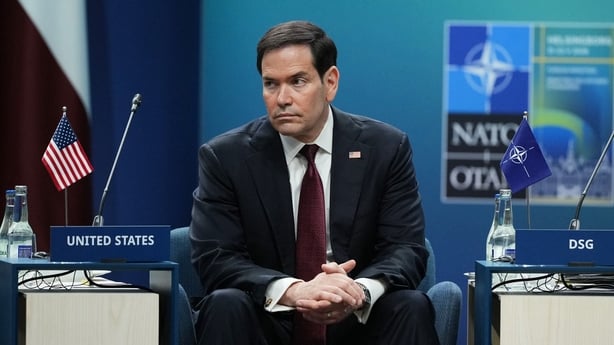
Meanwhile, US Secretary of State Marco Rubio said that troop shifts by Washington in Europe were not aimed at punishing allies for a lack of support over Iran.
"The United States continues to have global commitments that it needs to meet in terms of our force deployment, and that constantly requires us to reexamine where we put troops," he said.
"This is not a punitive thing, it's just something that's ongoing," Mr Rubio told reporters ahead of talks in Sweden with his NATO counterparts.
