


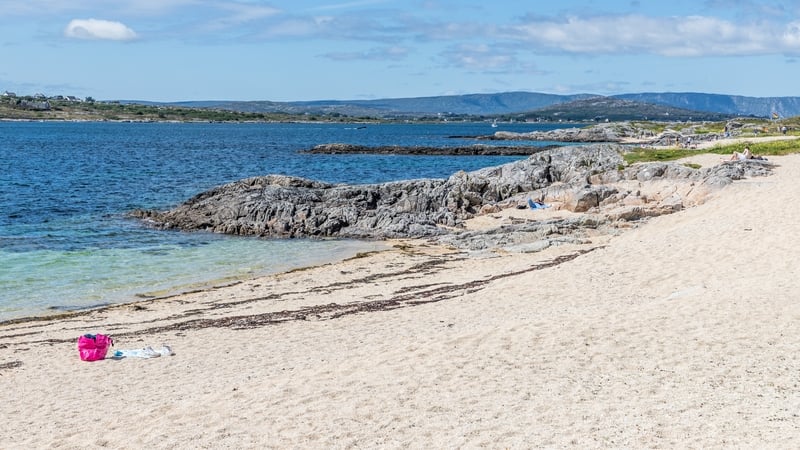
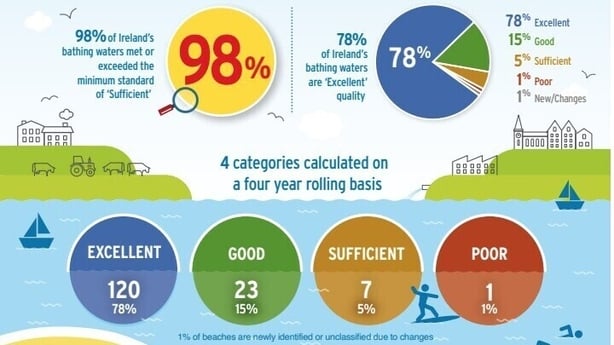
The quality of bathing water remained high across Ireland in 2025 despite increased heavy rainfall, with 98% of sites meeting or exceeding the minimum standard, according to a report from the Environmental Protection Agency.
A total of 150 of 153 bathing sites achieved a minimum standard, with 120 sites classified as having "excellent" water quality.
However, the figure is slightly down from last year, when 122 sites were recorded as excellent.
The EPA said high bathing water quality was maintained in 2025, despite increased pressure from "intense rainfall".
Only one site, Dún Laoghaire Baths, was found to have "poor' bathing water and the agency said this was caused by "wastewater, overflows and dog fouling".
It added that Dún Laoghaire-Rathdown County Council has produced a management plan to improve bathing water quality at the baths.
It was the first year Dún Laoghaire Baths were included for classification and the tidal pool in Béal an Mhuirthead in Co Mayo "requires at least one more season of sampling before classification can be assigned".
The EPA said there were improvements in bathing water quality at Lady’s Bay, Buncrana, Co Donegal and Sandymount Strand in Dublin following targeted actions by Uisce Éireann and the local authorities.
Last year, they were recorded as having "poor" bathing water quality and their classification was upgraded to "sufficient" in 2025.
In a statement, Director of the EPA’s Office of Evidence and Assessment Roni Hawe said: "We are pleased to report that bathing waters continued to achieve a high standard of quality nationally in 2025.
"However, the greater frequency of heavy rainfall events throughout the bathing season highlights an increased risk to people’s health when swimming after heavy rainfall.
"These conditions can result in short‑term pollution which must be effectively managed if current high standards are to be maintained into the future."
Ms Hawe added local authorities "need to strengthen their understanding of rainfall‑related pressures" and introduce "climate-resilient measures in place to protect bather health".
We need your consent to load this rte-player contentWe use rte-player to manage extra content that can set cookies on your device and collect data about your activity. Please review their details and accept them to load the content.Manage Preferences
