
The Irish Patients' Association has said the absence of a national electronic patient record system means thousands of patients have to legally request access to their own health records from many sources.
It comes as the State prepares to spend an estimated €2 billion on a long-delayed electronic health record system.
Figures obtained by RTÉ News show there were nearly 100,000 legal requests for information from the HSE over the last three years, and the majority were from patients looking for their own personal medical records.
People can access their HSE health records by writing to the public health service where they received their care, but patient groups said the number of requests shows that the health service is still heavily reliant on fragmented paper records - where patients find it hard to access their own treatment history.
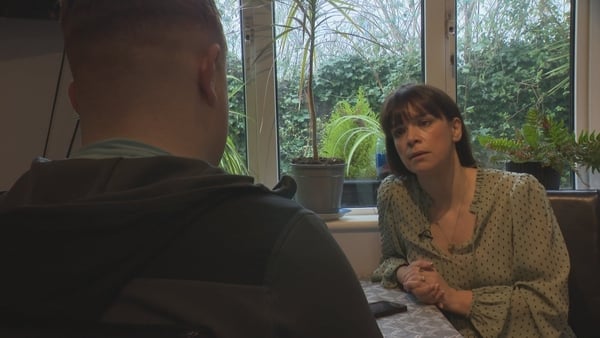
Shane Rodgers and his wife Claire O'Shea looked for answers from the health system after the stillbirth of their baby Noah, in 2020.
An inquest found a verdict of medical misadventure in their case.
Mr Rodgers said they spent nearly a year trying to access basic information through Freedom of Information requests.
He said: "This has had a huge impact on us emotionally, financially in terms of our relationship, when you are going through hundreds of pages and trying to figure out what happened and if things could have been done better and you're wondering why Noah passed away or the care that Claire got...
"It would be easier if it was all digitalised because you are going through hundreds of pages and you might just flick past one and miss something important."
Ms O'Shea said the process was very stressful: "It was like nearly another job when you got all the papers because you need to put them in order as well.
"It was more stress and hassle in an already stressful time and especially it was coming up to his first birthday and stuff and waiting and like all the emails and communication with the hospital and stuff and it took away from his first birthday as well."
Patient groups said Mr Rodgers and Ms O'Shea's experience is not unique.
Watch: Shane Rodgers and Claire O'Shea looked for answers from the health system after the stillbirth of their son Noah
The Irish Patients' Association said patients should not have to rely on legal processes to obtain or piece together their own medical information.
Co-founder Stephen McMahon said: "When someone dies or someone is injured or there is a question mark over care, they want to find out what happened. And they find it is not a compassionate way to go through the legal process to get access to those records and what we need now the electronic patient record to be brought forward and implemented, it's long, long overdue so that patients no matter where they are in Ireland or abroad can access their medical records."
At the moment in Ireland, hospitals work off a mostly paper-based or different electronic systems that do not link up.
This means that patients have to repeatedly give their medical history when attending different hospitals because records are not shared across services.
Watch: Electronic patient records 'long overdue' - IPA co-founder Stephen McMahon
This can cause a lot of difficulties for patients and medical staff.
Electronic medical records are being used in some hospitals, including six maternity hospitals.
But crucially, the systems are not connected, meaning the information cannot follow patients across the health system.
Earlier this year, Minister for Health Jennifer Carroll MacNeill approved the procurement of a national electronic health system known as One Health Record.
It aims to replace systems across hospitals with a single national patient records system.
The HSE said it is the largest digital transformation project in the history of the health service.
However, it could take years, and the cost could run to billions of euro.
"You or I wouldn't outsource our bank account for someone to manage so why would we outsource our health"
A former head of the HSE's Digital Transformation and Open Innovation, Martin Curley, who is now Director of the Digital Health Ecosystem at Maynooth University, said ultimately patients need to be able to easily access their medical records directly from their phones.
"We can either do what every other country did 15 years ago and implement old technology at great expense, or we can choose to leap forward.
"What we would like and what we would suggest is that we give everybody an electronic health record on their phone that they control.
"You or I wouldn't outsource our bank account for someone to manage so why would we outsource our health.
"Whether you go to your hospital or your GP or your pharmacy you control the information and this is what GDPR asks for as well."
Ireland ranks among the lowest countries in Europe for electronic access to health information.
The Government is under increasing pressure to modernise the system under new EU rules.
Under the EU's new European Health Data Space regulation, member states will be required to improve electronic access to patient records and enable safer sharing of health information across countries.
This framework has put pressure on Ireland to overhaul its digital health system.
France is one country in Europe where the implementation of electronic health records has been a success.
Watch: French healthcare and technology expert Florence Dupré discusses 'my health space'
France has a digital health platform where people can store their medical information securely, and patients can access their own information on their phones.
An expert in healthcare and technology in France, Florence Dupré, talks about the success of what's known as "my health space" in France.
She said: "In one place, which is called My Health Space, everything should flow, so information is getting there not everything for the moment it's a journey 'but it belongs to me Florence Dupré'. As a patient I have my space, I can go to it, I can have access to my children's space, until they are the age of 18 and that is how it works in France, it is a long journey that started a few years ago and it's progressing very well."
The HSE could not confirm the exact time frame for when a national electronic health system would be rolled out in Ireland.
It said the procurement process for the electronic records system is likely to extend to 2027.
The HSE said the programme will be the single largest ever investment in digital health infrastructure in Ireland.