


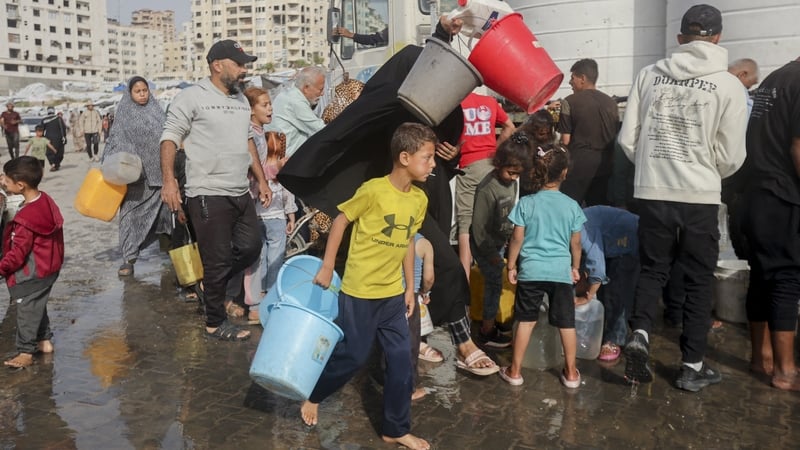
Israeli authorities are systematically depriving people in Gaza of the water they need to live, Médecins Sans Frontières (Doctors Without Borders) warned, decrying a campaign of "collective punishment" against Palestinians.
The extensive destruction of civilian water infrastructure in Gaza, coupled with obstruction of access, constitutes "an integral part of Israel's genocide", said the medical charity.
In a report entitled "Water as a Weapon", MSF said the "engineered scarcity" was occurring alongside "direct killing of civilians, the devastation of health facilities, (and) the destruction of homes".
Together, this amounted to "the deliberate infliction of destructive and inhumane conditions of life on the Palestinian population in Gaza", warned the report, based on testimonies and data MSF collected in 2024 and 2025.
We need your consent to load this rte-player contentWe use rte-player to manage extra content that can set cookies on your device and collect data about your activity. Please review their details and accept them to load the content.Manage Preferences
The Israeli authorities are using access to water as a "weapon to collectively punish Palestinians", said Emergency Manager with MSF Claire San Filippo.
"The Israeli authorities know that without water life ends, and in Gaza they have used access to water as a weapon to collectively punish Palestinians."
She added that this was happening alongside the "killing of civilians, the obliteration of the healthcare system, as well as the flattening of infrastructure, including homes and forced displacement of the population".
Despite an October ceasefire that largely halted the Gaza war that began after Hamas's 2023 attack on Israel, the territory remains gripped by daily violence as Israeli strikes continue and both the Israeli military and Hamas accuse each other of breaking the truce.
Speaking on RTÉ's News at One, Ms San Filippo said the denial of access to water creates destructive conditions of life, and this is an "integral part of the ongoing genocide in Gaza".
Nearly 90% of water and sanitation infrastructure damaged
The MSF report, which was slammed by Israel, pointed to data from the United Nations, European Union and World Bank indicating that Israel had destroyed or damaged nearly 90% of water and sanitation infrastructure in Gaza.
"Desalination plants, boreholes, pipelines and sewage systems have been rendered inoperable or inaccessible," it said.
The charity documented several incidents where its clearly identified water trucks and boreholes had been shot at or destroyed.
Asked if the lack of access to water was an inevitable consequence of bombing or something targeted, Ms San Filippo explained that there has been "definitely a systematic destruction in damaging of water infrastructure in Gaza".
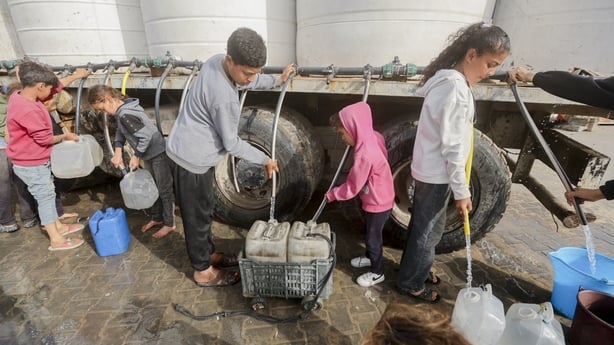
On top of the destruction, she said the Israeli authorities have consistently blocked essential water-related supplies from entering Gaza.
Ms San Filippo said they have put these issues to Israel repeatedly and have called on the Israeli authorities to restore water to people and to allow humanitarian access at scale, including allowing material that is related to water and sanitation.
The charity said that besides the local authorities, it was the largest producer and main distributor of drinking water in Gaza.
Last month, it provided more than 5.3 million litres of water each day, which meets the minimum needs of more than 407,000 people, or a fifth of Gaza's population.
However, throughout the war, "Israeli military displacement orders have locked our teams out of areas where we had provided water to hundreds of thousands of people," the MSF statement said.
MSF said a third of its requests to bring in critical water and sanitation supplies, including water desalination units, pumps, water tanks, insect repellent, chlorine and other chemicals to treat water, had "been rejected or left unanswered".
'Baseless claims'
COGAT, the Israeli defence ministry body in charge of Palestinian civilian affairs, harshly criticised "the baseless claims" presented in the report.
It maintained in a statement that "water supply in Gaza consistently exceeds humanitarian thresholds", insisting that "far from 'preventing' access, Israel facilitates and provides water from its own sources".
MSF's "operational delays" were a result of the organisation's "refusal to follow standard registration protocols and their history of employing individuals linked to terror", COGAT charged.
Contacted by AFP, MSF did not wish to react to Israel's accusations.
