


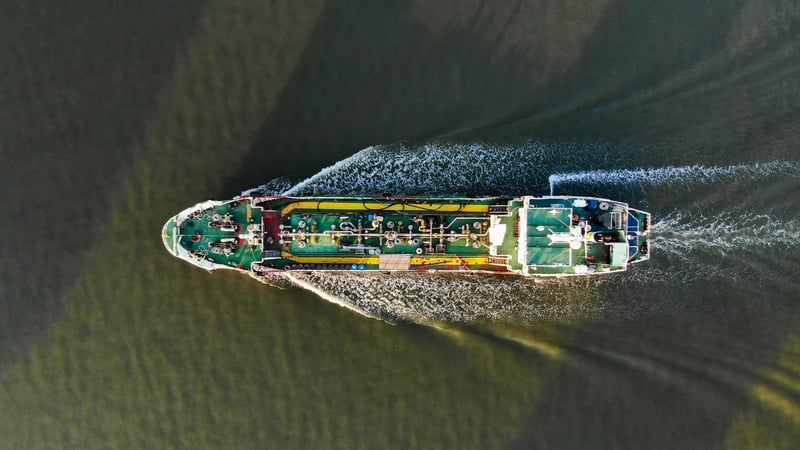
Shippers said they needed more clarity on the terms of the US-Iran ceasefire before resuming transit through the Strait of Hormuz, as Iran said the waterway remained closed to vessels sailing without a permit.
The six-week conflict had brought traffic through the strait - a chokepoint for about 20% of global oil and liquefied natural gas (LNG) shipments - close to a standstill, pushing global energy prices sharply higher.
Iran said it would offer safe passage in coordination with its armed forces, though its coastguards warned today that any ship attempting to sail without permission would be "targeted and destroyed".
"Transit in the Strait of Hormuz is closed yet, and you must receive permission from Iranian Sepah navy," the radio message received by two ship owners and shared with Reuters said.
Major shipping companies remain cautious
The first vessel had transited the strait with Iran's permission following the ceasefire, its state TV said.
The ship's identity was not immediately clear, but Marine Traffic data showed two Greek-owned and two Chinese-owned bulk carriers passing through since early today.
Iran has previously agreed safe passage arrangements with several countries, including India and Iraq.
Denmark's Maersk MAERSKb.CO said the ceasefire may create transit opportunities for vessels but did not yet provide full maritime certainty.
German container carrier Hapag Lloyd said it needed to see that the ceasefire holds before starting to take orders for selected markets.
Interest picks up among Asian refiners
Restoring flows to normal could take at least six to eight weeks, Hapag-Lloyd CEO Rolf Habben Jansen told a call with customers.
Lars Barstad, CEO of oil tanker group Frontline FRO.OL, said the firm was still assessing what the ceasefire meant for shipping. "I want to see the fine print," he told Reuters.
Bimco Chief Safety and Security Officer Jakob Larsen warned that vessels leaving the Gulf without prior coordination with US and Iranian authorities would face heightened risk.
Since the start of the war on 28 February, almost 30 maritime incidents involving commercial vessels and offshore infrastructure have been reported across the region, the US Navy-led Joint Maritime Information Center said in a note dated 7 April.
About 187 laden tankers carrying 172 million barrels of crude oil and refined products were inside the Gulf as of yesterday, according to ship tracker Kpler.
Shipping sources said interest in loading Gulf cargoes had picked up among Asian refiners, as well as trader Glencore and French oil major TotalEnergies TTEF.PA, both of which declined to comment.
Asian economies are the main buyers of oil shipped through the strait and have been hit especially hard by the disruption.
"We expect tankers and oil flowing to Iranian friendly countries to be the first ones to transit," said Anoop Singh, global head of shipping research at Oil Brokerage, adding more than 50 VLCCs and about 15 Suezmaxes could soon exit the Gulf.
Britain said it would work with the shipping, insurance and energy sectors to try to restore confidence in use of the Strait of Hormuz.
