


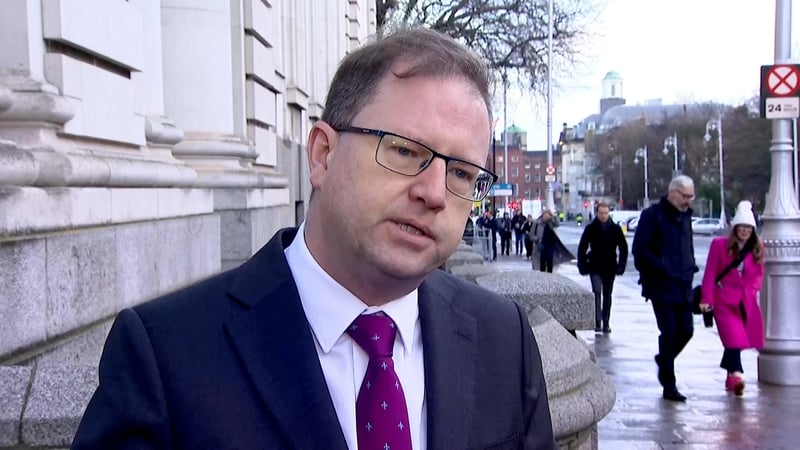
Minister for Further and Higher Education James Lawless has called for reform of first year in third-level education to allow students study a broader range of subjects before specialising.
He described the Leaving Certificate as a "pressure cauldron" and said there is a strong case for students to enter college and take a wider variety of modules in their first year, before choosing a specific path later.
Speaking on RTÉ's Today with David McCullagh, the minister said this model is used internationally and provides a more rounded education.
He said while universities aim to produce professionals with specialist skills, they also have a role in developing a wider understanding of the world.
The minister said this approach is particularly important in a changing environment shaped by artificial intelligence and digitalisation.
He said employers, including representative group Ibec, had raised the need for broader skills such as communication, leadership and teamwork at a recent skills roundtable.
Mr Lawless said students are increasingly focused on narrow subject areas and may not be getting opportunities to work collaboratively or explore disciplines outside their core studies.
He confirmed he has discussed the issue with the Irish Universities Association and is examining possible options.
The minister also said the points system can sometimes be artificially inflated due to limited places on high-demand courses.
He added that early specialisation may not serve students well in the long term, particularly as some careers may not exist in the future.
Mr Lawless said broader entry routes could help students make more informed choices and potentially reduce pressure on Leaving Certificate points.
He also expressed disappointment at reports that the University of Galway is considering dropping its general arts programme.
On artificial intelligence, the minister said it should be embraced as a tool but not used as a substitute for assessing a student's own work.
He referenced proposals from the Higher Education Authority that students could be asked to explain their work in person to ensure academic integrity.
Mr Lawless said such measures would support learning while recognising the growing role of AI in education.
