
Coillte, the National Parks and Wildlife Service and fire services are appealing to people to be extra careful and vigilant as the high-risk period for wildfires starts.
Fires have cost Coillte millions over recent years and badly damaged vulnerable, precious ecosystem.
There have been more than 300 fires on Coillte lands in the last five years with more than two and half thousand hectares of land damaged.
This time of year is the highest risk period. April winds dry out old dead vegetation on hill sides and forests and as the new green damper growth has not yet replaced, it leaves many areas very vulnerable to fire.
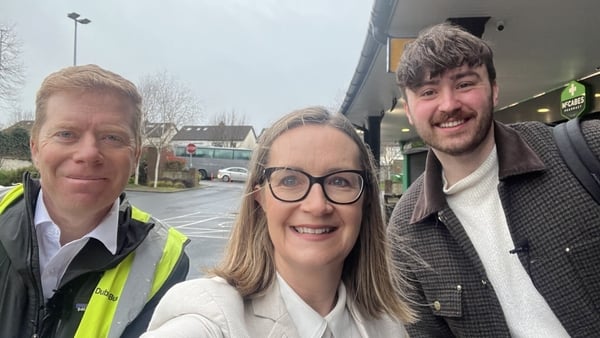
Communications Manager for Coillte Pat Neville said: "At this time of the year, particularly in the uplands and in woodlands, the vegetation can be very dry, and it only takes one or two days of consecutive dry weather for that vegetation to fully dry out and become very flammable.
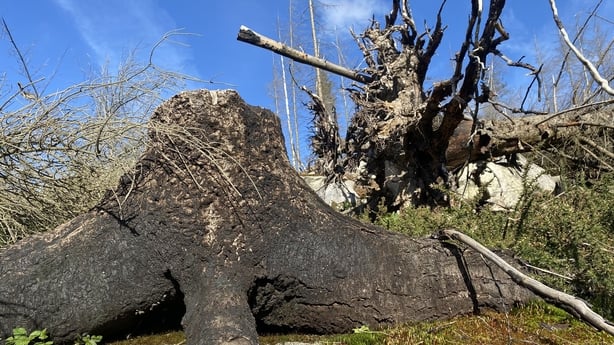
"So our wonderful habitats, our peatlands, and our forests that take decades or centuries to grow can be wiped out overnight from one careless campfire."
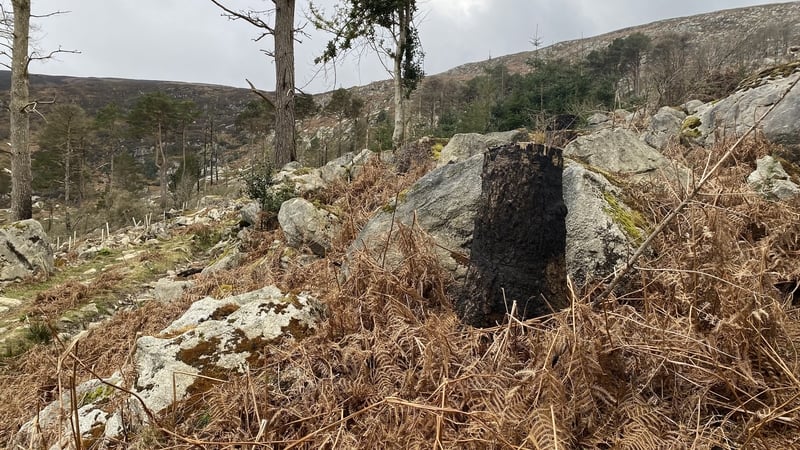
He was talking to RTÉ News at Crone Wood in Wicklow, where in 2023 a fire started by a campfire devastated 95 hectares of dry heath in the Wicklow Mountain National Park and 25 hectares of Coillte forestry.
Firefighters from Wicklow Fire Service spent days there, working with Coillte and NPWS personnel getting the fire under control and making sure it didn't flare up again.
Aidan Dempsey, Wicklow's Chief Fire Officer said: "When our crews are up here, the response that the towns can expect is reduced.
"It takes longer for our for a crew to get to a road traffic accident or a fire in a house, if all the firefighters from a given town are up on the mountains putting out a wildfire."
NPWS District Conservation Officer for the Wicklow Mountains National Park Ann Fitzpatrick said these types of fire can devastate fragile environments.
"It could be heartbreaking to watch a whole valley like this go up in smoke and to know that that's going to take decades to revegetate.
"It's absolutely heartbreaking, but also the investment that goes in financially and from staff into projects to restore and rehabilitate landscapes, it's very personal," she said.
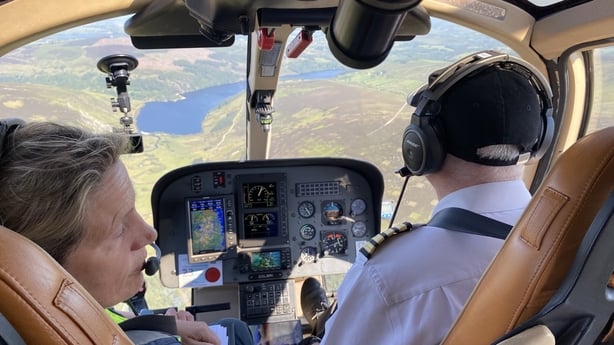
The NPWS is running helicopter surveillance flights again this year to spot wildfires as soon as possible.
That complements patrols by NPWS staff on the ground and helps them to find the fire quickly. Ann Fitzpatrick says the flights can also act as a deterrent.
"People know that we're active, they're less likely to light legal fires, because there's huge penalties to farmers and landowners for fires burning on their land," she said.
Chief Fire Officer Wicklow Aidan Dempsey said most farmers know better than to light fires.
"The majority of farmers understand that it is not acceptable to to light fires in rural areas, and we've seen a marked reduction in that, and we're very grateful to farming organizations and the wider farming community for that.
"But what we're seeing now is more and more people coming into the Wicklow Mountains to enjoy the scenery, to enjoy the environment, and some of them are engaging in unacceptable behavior, camping out and lighting campfires and not understanding the type of ground that they're lighting those fires on," he said.
He said all wildfires are started by somebody, accidentally or otherwise.
Mr Neville said fires can get out of control very quickly.
Coillte allows open access to its forests and asks visitors to respect the amenity.
"We're delighted, delighted to welcome visitors who are forests, and we're asking visitors this summer to be very careful and responsible in their use of the outdoors, not to light fires during the forest fire season.
"And if we all work together, we can reduce the number of forest fires in the countryside," he said.