The tragic story of the Titanic has captured the public's imagination since it struck an iceberg on its maiden voyage in 1912.
More than a century later many designs and drawings of the passenger ship are being made available to the public for the first time by National Museums NI.
Titanic, also known as Hull 400 during its construction, was designed by Harland & Wolff in Belfast, one of the largest shipyards in Europe.
Project archivist Siobhan McLaughlin refers to this collection, which is stored at Ulster Folk Museum, as a "heritage asset" that everyone can now access.
We need your consent to load this rte-player contentWe use rte-player to manage extra content that can set cookies on your device and collect data about your activity. Please review their details and accept them to load the content.Manage Preferences
"The public will have an unprecedented opportunity to experience incredible stories of design innovation from this vast repository of maritime history and a shipbuilding goliath who designed and built some of the world’s largest, most luxurious, and most iconic ships," she said.
This collection, along with showcasing the history of the world's most famous ship, also includes many designs and drawings of its sister ships, Olympic and Britannic.
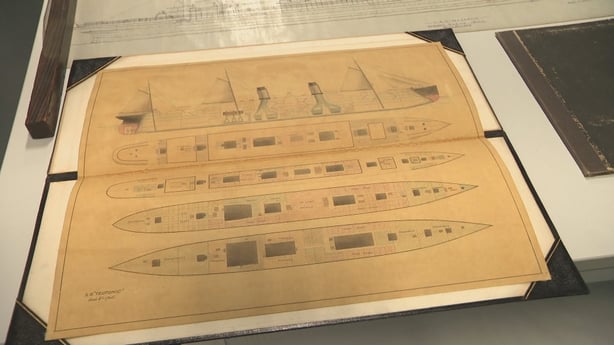
As well as technical drawings and blueprints, there are handwritten notes, internal memos, and other documents, including a marriage proposal.
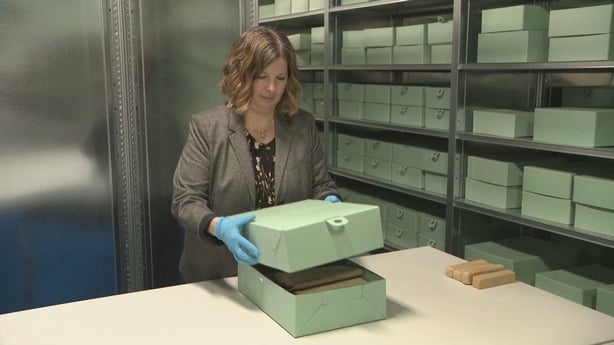
Those who are part of this project hope it will give an insight into the day-to-day operations of the shipyard in Belfast over 100 years ago.
Ms McLaughin said that cataloguing this archive will be a major body of work, but will make it "more accessible" through digital platforms, educational resources and ongoing community engagement.
Entitled 'From Drawing Board to Slipway’ the archive is being funded by the National Lottery Heritage Fund, the Pilgrim Trust, the Wolfson Foundation and The National Archives.
William Blair, Director of Collections at National Museums NI said public interest in this archive has remained high for decades but that up until now it had been restricted to academics and researchers.
"Due to the scale of the archive, the large format of the plans and limited resources, we were unable to facilitate demand," he said.
Among the thousands of documents, more plans for vessels have been discovered, including projects for Damson Hill, the sailing vessel built in 1892, and material also on the passenger ship, Canberra, launched in 1960.
This project also puts the spotlight on lesser-known stories of the Harland & Wolff business that also built tanks, bridges, and which employed thousands of workers throughout its 165-year history.
As well as its innovation in ship building, H&W also had a troubled history with incidents of sectarianism, particularly against Catholic workers.
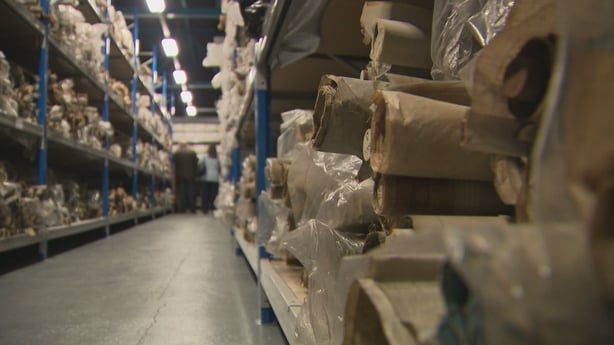
Through this archive, it is hoped that the public will have the opportunity to connect with Belfast’s heritage in shipbuilding, gain an understanding of the shipbuilding process and the working life of the people involved, and how it has shaped not just ships but communities.
The ship plans are just one part of the story. The photographic collection includes around 75,000 images of the H&W shipyard while the White Star Line collection contains over 7,000 items illustrating Titanic.
Dónal McAnallen, Library and Archives Manager at National Museums NI said that without the commitment to this extensive archive, much of the hidden stories of Harland & Wolff may never have been told, "or worse, may have been lost forever".
As cataloguing efforts continue, the public will be able to access the digitised ship plans and the wider Harland & Wolff collection online.
In-person access can be requested by appointment with more information available at the National Museums NI's website.