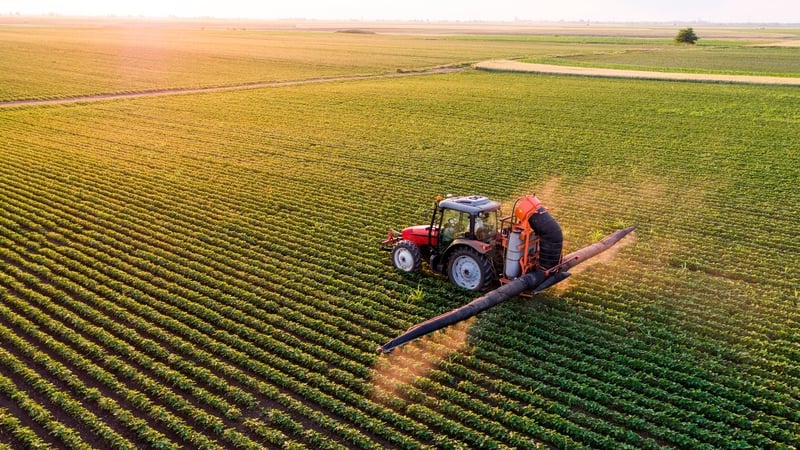

The Government has called for the temporary suspension of the EU's cross-border carbon rules when it comes to imported fertiliser, in light of the deepening crisis in the Gulf, which is threatening to hit global supplies.
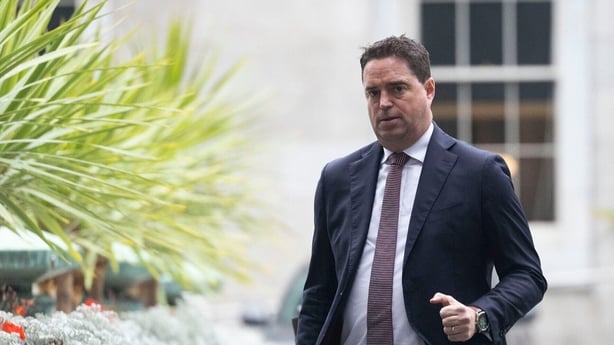
Speaking on arrival in Brussels, Minister for Agriculture Martin Heydon called for flexibility in the application of the Carbon Border Adjustment Mechanism (CBAM), the EU’s system which imposes levies on imports which rely heavily on the production of carbon.
He told reporters: "CBAM has a very important role to play, and we very much support in Ireland the tools being available to us to be able to react in real time to challenges that are here.
"In terms of CBAM for us in Ireland, fertiliser has a key role. We see our farmers across Europe having to pay a much increased price for fertiliser. Also, security of supplies is a very big concern as well.
"What we'd very much like to see is that the mechanism is there for us to be able to be flexible with CBAM as those measures and as circumstances develop."
In a statement ahead of a meeting of EU agriculture ministers, Mr Heydon said: "The Carbon Border Adjustment Mechanism risks the addition of a further layer of fertiliser cost inflation, which is why Ireland supports the provision of a mechanism to temporarily suspend the application of CBAM to fertiliser, and for this to be done in the most expeditious manner possible."
The European Commission is expected to bring forward a Fertiliser Action Plan with measures to enhance EU production of fertilisers and to reduce dependency on imports.
Mr Heydon added: "We will also discuss progress on implementation of the EU Vision for Agriculture and Food. I welcome the Vision's recognition that support through the Common Agricultural Policy remains indispensable in underpinning farm incomes, food security and the resilience of the agri-food sector.
"I also welcome actions that have been taken to address unfair trading practices, and to enhance competitiveness, including through CAP and environmental simplification packages.
"As negotiations on the CAP framework post-2027 continue, securing an adequately funded CAP under the next Multi-annual Financial Framework will be essential to delivery of the Vision's objectives. This will be a key issue throughout Ireland’s Presidency of the EU Council."
The minister will hold bilateral meetings with counterparts from France, Sweden and the Netherlands ahead of Ireland’s EU presidency in the second half of this year.
Parallel meeting of fisheries ministers also to be held
Ahead of a parallel meeting of EU fisheries ministers, Minister of State with Responsibility for Fisheries Timmy Dooley, said: "Today’s discussion on the energy transition and the impact of increased fuel prices is both timely and necessary.
"Support needs to be provided at EU level to enable the EU fishing industry to manage through the current challenging period of high fuel prices. Other important fisheries items on today’s agenda include discussions in relation to fisheries control and mackerel.
"Mackerel is Ireland’s most important pelagic stock. We need to take urgent steps to protect the sustainability of this stock and to protect the EU’s share of the Mackerel Total Allowable Catch.
"The commission will also deliver a presentation on the Implementation Dialogue for Small-scale and Coastal Fisheries. With over 80% of the Irish fleet consisting of inshore vessels under 12 metres, I welcome the opportunity to reinforce Ireland’s commitment to this sector both nationally and at EU level."
Minister Dooley will also hold bilateral meetings with his Dutch and Belgian counterparts to discuss Ireland's Presidency priorities for fisheries.