
Landowners along the route of the planned North South Interconnector have been told that compulsory easements will no longer be sought for access to lands earmarked for pylons.
Eirgrid recently sent letters to affected landowners outlining the change in approach to obtaining access, as well as revised compensation proposals.
However, campaigners have warned the "resistance is still very strong".
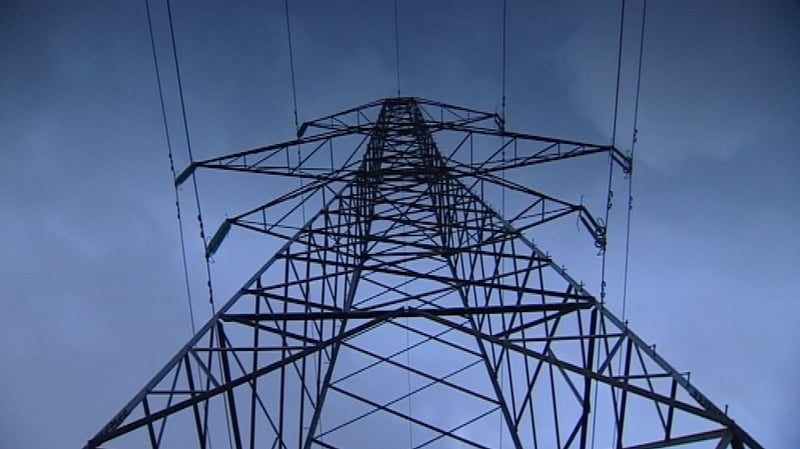
The North South Interconnector would link the electricity grids of Ireland and Northern Ireland with a 138km line and 407 pylons through the counties of Meath, Cavan, Monaghan, Armagh and Tyrone.
There would be 100km and 306 pylons in the Republic of Ireland, involving about 400 landowners.
The plan has faced great opposition among landowners and communities in the affected counties for around 17 years.
When the project got the green light to move to construction phase in 2023, the Department of the Environment said it expected it would be finished by 2026.
So far, the project here has not reached the construction phase.
Work has commenced on the Northern Ireland side of the project, with NIE Networks confirming it has carried out work at 10 tower locations.
It says its working towards an estimated completion date at the end of 2031.
The original deals from Eirgrid offered a compensation package to landowners, in exchange for an easement.
At the time, landowners were also advised that if they did not accept the packages, Eirgrid would ask the ESB to make an application to the CRU to compulsorily acquire an easement for the North South Interconnector across their land.
It is unclear how many landowners signed up for the original compensation package, however the numbers are thought to be low.
Eirgrid said that it sent the letters to landowners in recent weeks, after the ESB informed it that it will not be making applications to the Commission for the Regulation of Utilities (CRU) to compulsorily acquire easements for the infrastructure to be placed on or across the lands.
It said that the ESB would instead be seeking to place the infrastructure on or across land by serving 'wayleave notices'.
The ESB has said this approach is "consistent with standard practice across the wider transmission network".
Eirgrid said the letters which provided an update on the project and a revised compensation proposal, followed an "extensive engagement process" over the last number of years.
It said the letters were the "next step" in the engagement process "towards the construction of the project".
What does this mean?
In letters sent to landowners on the 12 March, and seen by RTÉ News, Eirgrid said that the rights to place the North South Interconnector infrastructure would be obtained by way of serving a wayleave notice.
It said that "these rights will not be registered on the title of your land".
Pádraig O'Reilly of the North East Pylon Pressure Group described an easement as something which sought a permanent right to the land, whereas a wayleave notice was less burdensome and did not go onto the deeds of the land.
However, Mr O'Reilly said he believed the change in approach to access was "purely tactical" and that it won't make a difference to those opposed to the project.
"If you're a farmer and you're against it, it won't change your opinion", he said.
He said that farmers he represents have been "nonplussed".
"It has absolutely zero impact in terms of any increase in farmers signing up for compensation. The resistance is still very strong", he said.
Mr O'Reilly said that NEPP Group will be focusing its efforts on compliance with planning conditions and calling on local authorities to ensure that conditions attached to the planning permission for the project are respected.
Sinn Féin TD for Meath East Darren O'Rourke said he doesn't think anything has changed from the perspective of landowners or campaigners.
"The level of opposition is still very, very strong.
I think it's a technical change, it is going to be strongly resisted", he said.
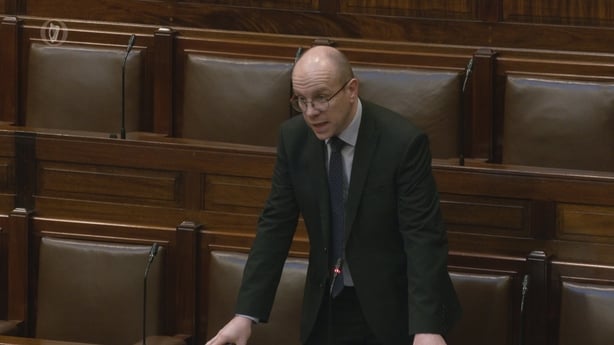
"It is one mechanism through the CRU or it is another mechanism through the ESB. Either way there is going to be very significant opposition", he said.
Deputy O'Rourke said he believes the "root of all this has been an unwillingness of Eirgrid and successive governments to engage meaningfully".
He is among the cohort who want to see the project put underground. Eirgrid has previously said this is not possible.
"Until Eirgrid and the Government engage on that issue, it doesn't matter what section of the legislation they're using. The fundamental of the issue is still there", he said.
"My firm opinion is, it is going to be incredibly difficult to deliver this project with the level of opposition".
Deputy O'Rourke has called for an independent, comparative analysis of overgrounding versus undergrounding, including the cost and technical constraints.
Compensation packages
The letter also outlined three options for compensation packages for those who agree to have the Interconnector infrastructure placed on or across their land.
These include a settlement agreement, which offers the same compensation as was originally offered (€50,000 per pylon and €160 per metre of overhead lines), but without the requirement for an easement.
There is also an upfront compensation option, and an option to submit a claim.
Goodwill payments will be made to anyone who avails of the above options, while an early sign up payment is available to landowners who sign up to the first two options within eight weeks of receiving the letter.
Access only
Other letters were also sent to a different category of landowner, where access would be required across their land to adjacent land to construct or maintain the Interconnector.
In these cases, the letters stated that the ESB would be making an application to the CRU for the compulsory acquisition or use of an easement or other right of access to the land.

The land would remain in the ownership of the landowner, but the ESB would have a right of access to the adjacent lands and this right would be registered on the title of the land.
Next steps
Eirgrid has said the delivery of the North South Interconnector will support national and economic growth.
A spokesperson for the Department of Climate, Energy and the Environment this week said the interconnector is an "essential infrastructure project" that will lead to a "more secure, affordable and sustainable supply of electricity across the island".
They said independent estimates put cost savings for electricity consumers to be in the region of €100 million per year once its up and running.
"It is essential that the NSIC is delivered for the benefit of customers, in the current context of challenging electricity bills. Delivery of this project would remove market constraints, enhance security of supply, affordability, and allow the connection of more renewable generation.
This Government is committed to delivering electricity infrastructure and this includes the North South Interconnector, which is a critical project and will form a key part of our electricity grid going forward," they said.
The spokesperson said that EirGrid has been engaging with landowners since 2023.
Over the past 17 years, many landowners and communities in the North East have staunchly opposed the North South Interconnector in its current form and have made repeated calls for the project to be put underground.
The question now is whether this "next step" in the "engagement process" will go any way towards moving the project forward all these years later.