


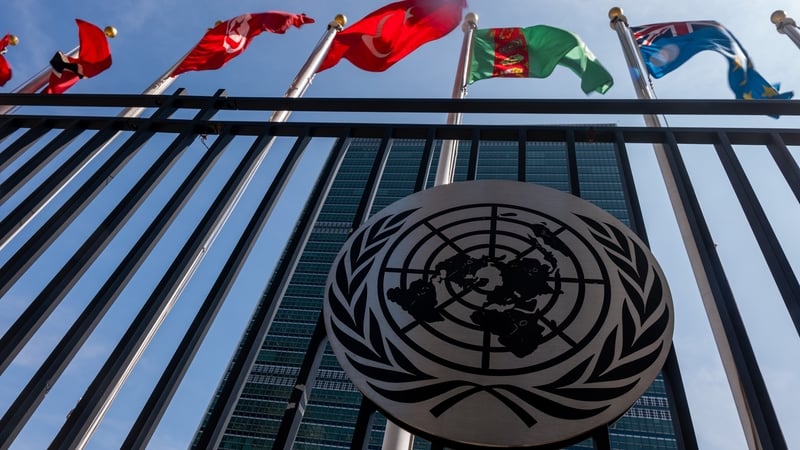
The United Nations General Assembly this week voted to designate the transatlantic slave trade as "the gravest crime against humanity", in a move supporters say could advance calls for reparative justice.
The resolution was adopted by 123 votes to three, with 52 abstentions. the United States, Israel and Argentina voted against, while Ireland joined EU member states in abstaining.
In a statement to RTÉ's This Week, a spokesperson for the Department of Foreign Affairs said Ireland recognised slavery and the transatlantic slave trade as "appalling episodes in the history of humanity", marked by "immense tragedy, brutality and inhumanity".
However, the spokesperson said the text of the resolution raised significant concerns.
"The text put to the General Assembly for a vote was challenging in a number of respects," they said, pointing in particular to language suggesting a "hierarchy amongst atrocity crimes", as well as elements considered inaccurate or inconsistent with international law.
"For these and other reasons, Ireland and our EU partners were not in a position to vote in favour," the statement added, describing the decision to abstain as reflecting "profound respect for the subject matter and its complexities".
Despite being non-binding, the vote at UN headquarters in New York proved contentious.
Opponents, including the United States, argued the resolution risked creating a hierarchy between historical atrocities and raised legal concerns around reparations.
The resolution does not refer to other slave routes in Africa, including across the Sahara or the Indian Ocean, but highlights the scale and brutality of the transatlantic trade, including what it describes as the "racialised chattel enslavement of Africans" and its lasting legacy.
Supporters, led by Ghana, said it marked an important step towards recognition, remembrance and potential reparations.
The Department of Foreign Affairs said it remains committed to international efforts to address the legacy of slavery and tackle contemporary forms of human trafficking and exploitation.
Additional reporting: AFP
