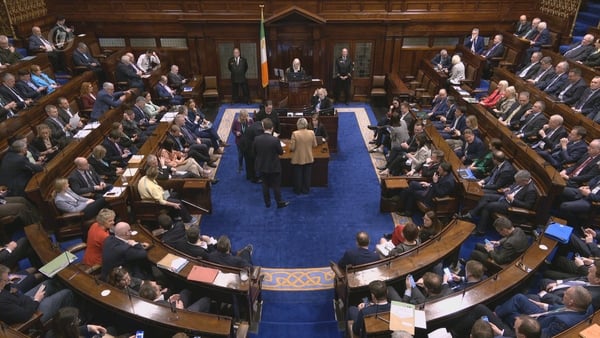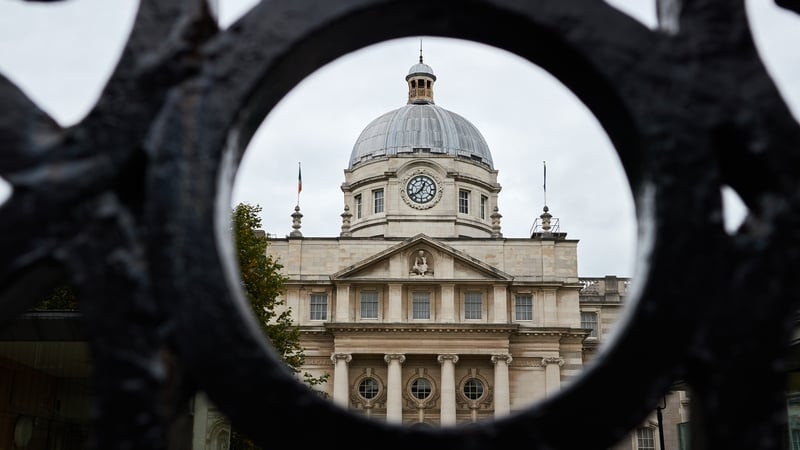

It is holiday time again in Leinster House as politicians return to their constituencies for the two-week Easter break.
Their mood on departure was one of foreboding.
An international energy crisis of historical proportions is beginning to bite.
Cuts to motoring fuel and an extension of the fuel allowance are widely viewed as the mere first act in response to the grim conflict in the Middle East.
"They were reasonable and balanced, but the public are not overly happy, and they don't think they are adequate, and that is understandable" was the assessment of veteran Fianna Fáil TD Seán Fleming.
Of particular concern is the price of home heating oil.
Coupled with this is the very modest reduction in green diesel levies, which has done little to stem higher costs for farmers and fishermen.
Within Government Buildings, there is an inescapable feeling that far more daunting times are on the horizon.
This is based on the belief that the colossal reduction in gas supplies from the Gulf region will only be fully apparent in the next few weeks.
Campaign to use energy sparingly
Competition for oil on international markets will intensify and pose further challenges.
Further down the line the price of electricity could rise too.
All this at the time when there are already more than 300,000 homes in arrears.
Although there is an insistence that these troubling times are "not remotely" comparable to the economic crash of 2008.
Expert consultants are set to soon work in the Department of Climate, Energy and Environment to assist in drawing up contingency plans for the period ahead.
The immediate next steps include putting the finishing touches to a campaign that will urge people to use energy sparingly.
The quicker processing of grants for businesses to improve their energy efficiency is also a priority.
There is a hope in Government that more tangible measures will soon be agreed at EU level to bolster reserves of gas and oil.
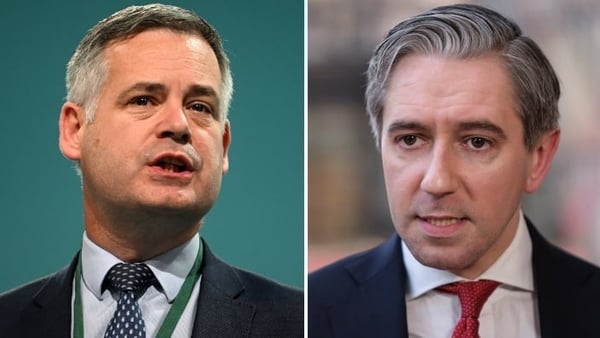
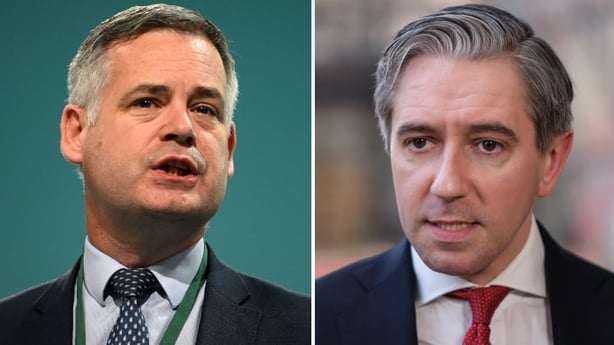
On the domestic front, a bitter row between Tánaiste Simon Harris and Sinn Féin’s Pearse Doherty continues to fester.
It centres on the contention that the Government could have cut excise duty on home heating oil.
The new finance minister insisted on Thursday that there was no such duty on this fuel, which is used to heat up to 750,000 homes around the country.
However, when this was put to Revenue, the response was notable.
In a statement issued to RTÉ News, it said: "While the traditional fuel excise element is zero, home heating oil is still subject to excise duty through the carbon component of Mineral Oil Tax."
Therefore, there is excise duty.
But unlike petrol and diesel, it is applied solely on the carbon element of the oil and in the eyes of the Government that makes it carbon tax.
Plus, it remains the policy of Government that the carbon tax is sacrosanct.
A Department of Finance official also sought to clarify the matter.
The official said: "Technically there is an excise charge on kerosene.
"However, it is exclusively the carbon tax and as such any calls to reduce fuel excise on kerosene really means to reduce the carbon tax on it.
"By not mentioning the carbon tax it gives the impression - to most people - that there is a general excise charge of kerosene when there isn’t."
At one level it could be seen as a dispute about words, but the political spat shows that the Government is under intense pressure to help more households and to fully explain its decisions.
Referendum for TDs
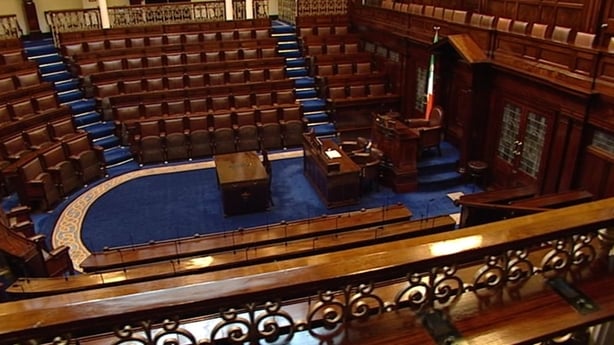
There was no lack of heat in the upper house of the Oireachtas on Wednesday night when Senators Michael McDowell and Victor Boyhan warned, based on population projections, that there could be a whopping 250 TDs in the Dáil by the year 2050.
They now want the number of TDs capped which would involve holding a referendum.
The idea has drawn a mixed response from current and past TDs.
Indeed, former minister for justice Charlie Flanagan believes the senators’ motion was laudable.
He offered a blistering overview on social media on the role of a TD.
He said that life as a "Government backbencher is an unenviable and lonely place to be ... most TDs that are not ministers are elevated county councillors."
The Government did not oppose the senators’ call to think about culling TD numbers, with one senior minister describing it as an interesting proposition.
Bearing witness to housing crisis
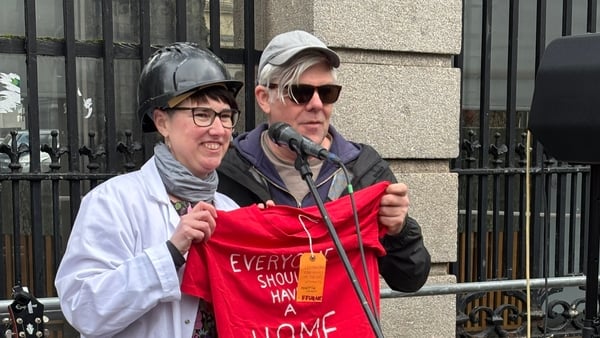
Outside the gates of Leinster House, one man has brought a relentless focus to the housing crisis for the last four years.
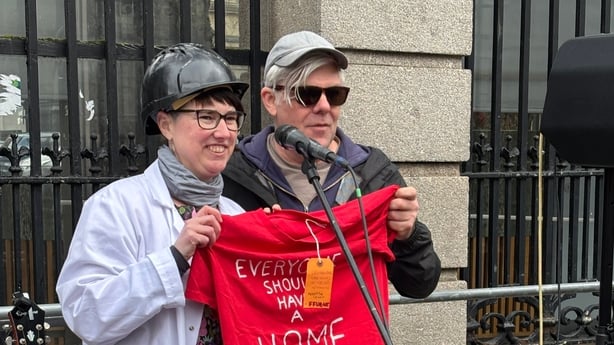
Musician Martin Leahy travelled from west Cork every Thursday to sing his song entitled 'Everyone should have a home’.
But after 200 weeks, he brought the curtain down on his protest.
As he prepared to sing one last time on Kildare Street, he summed up his feelings: "I suppose, angry and frustrated that any of us have to do anything like this.
"But at the same time, it's been a very enriching kind of experience, meeting all the community around housing and meeting the people who are refusing to accept this housing crisis as part of life here."
When TDs return to Leinster House in mid-April, the sound of Mr Leahy singing will not be there.
But delivering on the sentiment expressed in his lyrics will remain the Government’s biggest task.