
"Meat grinder" assaults.
That's how Ukraine's top general, Oleksandr Syrskyi, described Russian tactics along stretches of the 1,200km frontline in mid-March.
Between Tuesday, 17 March and Friday, 20 March, Russian forces launched more than 600 assault operations along the entire front, General Syrskyi noted in a post on the Facebook page of Ukraine’s armed forces this week.
Those assaults cost Russia more than 6,000 casualties in just four days, he said.
Some 8,710 Russian personnel were killed and seriously wounded throughout all last week, the Ukrainian commander noted, marking an increase on Russia's usual weekly casualty rates.
Ukrainian and Western military agencies estimate that Russia loses on average 7,000 troops, dead and wounded, each week.
The frontline in Ukraine has often been termed "a meat grinder" by commanders and analysts throughout the war to describe Russia's tactics of throwing waves of troops towards Ukrainian positions on the frontline.

The deceased former leader of the Wagner Mercenary Group, Yevgeny Prigozhin, used the term 'Operation Bakhmut Meatgrinder' to sum up his units' relentless assaults against Ukrainian positions defending Bakhmut in early 2023.
Russia eventually seized what was left of the destroyed city in April 2023 at the cost of thousands of Russian dead.
Chance of small infantry unit going unnoticed in 'kill zone' slim
As the war has ground on, the dominance of ever-more lethal drones has made those kinds of assaults more futile.
Inside the "kill zone", covering a distance of up to 20km from the frontline, and policed by surveillance and attack drones on both sides, the chances of a small infantry unit going unnoticed are slim.
Once spotted, a unit’s chances of survival are slimer still.
Estimates from Ukrainian and Western sources vary, but most point towards around 70% of Russian combat losses being inflicted by Ukrainian drones along the 1,200km front.
Ukrainian forces are equally hunted on the ground by Russian attack drones.
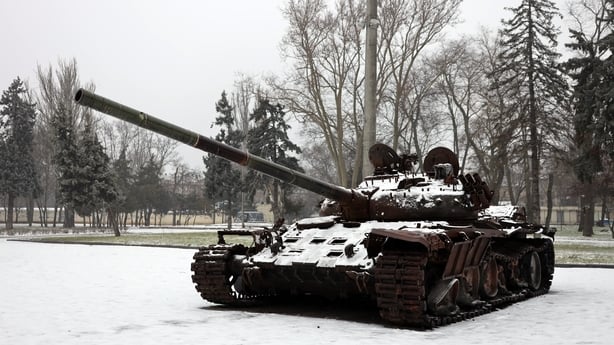
But last week’s assaults by Russian forces along the line of contact and the higher than usual number of dead and wounded suggested that Russia’s high command has returned, perhaps only briefly, to pushing more of its men into the "meat grinder", trying to blood its way metre by metre westward.
If it was the start of a Russian ground offensive, it was a failed one at that.
General Syrskyi said Ukrainian forces repulsed the attacks along the front.
Despite the horrendous scale of its combat losses, Russia’s leadership could be planning more "meat grinder assaults".
Russian forces conducting mechanised assaults on frontline - report
A report this week from the Institute of the Study of War (ISW), a US-based research institute that analyses the minutiae of frontline fighting in Ukraine, wrote that Russian forces are increasingly conducting mechanised assaults on the frontline, "possibly as part of intensified preparation for their spring-summer 2026 offensive".
Mechanised units used in the mid-March assaults were smaller in size than a normal Russian mechanised company, which are normally comprised of 40 troops at most.
The ISW report wrote: "Some of these mechanised assaults may have been Russian reconnaissance-in-force missions that aim to probe, identify, or test Ukrainian positions ahead of future ground assaults in the spring-summer campaign".
On that score, the four-day push by Russian units in mid-March appears to have been more of probing mission, and a costly one at that.
ISW also reported other factors that suggest Russian forces are preparing for a spring or summer offensive. They include Russian shelling of settlements close to Kramatorsk and strikes on dams near Kostyantynivka and in the direction of Pokrovsk since late February.
These tactics, ISW writes, are likely an attempt to "interrupt Ukrainian logistics and flood Ukrainian positions".
That said, Russia launched similar large-scale attacks along the frontline around this time last year also.
Yet, throughout 2025 Russia captured fewer than 1% of Ukrainian territory.
So, has Russia started a spring offensive in eastern Ukraine?
The answer is, no, not yet. Moscow may instead be waiting until the start of the summer to launch an all-out campaign against Ukrainian positions defending the so-called Fortress Belt in Donetsk, demanded by Russian President Vladimir Putin as the price for ending the war.
But with Ukrainian drones enforcing a "kill zone", the chances of a major breakout from Russia's current positions are slim.
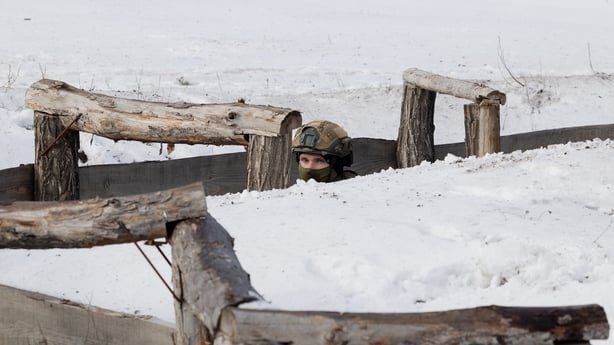
The last sizeable counteroffensive or advance in the war was made by Ukrainian forces in the autumn of 2022 when they liberated occupied Kharkiv region and large parts of Zaporizhzhia and Kherson regions, including Kherson city.
Since then, attrition has set in.
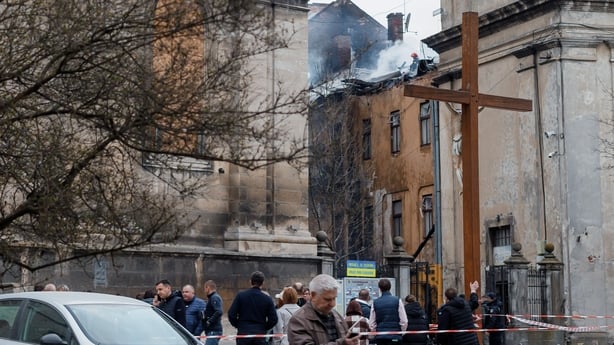
More worryingly for Ukraine was the staggering volume of Russian drone strikes across the country last Tuesday - almost 1,000 in total were launched at 11 Ukrainian regions, including strikes on Lviv's historic quarter, some 900km from the front in Donetsk.
Why or how Lviv's 16th century Bernadine monastery was deemed of strategic importance to Russian forces is not known. Moscow's war has many fronts, including a psychological one.
And with the US war against Iran going into its fifth week, Russia seems more emboldened to try out these kinds of colossal drone attacks, on a scale not seen before.
Mass drone attacks against every corner of Ukraine may, in fact, be a new kind of offensive by Moscow that tries to slowly bury the US-peace initiative in the background.
But bombing civilian and energy infrastructure throughout the winter failed to smash Ukrainian resolve, and is unlikely to do so in the months ahead either.