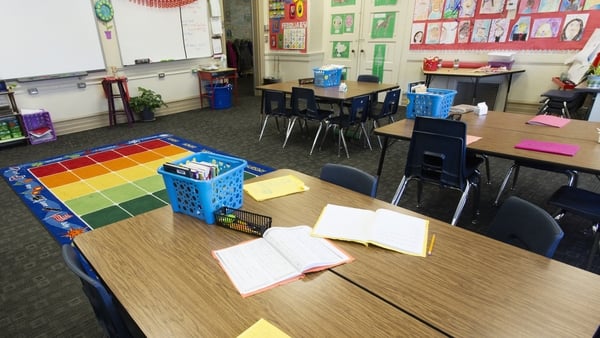
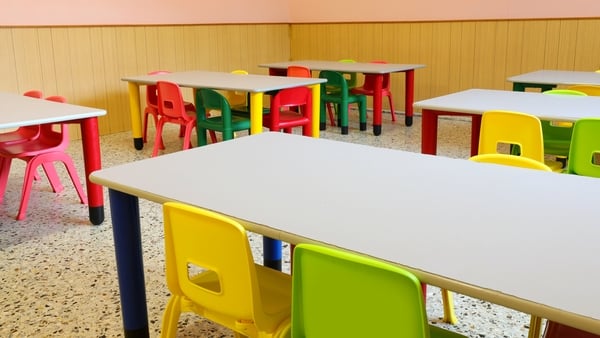
An evaluation of the school meals programme has recommended that a kitchen and dining or canteen area should be mandatory in all new school buildings.
The report, by the Joint Oireachtas Committee on Education and Youth, has also called for a policy paper on the content of school meals to be published, to include specifications around key areas such as portion size, nutritional content, and the elimination of highly processed foods.
"Onsite provision of school meals, prepared from scratch and eaten in a communal setting, should be the preferred option as the programme expands", the report states, "with local staff employed directly to cook and serve meals".
The study is based on deliberations by the committee and submissions received from education stakeholders, nutritional experts and food providers. Among the concerns raised by schools was the lack of administrative support for schools to procure suppliers and manage the programme.
The committee has recommended that a preferred list of suppliers should be provided to schools by the Department of Education and Youth on a per county basis to reduce the administrative burden on schools.
Schools also complained about additional costs associated with the school meals programme, including additional electricity, cleaning, waste, and pest control costs.
Concerns were also raised around the nutritional quality of meals, including the level of highly processed foods and the lack of transparency regarding production methods, with Dr Darina Allen telling the committee that "ultra-processed foods dominate many school meals" and that "pre-cooked, ultra-processed components are assembled, sealed in single-use packaging and reheated multiple times".
The committee has recommended an inter-departmental working group should produce a policy paper based on public consultation with a number of aims including the elimination of highly processed foods and maximum use of local ingredients.
It has also called for the integration of food education into school curriculums and for Home Economics to become a mandatory subject in all primary and post-primary schools as part of the SPHE/Wellbeing Programmes and Transition Year programmes.
The publicly funded hot school meals programme is currently in operation across primary schools and the committee has recommended it be extended to post-primary schools "as an urgent national priority".
School management bodies also raised the difficulties facing small rural schools in securing suppliers under the programme. The committee has recommended that those schools should be either clustered into groups for one contract or bundled into a contract with larger urban schools.
It also recommended that full responsibility for the school meals programme should be moved to the Department of Education and Youth.
Committee Cathaoirleach Deputy Cathal Crowe said: "As the programme continues to expand, it is important that its delivery arrangements keep pace with its scale and ambition. Issues relating to procurement, school infrastructure, nutritional standards and programme governance must therefore be addressed in a structured and future proofed way.
"Throughout its work, the committee was mindful that the programme ultimately exists to support the wellbeing and development of children and young people. Ensuring that all students have access to nutritious meals during the school day which can make a meaningful difference to their mental and physical health, learning and overall educational experience.
"This is a seminal initiative that has the potential to transform the lives of generations of young people. The committee also requests that the issues raised in the report be the subject of a debate in both Houses of the Oireachtas."