
It's a vicious circle.
Galway’s longstanding traffic congestion stems from the volume of vehicles, particularly cars, using the city’s roads on a daily basis.
For decades, the place has been struggling under the pressure caused by clogged routes and the associated snail like pace of traffic during morning and evening commutes.
There are no shortage of announced solutions or intended improvements, but also a sense of little in the way of tangible action to bring them into being.
Planners say there is no silver bullet to resolve the issues. Instead, a range of measures, identified in the 2016 Galway Transport Strategy, are considered the best approach to try and enhance matters.
A light rail network or a proposed ring road could eventually form part of that transport menu. But in the meantime, could enhancing the existing bus service bring a more immediate shift?
It's almost three years since Galway City Council and the National Transport Authority unveiled plans to redesign the local bus network.
A promised 50% increase in bus services would bring new routes, increased frequency and a round the clock service linking the east and west of the city.
It was described as a "fundamental transformation" of public transport, for the city and surrounding areas.
Crucially, the changes could be implemented on the existing road network - a significant consideration, given the long-awaited decision on whether that proposed ring road will be approved.
Cautious timeframe set for implementation
In December 2023, the NTA said the changes would be introduced between 2025 and 2026.
Now, it provides a more cautious - and open-ended - timeframe: "Dates for implementation of the new services have not yet been set but it is currently anticipated that the changes would happen in 2027."
The redesign forms part of Galway BusConnects initiative, aimed at reducing gridlock, giving car owners a viable alternative and ensuring a reliable provision of services.
The plan envisages new bus corridors and cycle lanes, better ticketing systems, a "zero emissions" fleet and new Park and Ride sites.
A Cross-City link from University Road to the Dublin Road is described as "central" to the proposal. This would be augmented by another 3.9km corridor for public transport and active travel along the existing Dublin Road.
When completed, four hospitals, two universities, and the entirety of the city centre would all be served by busses, running in dedicated lanes, as often as every couple of minutes at peak times.
Both proposals have been approved by An Coimisiún Pleanála, but the Cross-City link is still subject to legal challenge.
In the meantime, plans were announced last month for a new Park and Ride facility, in the western suburbs of Knocknacarra. But the location is not served by a bus lane and is situated at the end of a road clogged by traffic during morning rush hour, day in, day out.
And here's where that vicious circle comes in again. How do you incentivise people to hop on a bus, if it's still going to be stuck in traffic?
The City Council says that "for Galway to flourish as an attractive city in which to live and work, a modern high-quality public transport system is needed which allows people to conveniently reach key destinations within a reasonable time."
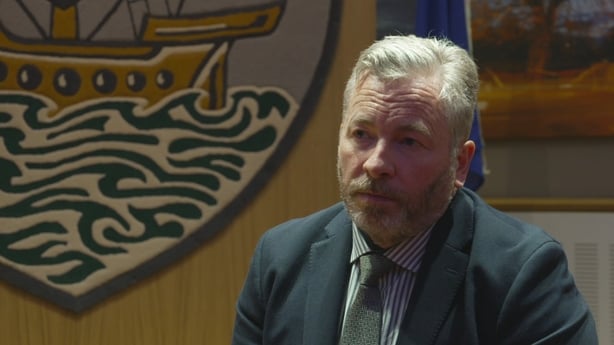
Director of Services at the local authority, Derek Pender, is well versed in the problems and the possible solutions.
"Anybody that lives or commutes into Galway knows there’s a problem here. We are trying to address those through a suite of projects," he says.
"At the moment, you have pedestrians, cyclists, cars, vans, heavy goods vehicles, busses and they’re all competing for the same space. We need to separate them."
Mr Pender says he hopes that construction on the BusConnects routes can begin in the next 12 to 18 months.
"We need to get people out of their cars, it’s as simple as that … Every single junction in the city is operating over capacity and when that happens, all you need is a single puncture or breakdown and the entire city comes to a standstill.
"The buses currently are operating within the same congestion as you or I in our private car. So we need to get that separation and that will come in the form of BusConnects, where you’ll have dedicated public transport and active travel corridors all the way through the city centre.
"Standing at the bus stop, and the time spent on the bus, are the two factors against people taking public transport, because there is no way of predicting them. It’s not reliable. And that is the one thing we require to encourage people to alter their habits," says Mr Pender.
That sense that commuters must have certainty about reliability is shared.

Cathal Lawlor, of the Galway Commuter Coalition (GCC) , has been monitoring bus movements and tracking passenger opinion in recent months, through an online survey. He’s received hundreds of responses from people who’ve experienced delays, or other scheduling issues, on the existing network.
"Many times, people are left waiting at bus stops for twenty, thirty, forty minutes for ghost busses that say they are coming but never appear," he said.
"How can you rely on that if you have an appointment or need to get to work? And when you can’t do that, it forces people to use alternative measures, usually cars, which then increases traffic for everyone."
The organisation says its not focused on any one option to improve the lot of commuters in the city but instead wants to see improvements, which can benefit those traveling by foot, bike, car or bus.
"It’s not an either/or scenario. It’s about improving things across the board" says Mr Lawlor.
He feels the BusConnects project would "make a dramatic impact on transport, allowing for a modal shift, with "conservative estimates suggesting it would increase usage by 25% or more."
"It would cost around €200 million, that’s less than the fuel excise decrease that was announced this week. If the Government want to do something feasible, this could be implemented in a year and a half".
"It would open up a lot of opportunities in the city for businesses and for residents ... and it would bring us into the age of proper, high quality services that we see across Europe and which we should be able to replicate here."
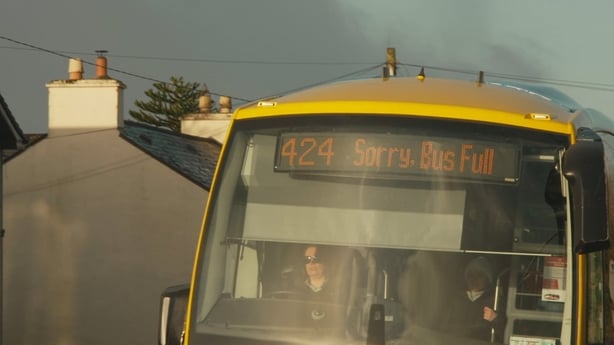
The experiences of bus users we spoke to this week was mixed.
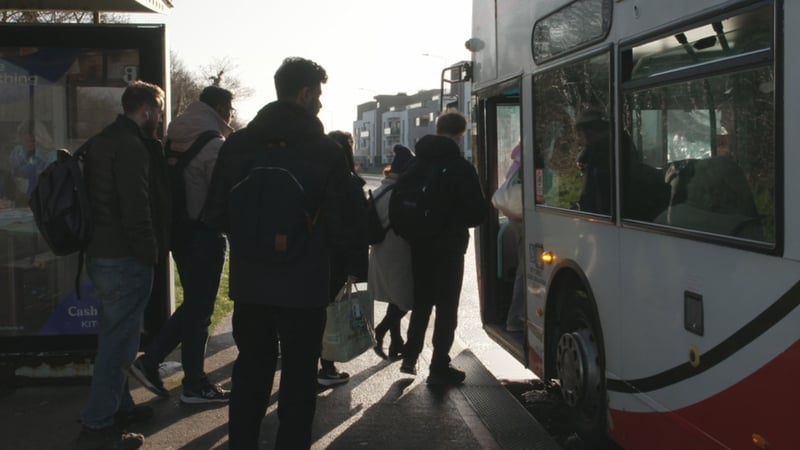
During yesterday morning’s rush hour, the 424 bus from Conamara to Galway, and local services into the city, were running on schedule and had capacity.
But that’s not always the case. There’s huge demand on the route serving most of south Conamara, with "Sorry. Bus Full" regularly displayed. And buses from the western suburbs have been the focus of most of the ire registered in that Commuter Coalition survey.
Commuters are fully cognisant of the domino effect congested roads have on their movements via public transport.
All are hoping the vicious circle can be broken. But none are banking on an overnight change.