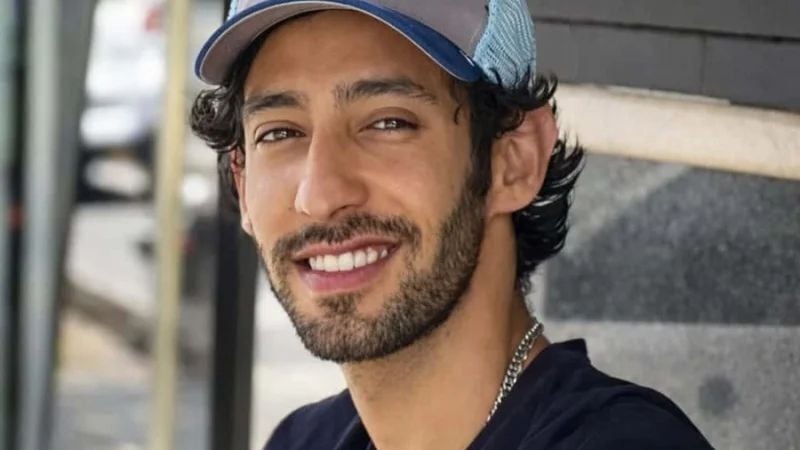

A member of the Bahá'í community in Ireland has expressed concern over what she has described as torture, interrogation and mock executions that her cousin is enduring in Iran.
Sama Sabet, who lives in Dublin, has called for the support of the international community, following the arrest of her cousin Peyvand Naimi on 8 January.
The 28-year-old was arrested during the Iranian government's response to protests at the time and was taken to an Islamic Revolutionary Guards Corps (IRGC) detention centre on what his relatives have described as "false charges".
They say he is being persecuted for being a member of the Bahá'í faith.
The United Nations and international rights groups have documented the persecution of Bahá'ís in Iran for many years; including denial of civil rights, imprisonment, torture and destruction of property.
According to Ms Sabet, following weeks of torture, on 1 February, Mr Naimi was forced to confess on state television to "a number of baseless charges."
At the end of February, he was accused of being involved in the deaths of three Basij security agents during the January protests, despite Mr Naimi being in detention at the time of the alleged attack.
He was also accused of celebrating the death of Iran’s former supreme leader, Ali Khamenei on 28 February - an event Ms Sabet has said her cousin had no knowledge of because he had no access to communications as a prisoner.
In a statement, the Bahá'í International Community has said that Mr Naimi is "in serious danger after enduring two show executions and prolonged torture and interrogations".
The UN's Bahá'í International Community Representative Simin Fahandej has backed the family.
She said the Islamic Republic did not have "a single shred of evidence" for the accusations.
"If it did, it would not have to resort to torture to extract a false confession. There is only one reason for this cruel treatment, and it is that Peyvand is a Bahá'í.
"It is the same reason Iran’s government has persecuted and discriminated against an entire innocent community for almost five decades," she said.
She called for the international community to act fast and insist Iran "stop its senseless targeting of Bahá'ís".
Ireland has consistently condemned the persecution of Bahá'ís in Iran.
A year ago, at the 58th Session of the UN Human Rights Council, Ireland's Permanent Representative to the United Nations Noel White condemned the "continued discrimination and oppression of minority groups in Iran".
He said members of the Bahá'í faith in particular faced limits in realising the right to education and accessing legal representation. Mr White also expressed Ireland's increasing concern over the detention and oppression of Bahá'í women.
According to Ms Sabet, Mr Naimi has faced constant and severe torture, interrogation, and denial of food and water during his imprisonment.
She said that her cousin was "completely innocent of all charges" and that there was no evidence to support any of the claims and that he should be released immediately.
There are around 500 members of the Bahá'í faith living in Ireland.