
As the Government takes measures to tackle rising energy and fuel costs, RTÉ's Agriculture and Consumer Affairs Correspondent Aengus Cox looks at how and when consumers will see reduced prices.
How much have fuel prices jumped by because of the Iran war?
The strikes from the US and Israel on Iran started on 28 February.
According to AA Ireland, both diesel and petrol prices for last month were averaging around €1.72 per litre.
But since then the price of a barrel of oil has risen dramatically from around $70, spiking at almost $120 and is now around $100.
This has had a considerable knock-on effect on pump prices.
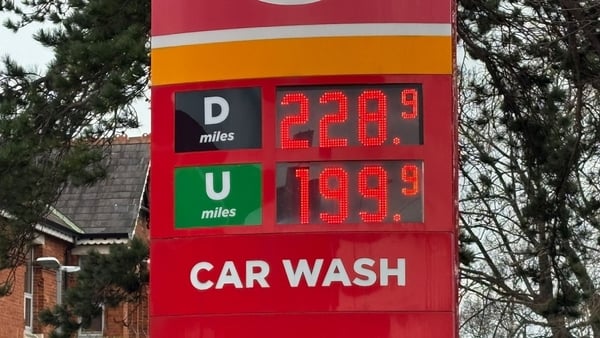
As of today, diesel is costing in and around €2.30 a litre on many forecourts, with petrol hovering around the €2 a litre mark.
How will the reduction work?
Over half of the price of a litre of diesel and petrol is made up of taxes. The figures are a little different for each.
Diesel, which is the most widely used fuel, will see a VAT-inclusive excise duty reduction of 20 cent per litre from midnight.
The drop for petrol will be 15 cent.
In addition, a separate two-cent tax on diesel and petrol that goes to the National Oil Reserves Agency (NORA) is being temporarily suspended as part of the Government's measures.
This brings the total reduction to 22 cent on a litre of diesel and 17 cent on petrol.
The Government has said the reduced tax rates will be in place until the end of May.
How quickly will motorists see this drop at the pumps?
The answer isn't as simple as you might think.
The reduction kicks in from midnight, so any fuel leaving a depot headed for a forecourt from then will be subject to the lower taxes.
But many service stations might well be still selling their existing stock tomorrow, on which they would have paid a higher excise rate.
So motorists won't be paying cheaper fuel prices at some pumps until the old supplies wash through.
At busier service stations, this shouldn't take more than a day or so, but for some less busy ones it could take longer.
But it's worth remembering, only four weeks ago diesel was costing less than €1.70 a litre on many forecourts ... even with these latest cuts, it will still likely be priced above two euro.
What about home-heating oil and fuel allowance?
The temporary removal of the two cent a litre NORA levy will also apply to home-heating oil, however, this is a lot less than many had hoped for.
That's because home-heating oil has shot up in price by around 80% in recent weeks.
But the logic from the Government here is that the weather is warming and there won't be the same demand for home-heating oil as in the winter months.
If the Middle East conflict drags on, we could well see a bigger tax reduction later in the year as temperatures cool.
However, it's worth noting that even with the warmer weather many households still rely on oil to heat water - so it will still need to be used by many.
Fuel allowance is being extended by four weeks, meaning the 470,000 households in receipt of it will receive additional financial support of €38 per week - totalling €152.
What about industry?
Farmers will benefit slightly from the reductions.
Taxes on agricultural/green diesel - which has risen by more than 50% in price in recent weeks - will be lowered by a total of three cent a litre until the end of May.
While hauliers and bus operators will benefit from an increase in the rates for the diesel rebate scheme - from 7.5 cent up to 12 cent per litre of diesel.
This will apply to diesel bought during the first half of 2026.