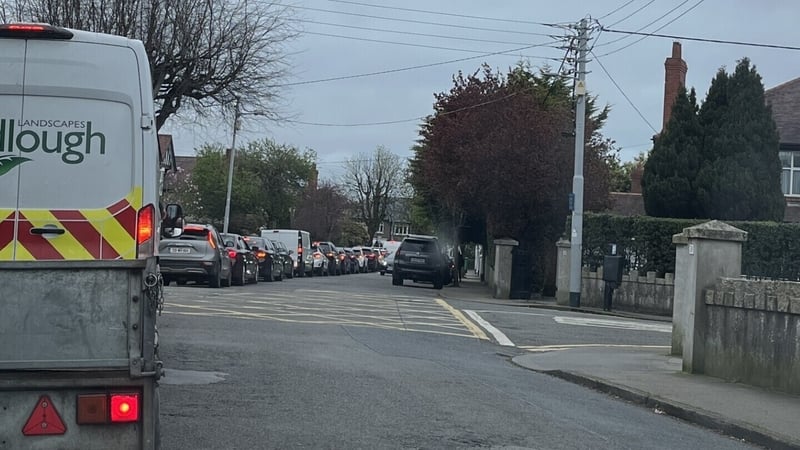

How long does it take to get to work, school or an appointment in Dublin's morning rush hour?
There is a very real possibility of getting stuck in heavy traffic, or waiting for an overcrowded bus or train or cycling in between cars and trucks on a busy road.
Figures from the Central Statistics Office show the average commuting time in Dublin is just over half an hour.
We need your consent to load this flourish contentWe use flourish to manage extra content that can set cookies on your device and collect data about your activity. Please review their details and accept them to load the content.Manage Preferences
Trade unions and opposition political parties have called for better flexible working arrangements to try to ease the congestion many people experience on the capital’s roads and commuter routes.
According to Inrix, a traffic analytics firm, Dublin is the 11th most congested city in the world, ranked between Los Angeles and Boston.
Incidents on the M50, which is the busiest road in the country, regularly cause severe delays for drivers and businesses.
Accidents and broken-down vehicles on the M50 can cause serious knock-on effects for surrounding routes - clogging up the network of roads that surround Dublin’s arterial motorway.
Transport Infrastructure Ireland has said it can’t do anything about it - that the motorway is at full capacity.
Traffic congestion not only causes delays and frustrations for commuters; there is also a financial burden.
We need your consent to load this flourish contentWe use flourish to manage extra content that can set cookies on your device and collect data about your activity. Please review their details and accept them to load the content.Manage Preferences
The National Transport Authority (NTA) detailed the cost of congestion to an Oireachtas committee earlier this year - it has estimated it will reach €2 billion nationally by 2040 without intervention, and that the cost to the greater Dublin area will be €1.5bn.
But there are indications that more people are getting out of their cars and using sustainable transport options such as bicycles and buses.
The Government has been investing through the NTA to develop Active Travel - an initiative to promote sustainable modes of travel like walking and cycling.
Watch: From the Archives - Commuting in Dublin in 1979
There has been investment too in bus travel with BusConnects delivering new routes and timetables and changes to road layouts. There have been teething problems with some unhappy bus users, while the NTA said it continues to monitor all of its changes.
The most recent data from the CSO shows there were almost 3.5 million passenger journeys by Dublin Bus in the last week of January.
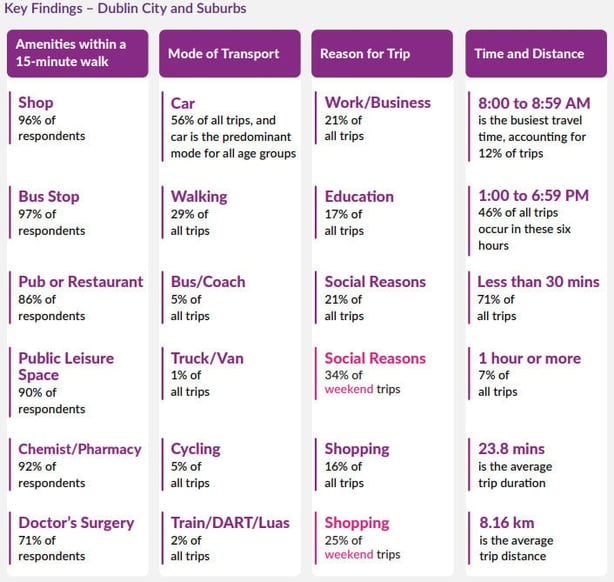
In its National Household Travel Survey 2024, the NTA showed Tuesday is the busiest day for work-related travel, and that travel peaks between 8am and 9am across the country.
The survey found almost six in ten trips, or 56%, are made by car by those living in Dublin city and its suburbs, while 29% of trips were made by walking.
It found the use of buses and cycling in Dublin were each used for 5% of all trips.
RTÉ News has undertaken a very non-scientific methodology to see how three different modes of transport fared in Dublin’s rush-hour.
Our three reporters; Maggie Doyle in her car, Colman O’Sullivan on his bike and Barry Gallagher on a bus left Woodstown Shopping Centre in Knocklyon near the M50 and headed into St Stephen’s Green.