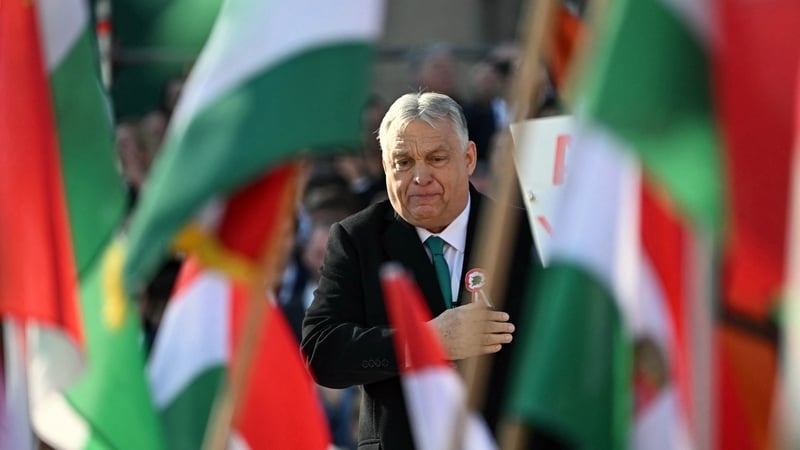

Hungarian Prime Minister Vitkor Orbán is facing the toughest challenge yet to his 16 years in government ahead of a parliamentary election on 12 April.
His nationalist Fidesz party is trailing in the polls by nine points to the centre-right Tisza party, led by a Péter Magyar, a 44-year-old lawyer and former Fidesz insider.
Mr Magyar's anti-corruption and pro-business platform has put his party on the rise since successful performances in European and local elections in 2024.
A sluggish economy and voter fatigue with Fidesz, particularly in urban areas, has also contributed to Tisza's growing popularity after years of easy election wins for the ruling party against fragmented left and liberal parties.
Mr Orbán's pro-Moscow stance on the war in Ukraine and his repeated opposition to EU policy on migration quotas and the bloc's progressive social agenda has put him at odds with many of the EU's leaders in recent years.
In contrast, Mr Magyar has promised to align Hungary with the West and has said he will work with the EU to unlock billions in cohesion funds for Hungary, frozen because of the Fidesz government's changes to the rule-of-law.
Mr Magyar would continue a Hungarian position of not sending arms to Ukraine and has said a Tisza-led government would hold a referendum on whether to back Ukraine's EU membership.
But overall, he has been firmly critical of Russia's invasion of Ukraine.
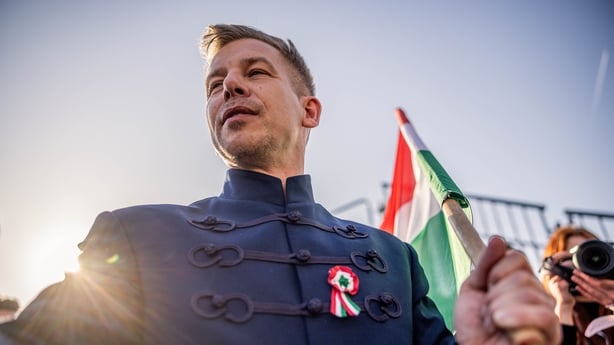
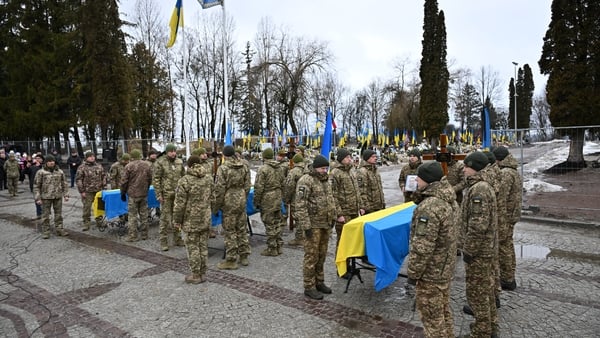
In 2024, he visited Kyiv's Wall of Remembrance of the Fallen, honouring Ukrainians killed since the start of Russia's full-scale invasion.
Such a gesture from Hungary's current prime minister would be unthinkable.
Mr Orbán's Fidesz has put the war in Ukraine at the centre of its election campaign, just as it did with local elections in 2024, framing the current government as peaceniks and the opposition as pro-war.
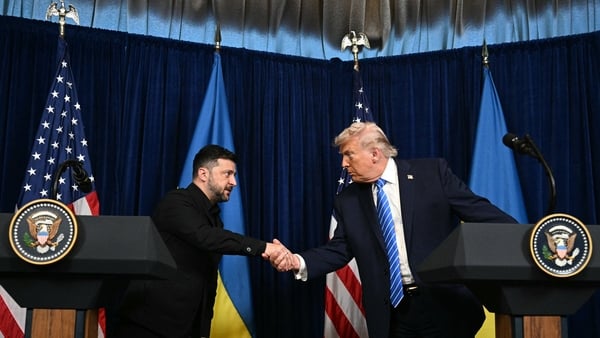
Fidesz campaign posters in the capital Budapest feature a trio of images of Mr Magyar, European Commission President Ursula von der Leyen and Ukrainian President Volodymyr Zelensky with the words: "Ok, the decision".
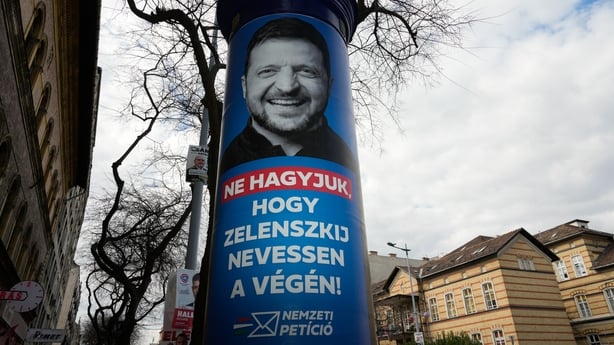
Another features a smiling Mr Zelensky with the words: "Let's not let Zelensky have the last laugh".
It is crude electioneering, but it has worked previously for Fidesz, which won the past four parliamentary elections, each time with a two-thirds majority.
The party's super-majority in the Hungarian parliament has enabled it to change the country's constitution, reducing the independence of the judiciary and state media, and introducing a controversial anti-LGBTQ law in 2021 that prohibits the promotion of homosexuality and gender change in books, films and advertisements for minors.
Russia has an interest in Mr Orbán winning a fifth consecutive election - his party's defeat would deprive Moscow of a key political and economic ally within the EU.
On Saturday, the Washington Post reported that Russia's foreign intelligence agency, the SVR, had proposed conducting a staged assassination attempt on Mr Orbán to dramatically alter the course of the campaign and boost support for Fidesz.
The reporting was based on an internal SVR report, obtained by a European intelligence agency and shared with the newspaper.
In the same article, the newspaper, citing a European security official, reported that Hungary's foreign minister Péter Szijjarto shared live updates from EU foreign council meetings with Russian foreign minister Sergey Lavrov, allegedly making phone calls during breaks.
Mr Szijjarto dismissed the report as "fake news" on social media platform X, while the Kremlin’s spokesperson Dmitry Peskov describing it as "disinformation".
A European Commission spokesperson said yesterday that the Commission was concerned by reports of alleged information sharing and called on the Hungarian government for clarifications.
Mr Orbán yesterday ordered a probe into what he described as the wiretapping of his foreign minister.
Earlier this month, independent Hungarian media outlet VSquare, claimed that three Russian operatives were already working in Hungary, tasked with manipulating social media content ahead of the April election.
VSquare based its reporting on interviews with three unnamed European intelligence agencies.
For Ukraine, the immediate impact of a Fidesz defeat at the polls would be the release of a €90bn loan from the EU, designed to meet Ukraine’s budgetary needs for the next two years.
Mr Orbán originally approved the loan at an EU Council summit in December, but made a U-turn on the issue last month, citing slow repair work by Ukrainian authorities to the Druzhba oil pipleline, damaged by Russian drone attacks last year. Hungary and Slovakia are the only two EU members still buying Russian oil imports directly.
Ukraine has since requested help from the EU to repair the pipeline as a compromise and to unblock the Hungarian veto.
Mr Orbán is not short of support among Europe’s nationalist leaders, many of whom travelled to Budapest yesterday for a meeting of the Patriots for Europe, a European Parliament grouping of nationalist and far-right parties that the Hungarian prime minister formed in 2024.
French far-right politician Marine Le Pen, Italy's Matteo Salvini, and Geert Wilders from the Netherlands were among the attendees.
Poland's President Karol Nawrocki also travelled to Budapest yesterday to meet Mr Orbán.
Mr Nawrocki, a nationalist, shares Mr Orbán's admiration for US President Donald Trump, though none of the Hungarian leader's openness towards Moscow.
On Saturday, Mr Trump endorsed Mr Orbán for the upcoming election in a video address to CPAC Hungary delegates, an annual meeting in Budapest of right-wing politicians and ideologues from across Europe and North America.
That kind of endorsement will carry weight with Fidesz loyalists, but Hungary's stagnant economy and relations with the EU, soured after years of non-compliance by Budapest over the rule-of-law, are likely to be more important for many centrist voters.