


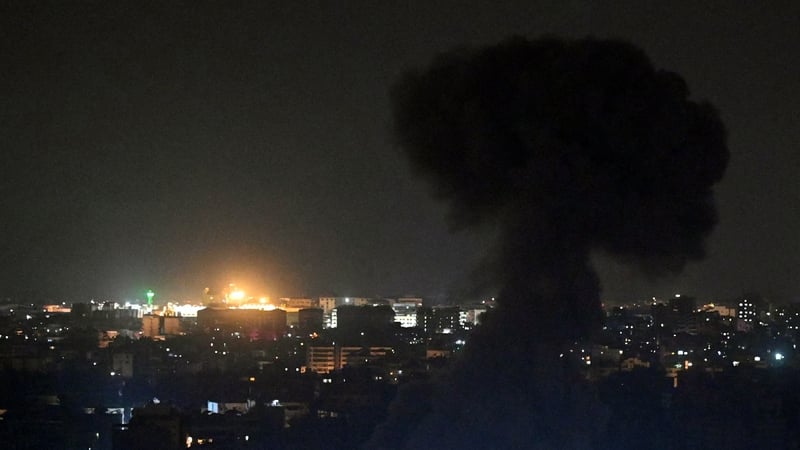
The leaders of Iran, Israel and the United States all voiced defiance and vowed to fight on as the Middle East war approached the two-week mark, killing thousands of people, disrupting the lives of millions of others and shaking financial markets.
New Iranian Supreme Leader Mojtaba Khamenei issued his first defiant comments, read out by a television presenter, vowing to fight on and keep the Strait of Hormuz shut, and calling on neighboring countries to close US bases on their territory or risk Iran targeting them.
"I assure everyone that we will not neglect avenging the blood of your martyrs," said the hardline cleric, who is close to Iran's top military force. It was not clear why he did not appear in person.
Israeli Prime Minister Benjamin Netanyahu held his first news conference since the US and Israeli airstrikes on Iran started on February 28, taking questions via video-link and issuing a veiled threat to kill Mr Khamenei and defending the military assault.
"I will not detail the actions we are taking. We are creating the optimal conditions for toppling the regime but I won't deny that I can't tell you with all certainty that the people of Iran will topple the regime - a regime is toppled from the inside," Mr Netanyahu said.
"But we can definitely help and we are helping."
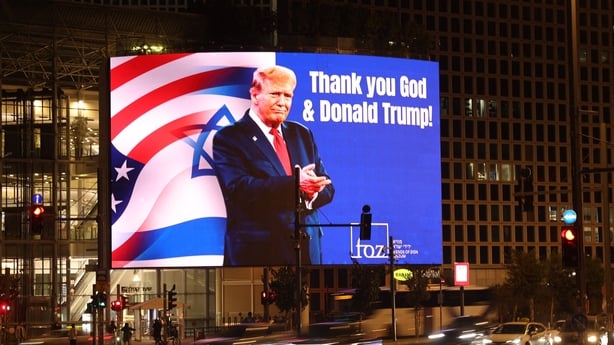
US President Donald Trump, who has already declared that the US and Israel won the war, said that the United States stood to make significant money from oil prices driven higher because of supply issues tied to the closure of the Strait of Hormuz.
"The United States is the largest Oil Producer in the World, by far, so when oil prices go up, we make a lot of money."
Stopping Iran from having nuclear weapons was far more important, he said on social media.
US political fallout
Mr Trump's comments angered opposition Democrats, who accused the Republican president of caring too little about the war's impact on average Americans and demanded more information about civilian casualties, particularly a strike that killed dozens of children at an Iranian girls' school.
Mr Trump's administration has not provided a public assessment of the expected cost or duration of the war, which is unpopular with the American public, or a strategy for Iran after the fighting stops.
The president and top aides have also given conflicting reasons for starting to fight.
The Strait of Hormuz is the shipping route through which a fifth of global oil normally passes along Iran's coast.
The prospect that one of the most severe disruptions ever to global energy supplies could endure sent oil prices up about 9% to $100 a barrel, despite the announcement on Wednesday that developed countries would release 400 million barrels of oil from strategic reserves, and after falling earlier in the week on hopes of a swift end to the war.
US stocks fell yesterday, with the S&P 500 notching its biggest three-day percentage drop in a month.
The death toll in the unpredictable war has risen to more than 2,000 people, most in Iran.
Almost 700 have died in Lebanon, where Israel has targeted central Beirut and ordered residents out of a swathe of the south in an offensive against the Iran-backed Hezbollah group.
At his press conference, Mr Netanyahu vowed to keep hitting Hezbollah in Lebanon, after the group opened fire on 2 March to avenge Israel's killing of Iranian Supreme Leader Ali Khamenei, Mojtaba Khamenei's father, at the start of the war.
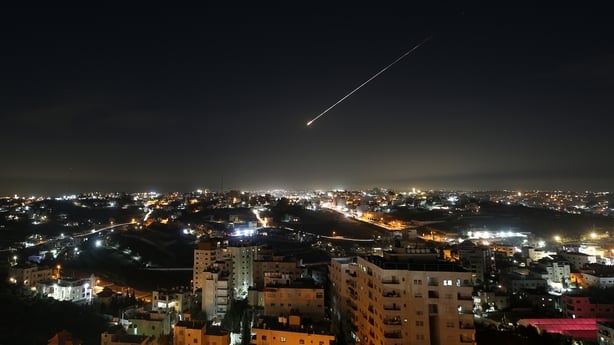
Drones have been reported flying into Kuwait, Iraq, the United Arab Emirates, Bahrain and Oman, undermining US and Israeli claims to have knocked out much of Iran's stock of long-range weapons.
Read more:
Iran war may be decided by stability of global economy
Clashes intensify near Irish UN troops on Israel-Lebanon border
Missiles and movies: How Trump is appealing to his base online
Two tankers were set ablaze in the port of Basra in Iraq, after being hit by suspected Iranian explosive-laden boats.
Hours earlier, three other ships were struck in the Gulf.
Iran's Revolutionary Guards claimed responsibility for at least one attack - on a Thai bulk carrier that was set ablaze.
Another container vessel reported being struck by an unknown projectile near the UAE.
Iran security forces 'everywhere'
Inside Iran, residents said security forces were increasing their presence to demonstrate continued control.
"Security forces are everywhere, more than before. People are afraid to come out, but supermarkets are open," teacher Majan, 35, said by phone from Tehran.
Israel and the United States have called on Iranians to rise up and topple their clerical rulers.
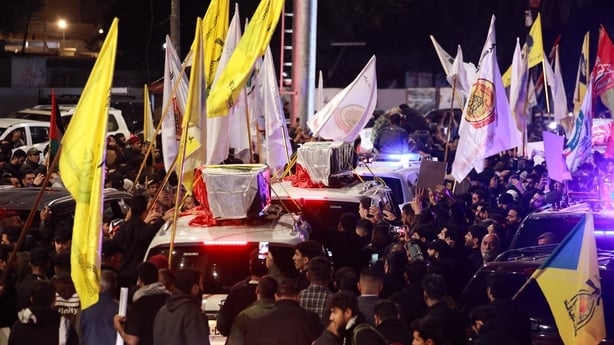
Many Iranians want change and some openly celebrated the supreme leader's death on 28 February, the war's first day, after his forces had killed thousands of anti-government protesters in January.
However, there has been no sign of organised dissent while the country is under attack.
Iran's message is that its strategy now is to impose prolonged economic shock to force Mr Trump to back off.
A spokesperson for Iran's military command said the world should prepare for oil prices of $200 a barrel.
US Energy Secretary Chris Wright said he did not expect that to happen, but did not totally rule it out.
"I would say unlikely, but we are focused on the military operation and solving a problem," Mr Wright told CNN.
