
The jury in the trial of a man accused of murdering his partner and setting fire to their home has heard that an attempt may have been made to amputate her left arm after she was dead.
However, this could not be confirmed because of fire damage to the skin.
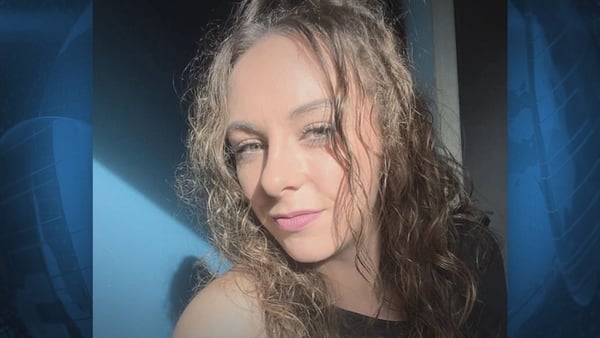
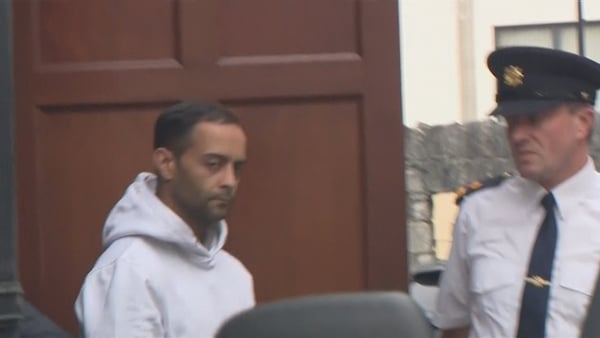
State Pathologist Dr Yvonne McCartney was giving evidence on day four of 31-year-old Adam Corcoran's trial for the murder of his 27-year-old partner Daena Walsh, at John Barry House, Connolly Street, Midleton, Co Cork, on 2 August 2024.
Mr Corcoran has denied murdering the mother-of-two, and a charge of arson. He told gardaí she stabbed herself.
Dr McCartney gave details of 51 separate injuries to Ms Walsh's body.
These included 25 stab and slash wounds to the face, neck, chest, abdomen and limbs as well as burn injuries, bruises and abrasions.

In his cross-examination, Defence Counsel Brendan Grehan asked Dr McCartney about signs of "notching" on the left arm, "it sounds like an attempt to amputate the arm?", he asked.
Dr McCartney said "that is what it appears. It is difficult to say because of the heat. Injuries (to the left arm) might have been inflicted post mortem. Appearance suggest that but I cannot say because of the heat".
The State Pathologist later agreed that the large wound to Ms Walsh's left arm, the only one that did not have associated haemorrhage, feeds into her view that it may have been inflicted post-mortem but fire damage may have hampered it to a degree.
Dr McCartney also said the lack of soot and debris in her airways, together with very low carbon monoxide saturation levels, indicated that Ms Walsh was already dead when the fire started.
Mr Grehan asked about the wounds on the deceased's hands, and the State Pathologist said, on the balance of probabilities, the pattern was more in keeping with defence-type wounds.
She also said the drugs in the deceased's system played no role in her death.
Dr McCartney said toxicology tests found anti-anxiety and anti-psychotic medicines at a therapeutic level in the young mother's body, with a very low level of metabolised cocaine, and an ethanol level of 40mg per 100ml of blood below the legal limit for driving.
The jury of eight men and four women at the Central Criminal Court in Cork were told that death was due to multiple sharp force injuries, made up of 11 stab wounds and 14 incised wounds, to her face, neck, chest and abdomen, leading to haemorrhage, hypovoleamic shock and cardio-respiratory arrest.
One of the stab sounds penetrated the sternum and the pericardium of the heart and would have been independently fatal, the pathologist said.
The trial continues tomorrow.