
New figures from Focus Ireland show the number of families seeking assistance from their homelessness services reached a record high last year.
2,164 families engaged with the charity in 2025, which is up over 5% on the previous year.
Last month saw another record broken, with the number of people accessing emergency accommodation nationwide surpassing 17,000 for the first time, with a total of 11,793 adults and 5,319 children.
Emma, who shares a single room in an emergency accommodation centre with her 10-year-old daughter and seven-year-old son, says the situation has brought her to breaking point: "It's just not normal to see so many children living in this place and having to grow up in a room.
"It actually just breaks my heart. It's not normal, it's not right and it just shouldn't be happening. Any TD or the Taoiseach or anybody, they would not last one night in a place like this. It's just absolutely horrific."
Emma says the family had been living in rented accommodation for 10 years, but when their landlord sold up, they had nowhere to go and had to take emergency accommodation in a centre far from where they had been living: "It's not the area we're from. We're away from our own resources, our family, our friends.
"And we're away from the schools, we've been moved away from everything basically and it's just, it is a nightmare to be honest, especially for the kids. I'm struggling myself and I'm a grown-up, but I can only imagine what's going on with my poor kids."
"Every day it's just a nightmare, getting up in the morning, getting ready in a tiny room. We only have a little bathroom with a sink. We don't have countertops. We've nowhere to prepare our food. After school, not having our own kitchen for making a nice healthy dinner, not having a kitchen table to sit with our kids and do homework."
She added: "My eldest daughter is amazing, so smart, so great in school and never complains. But since we've moved in here, with the homework, with everything, she's not really able to manage it.
"She has to do her homework in the room. We have a camping chair that she just folds up. She sits on it with the books on her lap, does her homework. But she's just really struggling with it, to be honest. Both of my kids are struggling every day and all I get asked every day is, when are we going to get our own home? It just makes me feel really guilty."
We need your consent to load this rte-player contentWe use rte-player to manage extra content that can set cookies on your device and collect data about your activity. Please review their details and accept them to load the content.Manage Preferences
At the Focus Ireland office in Dublin, Sarah, which is not her real name, explains how living in emergency accommodation for over three years, sharing a single room with her mother and two older brothers, impacted her performance at school.
"I found it quite hard because I didn't have the facilities to do my work or homework. We had one desk in our room, and we had to share it because my brothers, they're older than me, so obviously they also had their work. But I love school, because I love the fact that I get to learn.
"I think in general, it's a privilege to be able to learn. You never know what a person is going through in life. It can be quite hard. And for me personally, education is the escape."
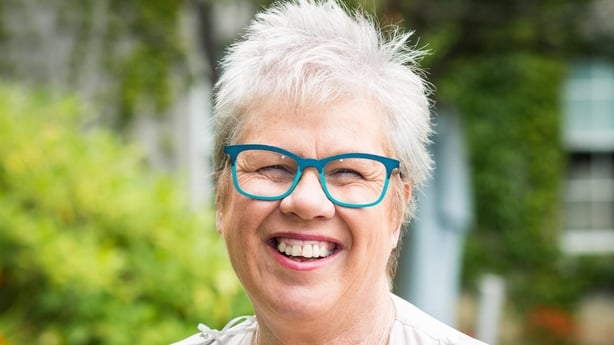
Drawing on her research, carried out on behalf of the Children's Rights Alliance, Associate Professor of Psychology in the Institute of Education at Dublin City University Dr Ger Scanlon, outlines the numerous challenges facing families in homelessness, particularly when it comes to adolescents developing social skills.
"We heard stories from parents who spoke about being in hotels where children were constantly getting reinfected with tummy bugs, colds etc and then missing school as a result. Also, particularly in adolescents, we're very consumed with how other people perceive us. So, if it happens that I become homeless at 15, that will have a different impact long-term than it would have on a seven-year-old.
"In our report, we found that teachers were saying some of the children were socially isolated. They weren't telling people about their circumstances. So, how that's mediated is really, really important. If schools and teachers give young people and children the vehicle to be able to express that, it can help them navigate that as well."
The difficulty in navigating those teenage social relationships when sharing a room in emergency accommodation is something Maria, which is not her real name, says changed her as a person.
"I'd like to say I wasn't entirely embarrassed about living in emergency accommodation, but it did really make it difficult to hang out with friends. I’d have to come up with excuses because there were curfews (in the emergency accommodation centre) and there were a lot of restrictions on the time we could spend out.
"The fact that we couldn't go out because of the curfews, and we couldn't invite anyone into our emergency accommodation, meant it didn’t feel like a home. It felt more like a prison. It was really, really tough."
"I'd like to think that with friends, I'm chatty, but during this period, I found myself self-distancing. I was extremely quiet and withdrawn", she added.
Both Maria and Sarah have exited homelessness with their families with the assistance of Focus Ireland. But for Emma and her two children, the wait for a home of their own continues.