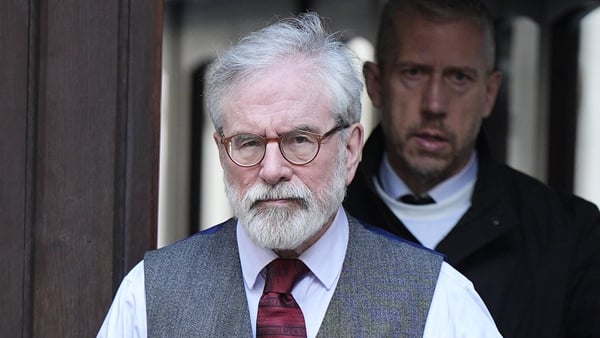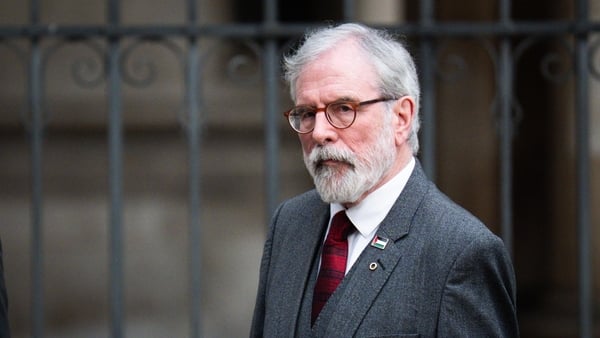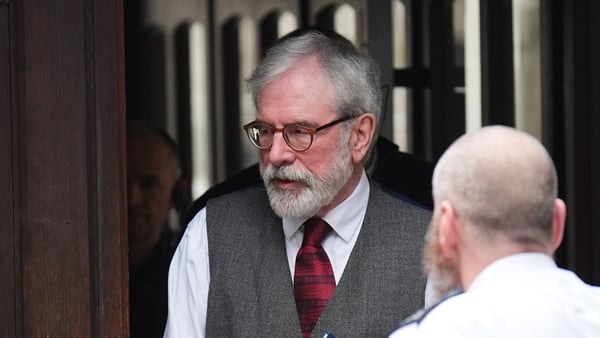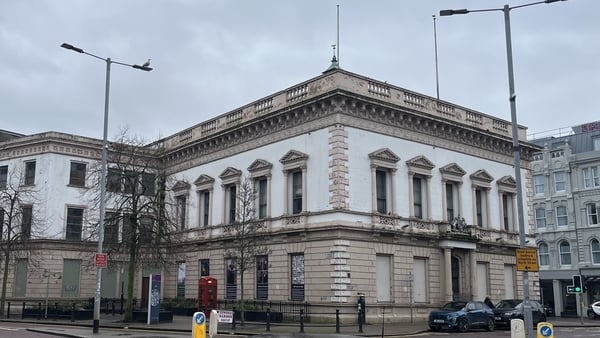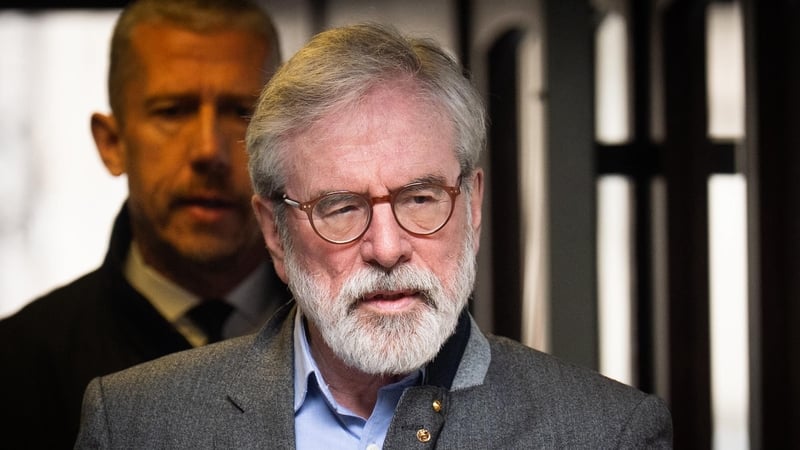

A former RUC Special Branch officer has told the civil trial of Gerry Adams in London that intelligence reports stated that he "was a senior member of the IRA Army Council and the de facto leader of the IRA".
The former Louth TD and West Belfast MP is being sued in a civil action in the High Court by three victims of separate IRA bomb attacks in 1973 and 1996 who claim he was directly responsible.
The former Sinn Féin leader was heckled on his way into the Royal Courts of Justice this morning by two protesters.
The fourth day of the case heard evidence from one of two witnesses who have been granted anonymity, and he gave his evidence from behind a screen to conceal his identity.
Witness B said Mr Adams was regarded by the intelligence agencies as "a very formidable opponent" and "the greatest strategic thinker" the IRA had.
His statement added that if Mr Adams was not the most important member of the IRA, "he pulled off a remarkable coup", as the British, Irish and Unites States governments believed otherwise.
"Had (Adams) not been the senior figure in the IRA that he was, there would have been absolutely no point in the governments dealing with him the way they did on the road to the Good Friday Agreement in 1998."
He told the court he remembered meeting with two Garda Special Branch officers in the mid-1990s who briefed him on the workings of the IRA Army Council. He said they told him that all its meetings took place in the Republic of Ireland and that Mr Adams "never missed" them.
In his witness statement, Witness B said all IRA operations outside Northern Ireland required Army Council authorisation, especially something as serious as the London Dockland's bombing in 1996, which ended the IRA ceasefire at the time.
He said a great deal of the intelligence material he read throughout his service with RUC Special Branch communicated that Mr Adams "was a senior member of the IRA Army Council and the de facto leader of the IRA."
Questioned by a lawyer representing Mr Adams, he said he believed he was probably being constantly looked at by police during the Troubles to see if there was any evidence that would meet the criminal burden of proof.
The criminal burden of proof is "beyond a reasonable doubt" while the burden of proof required in this civil legal action is "on the balance of probabilities."
Agreeing that Mr Adams was "at the forefront" of the peace process, the witness said that was not only because he wanted peace but because at that time "he knew his organisation was getting nowhere and he had to extract the best possible price he could."
The witness agreed that if he had had any direct evidence that Mr Adams had been involved in the bombings of London Docklands and Manchester in 1996 he would have passed that information to investigating officers.
The hearing continues