
A new report from the Economic and Social Research Institute has found that Ireland is "lagging considerably behind", and unlikely to meet, the targets set out in the Climate Action Plan for decarbonising residential heat.
It highlights two main reasons.
The first is that the rate of deep energy retrofits, heat pump installation, and district heating is too slow.
The second reason is that energy efficiency measures are not delivering the carbon savings predicted by theoretical models.
This is because householders typically get used to higher comfort levels and so do not reduce their energy consumption as much as expected.
One striking observation is that there is very little variation in actual energy use between dwellings of different BER ratings, so that the average actual energy consumption is similar for A-Rated house and a G-Rated house.
There are three key targets for the residential heat sector in the Climate Action Plan.
The first is to ensure that half a million existing Irish homes undergo deep energy efficiency upgrades by 2030.
This is defined as 500,000 older houses achieving a BER rating of B2 or higher by that date.
Today's ESRI report shows this target is likely to be missed by a large margin.
We need your consent to load this rte-player contentWe use rte-player to manage extra content that can set cookies on your device and collect data about your activity. Please review their details and accept them to load the content.Manage Preferences
At the end of 2024, only 58,000 homes had undergone the required level of retrofitting - just 11.5% of the 2030 target.
There was an acceleration in the pace of deep retrofitting between 2022 and 2024.
However, the report says that even if that accelerated pace can be maintained, total deep retrofits would still be one-third short of target by 2030.
The SEAI estimates the rate of deep retrofit installation needs to average about 75,000 homes per year to reach the target.
But this is 3 times higher than the amount completed in 2024.
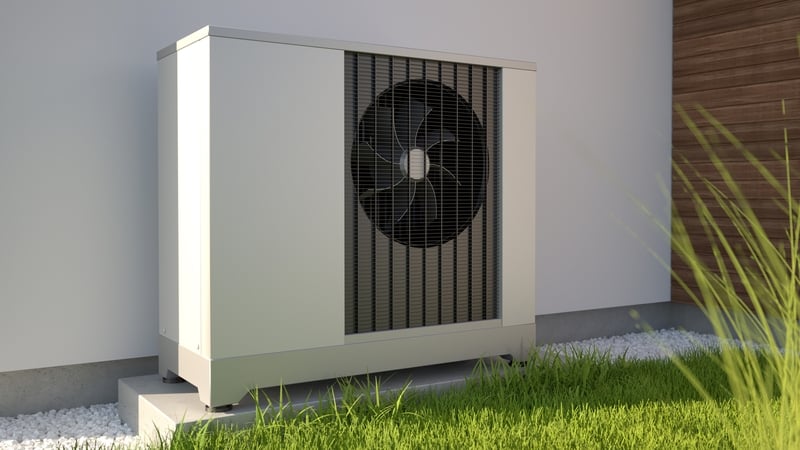
The second key objective for the sector in the Climate Action Plan is to ensure that heat pumps are retrofitted or installed in 400,000 existing dwellings by 2030.
The ESRI says this second goal is currently on course to be missed by an even bigger margin than the retrofitting target.
By the end of 2024, barely over 14,000 heat pumps had been installed, just 3.5% of the 2030 target.
At this rate 51,400 heat pumps will have been installed by 2030. This is just under 13% of the target set out in the climate action plan.
The third target for residential heat in the Climate Action Plan relates to district heating.
It is to have 2.7 terawatt hours per year of residential heat supplied through district heating networks.
This would be enough for between 187,000 and 314,000 homes, or 10% of residential heating demand.
Progress however is slow, with current estimates suggesting that perhaps 60,000 homes will be connected to district heating by 2030. But this merely between 20 and 32% of the target required.
The report highlights significant financial barriers preventing a more rapid uptake of decarbonisation measures by homeowners.
It says that, after State grants are subtracted, the median cost for a householder of a deep retrofit ranges from €16,378 for an apartment, to just over €42,900 for a detached house.
If this is funded by through a Government-backed 5-year retrofit loan, the monthly repayments range from €294.05 for an apartment owner to €770.06 for detached house dweller.
The report highlights that more than 40% of homeowners are highly unlikely, in any case, to undertake a deep retrofit or to switch to a heat pump heating system.
Firstly, 21% of homeowners say they have already completed any renovations they are prepared to undertake, including energy saving measures.
Another 23% say they are content with their home as it is.
Given all this, the ESRI report says that if Ireland is to meet the current decarbonisation targets in the residential heat sector, additional measures may be required.
These might include policies to switch from the more carbon-dense fossil fuels like coal and oil to lower carbon fuels like natural gas, LPG, and zero emission fuels, including Hydrogenated Vegetable Oil, or biodiesel for home heating.
Senior Research Officer at the ESRI, Dr Muireann Lynch, said there are more households in the country than can feasibly retrofit by 2030, and the question is what to do about those other households that won't be retrofitting.
"We think that there might be something to be said for trying to target grants and incentives a bit better. We should also be looking at alternative and complementary fuels and technologies and considering whether they should be included in the mix," she said.
We need your consent to load this rte-player contentWe use rte-player to manage extra content that can set cookies on your device and collect data about your activity. Please review their details and accept them to load the content.Manage Preferences
Ireland will fall short of renewable energy targets
Ireland will fall short of renewable energy targets up to 2030, the Cabinet heard yesterday.
The State met its "baseline" renewable energy target of 16% in 2024 but is projected to fall short of interim targets in 2025 (27.6%) and 2027 (33.6%), according to a memo brought to Cabinet.
The overall ambition is a renewable energy share of 43% in 2030.
A Government spokesman said: "Ireland will fall short of our renewable energy targets up to 2030.
"These targets are based on the share of renewable energy in gross final energy consumption in the electricity, heat and transport sectors."
The spokesman said further analysis of available "options" is being undertaken, including paying a financial contribution to renewable energy projects in other EU member states in return for a "statistical allocation" of the energy produced.
He added: "The priority will still remain supporting domestic renewable generation.
"Further analysis is going to be undertaken to assess the potential value and cost effectiveness of these mechanisms."