
In quieter times, the French leader's announcement to expand France’s nuclear arsenal and use it to shield much of the European continent would probably have received a lot more attention.
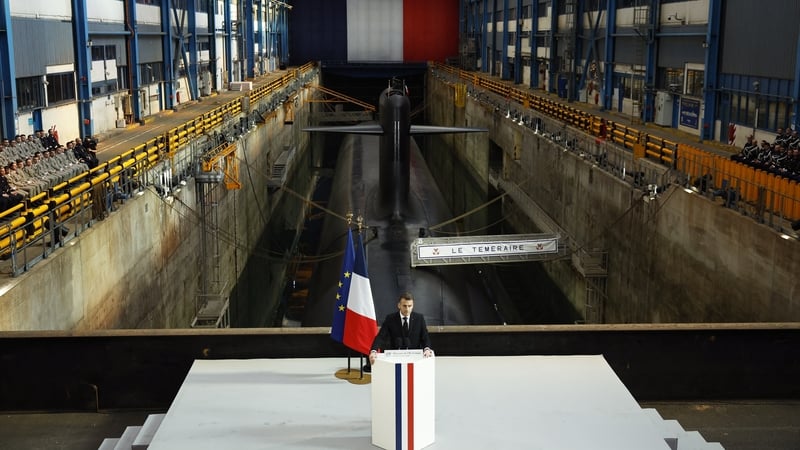
But with the United States and Israel waging war on Iran, French President Emmanuel Macron’s speech - delivered in front of a giant nuclear submarine at the Île Longue naval base in Brest - went largely unnoticed.
And yet, it was hugely significant.
Since the beginning of the Cold War, France and the rest of Europe have sheltered under the US nuclear umbrella.
On Monday, Mr Macron declared that France would not just increase its number of nuclear weapons, but also allow the deployment of nuclear-armed fighter jets to other parts of the continent.
"To be free, one must be feared," he told the audience, mostly made up of ministers and military personnel.
He added: "To be feared, one must be powerful."
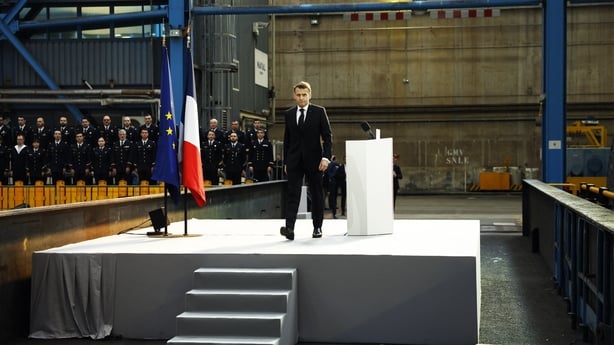
Citing growing threats from Russia and China and rising tension with the United States, the French president said it was in his own country’s "vital interests" while also holding out the French nuclear umbrella for other European states too.
Several have already agreed to huddle underneath.
Among them are Belgium, Denmark, Germany, Greece, Poland, the Netherlands and Sweden.
France and the UK, Europe’s only other atomic power, already signed a nuclear cooperation pact last summer.
Mr Macron was not offering to share operational capability.
Control of the arsenal, he made clear, would remain in French hands.
Mr Macron also announced that France would no longer publicly disclose the number of nuclear warheads - another major shift.
At the moment, that figure is around 290, making France the fourth-largest arsenal behind Russia at around 4,300, the US at around 3,700 and China at around 600.
While the new doctrine to strike out for Europe certainly marked a departure from decades of nuclear policy, it was not an abandonment of the US deterrent.
"The initiative is not intended to replace the American nuclear umbrella but to complement it, as US strategic priorities evolve," wrote Grégoire Roos, director of Europe, Russia and Eurasia programmes at Chatham House, a UK-based think tank.
After all, the US nuclear deterrent is, by its vast and phenomenally expensive nature, irreplaceable.
In fact, head of NATO Mark Rutte laughed off European attempts to forge their own path.
"Good luck," he told European politicians in Brussels last month.
But this week he had softened his line, saying in an interview that he welcomed the French move.
"We all agree on this," he said, adding "the ultimate supreme guarantor of our way of life, the fact that we have free media, free press, that we have elections … regains so hard fought after the second World War, is in the end, the United States' nuclear umbrella and that is key".
Whether Mr Macron’s new nuclear posture will survive beyond the term of his office remains to be seen, especially if he is succeeded by a more nationalistic government under Marine Le Pen, who rejects the idea of sharing France’s nuclear umbrella with anyone.
It hardly needs reiterating that this comes at a time of major global upheaval.
This month marked four years since Russia launched its full-scale invasion of Ukraine, testing Europe’s defensive capability and eventually straining its relationship with its security guarantor.
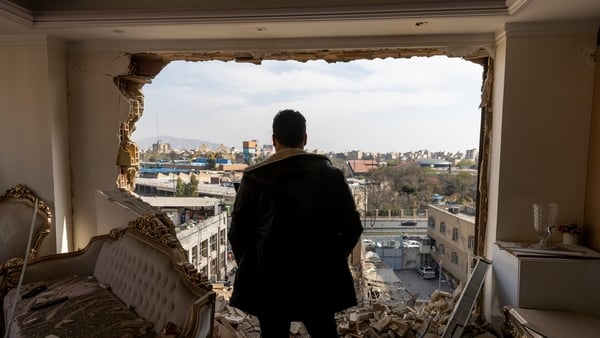
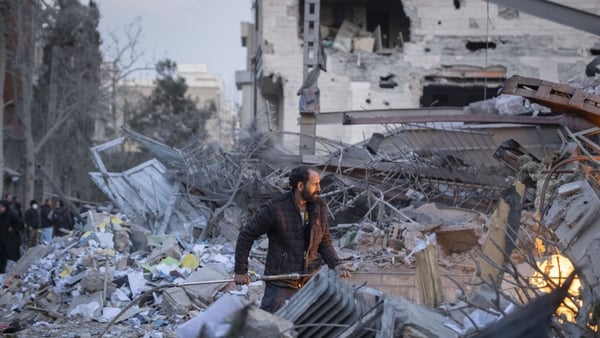
Meanwhile the US-Israeli attack on Iran last weekend and Iranian retaliation on its neighbours threatens to "spiral beyond anyone’s control", according to the UN Secretary General António Guterres.
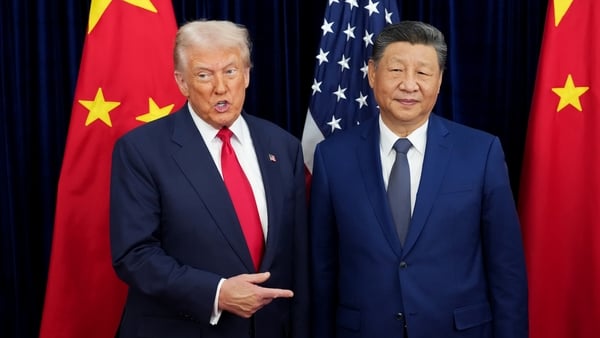
Europe, previously upbraided by US President Donald Trump for being "pathetic freeloaders" when it comes to defence, has woken up in a new reality.
Threatened to the east by Russia, which is backed by China, and to the West by its own ally with its territorial designs on Greenland, Europe is making a play for some strategic autonomy.
Already, a buildup of conventional weapons is under way with billions of euros set to be spent to beef up Europe’s defences.
Germany, having lifted its post-war limits on expenditure, is leading the pack and is set to pour more than $100 billion into its military this year, dwarfing the defence budgets of other European nations.
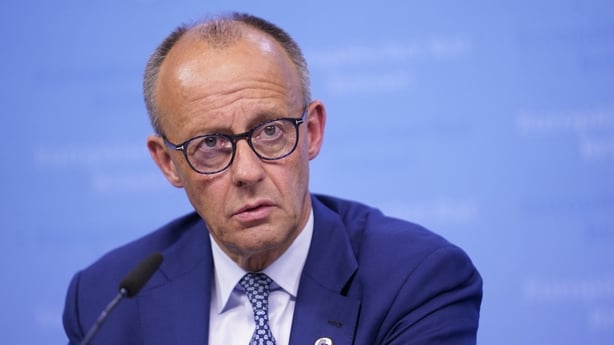
German Chancellor Friedrich Merz is fully onboard with the French nuclear flex.
Mr Merz and Mr Macron have set up a high-level nuclear steering group.
According to a joint declaration on Thursday, the two leaders would engage in strategic cooperation including consultations "on appropriate mix of conventional, missile defence and French nuclear capabilities" in response to "the evolving threat landscape".
As Europe integrates on defence, it raises questions for militarily neutral countries, like Ireland, already facing scrutiny from some fellow EU member states over its reliance on others for security.
'Important Ireland working with its partners'
There is also the question of how much Ireland will be consulted in the event of nuclear deterrent drills in the northeast Atlantic.
Assistant professor in the history of war since 1945 at University College Dublin believes Ireland needs to be in the room when decisions are made.
Edward Burke said: "It's very important that Ireland is working with its partners to secure its economic exclusion zone, its marine territory, which is pretty vast within the Atlantic."
"If Ireland is not proactively securing its maritime space and is not engaging with its partners on this, then there's a risk of ever-increasing impatience and frustration that Ireland is not engaging and that could be quite detrimental to Ireland's interest," he added.
Responding to the nuclear build-up, anti-nuclear campaigners were aghast.
'A direct threat to the peace'
"Every additional nuclear weapon in the world and every additional country where they are deployed increases the risk that they will be used," said Melissa Parke, director of the International Campaign to Abolish Nuclear Weapons (ICAN).
She said the announcement from Mr Macron was "a direct threat to the peace and security of the region and the world".
She pointed out that France had already spent $6 billion on its nuclear weapons in 2024 and it was not clear how much more that amount would increase.
"This is not progress, it’s a nuclear arms race that no one can afford," she said.
But France is far from alone.
China spends around $11 billion a year, Russia around $8 billion and the US a whopping $51 billion.
Dissolution 'could not come at worse time'
Together the world’s nine nuclear powers - Russia, the United States, China, France, the United Kingdom, Pakistan, India, Israel, and North Korea - possess nearly 13,000 nuclear weapons.
But the international nuclear non-proliferation agreements designed to cap the number of warheads are falling away.
In February, the new Strategic Arms Reduction Treaty (START) between the United States and Russia expired, marking the end of over 50 years of legally binding nuclear arms control agreements between the world's two largest nuclear powers.
"This dissolution of decades of achievement could not come at a worse time," said Mr Guterres.
"The risk of a nuclear weapon being used is the highest in decades," he added.
In a geopolitical landscape scarred by great power rivalry and an emerging doctrine of "might makes right" - smaller countries are showing more interest in developing their own nuclear deterrent.
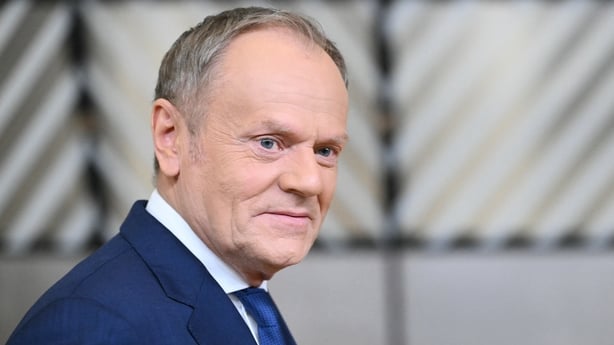
This week, Poland’s Prime Minister Donald Tusk confirmed he would hold nuclear talks with France but also hinted that Poland may consider its own nuclear programme.
Japan and South Korea, also growing less certain of relying on the American umbrella, have floated the idea.
The former US President Bill Clinton told Prime Time in 2023 that he regretted persuading the Ukrainians to give up their nuclear weapons.
"And none of them believe that Russia would have pulled this stunt if Ukraine still had their weapons," he said.
And while the US is engaged in wars of regime change with its adversaries around the world, it is unlikely to go after Kim Jong Un of nuclear-armed North Korea despite that regime posing a more immediate threat.
North Korea is believed to possess intercontinental ballistic missiles capable of reaching the US mainland in 33 minutes and is believed to be working on technology to miniaturise nuclear warheads.
The Kim regime has referenced the demise of others in relation to its own nuclear pursuits.
Defending a nuclear test in 2016, the state-run news agency KCNA said: "The Saddam Hussein regime in Iraq and the Gaddafi regime in Libya could not escape the fate of destruction after being deprived of their foundations for nuclear development and giving up nuclear programs of their own accord."
From what the former US president George Bush called the Axis of Evil - North Korea, Iraq and Iran - the North Korean regime is the only one left standing.
"It’s a terrible lesson for the 21st Century," said assistant professor Edward Burke
He said: "That the way to guarantee your security is by accelerating your development of a nuclear programme, covertly or otherwise.
"Iran will look at North Korea.
"Nobody is talking about armed intervention against that regime."