
An awareness campaign around endometriosis will be rolled out across schools and workplaces, the Government has announced.
Endometriosis is a chronic disease in which tissue similar to the lining of the uterus grows outside the uterus, which causes inflammation and scar tissue to form in the pelvic region and sometimes in other parts of the body.
It is thought that over 200,000 women and girls are affected by it in Ireland.
The HSE is set to run the programme, which will have a specific focus on educating on the condition as well as menstrual health.
Two officers have been assigned to deliver MISE (Menstrual Information Specialising in Endometriosis), which has been adapted from a similar programme in New Zealand.
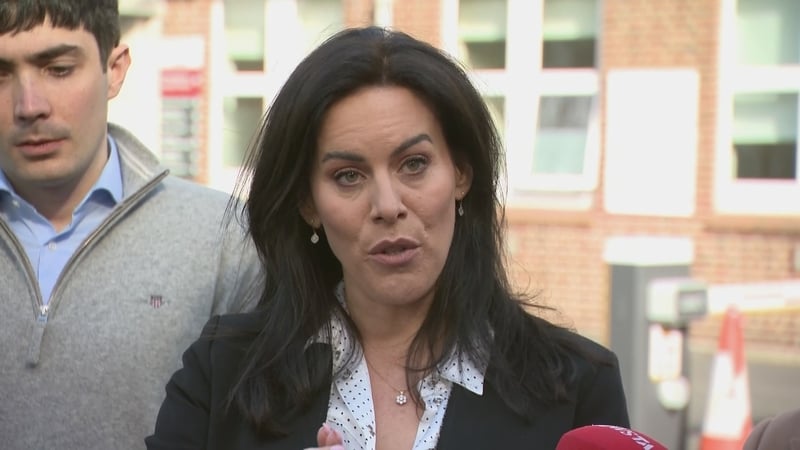
Minister for Health Jennifer Carroll MacNeill said that the programme helps address what she described as a critical gap in education.
In the past months, a number of groups have protested, calling for improved care in Ireland.
Many of those suffering from endometriosis say they have had issues getting a diagnosis in Ireland and have had to travel abroad to receive treatment for it.
Read more:
Normal People star Daisy Edgar-Jones recalls relief of endometriosis diagnosis
Last October, the minister published a national framework to address issues around care, as well as a new financial support system for those who go abroad for treatment.
Speaking today, Ms Carroll MacNeill said the exact number of people who have gone abroad for treatment is not known, but that there have been 20 applications under the new scheme and ten people have travelled so far.
She added that there has been more treatment made available in Ireland in the final three months of last year.
"I asked the clinical community to do 100 more surgeries than was planned. They did 142, they found theatre time and they found additional time within their schedules to be able to do that," Ms Carroll MacNeill added.
She described care for endometriosis in Ireland as a "dual pronged problem", saying that waiting times are one part of the issue, and the other is related to the availability of the type of surgery needed.
"I have talked to women who have had nine, ten, 11, surgeries in Ireland and it is not resolved, and then a surgery in a different clinic internationally has a much better outcome and that's not OK.
"And that's why, within the last six months, we've seen this leaning in by clinicians," Ms Carroll MacNeill added.
She said clinicians here are now building more expertise in the area.
The Department of Health has said that funding for 65 roles specifically related to endometriosis services has been ringfenced for 2026.
The Royal College of Physicians of Ireland's Institute of Obstetricians and Gynaecologists (IOG) met in Dublin for its Spring Conference, with the focus on endometriosis.
Chair of the institute Dr Suzanne O'Sullivan welcomed the progress made in care, but added that the condition is "complex" and "often debilitating", and said that women in Ireland "deserve timely diagnosis, coordinated care, and access to the highest standards of treatment".
"Endometriosis training in Ireland meets, and often exceeds, the highest international standards, and we continue to work closely with the Department of Health and the Health Service Executive to help women to access the best treatment to address their individual needs," Dr O'Sullivan said.
Labour’s Health Spokesperson Marie Sherlock also welcomed the announcement, telling RTÉ News that women and girls in Ireland have suffered "for far too long".
She said that it is concerning that women are still travelling abroad for treatment without State support.
"No woman should be forced to leave the country to receive care for a chronic and often life-limiting condition," Ms Sherlock added.