
Opposition parties and climate campaigners are calling for the Government to allocate more resources to retrofitting social homes.
They are calling for particular focus on helping local authority tenants living in cold, damp or mouldy conditions.
Budget 2026 includes €140 million to support the retrofitting of 3,500 social homes to a Building Energy Rating of B2.
It provides funding of €558 million for the SEAI residential and community energy upgrade schemes this year, which include retrofits for homeowners and some homes owned by approved housing bodies.
The Climate Action Plan includes a target to retrofit 36,500 local authority owned homes by 2030. That represents one quarter of the local authority housing stock and would match the percentage of private homes upgraded.
However, it is behind schedule for meeting that target and campaigners argue that it is too low. They say priority should be given to those most in need, particularly those living in poor conditions or at risk of fuel poverty.
Ashleigh Mullen Dunne lives in a Dublin City Council house in Ballymun with her husband and three children.
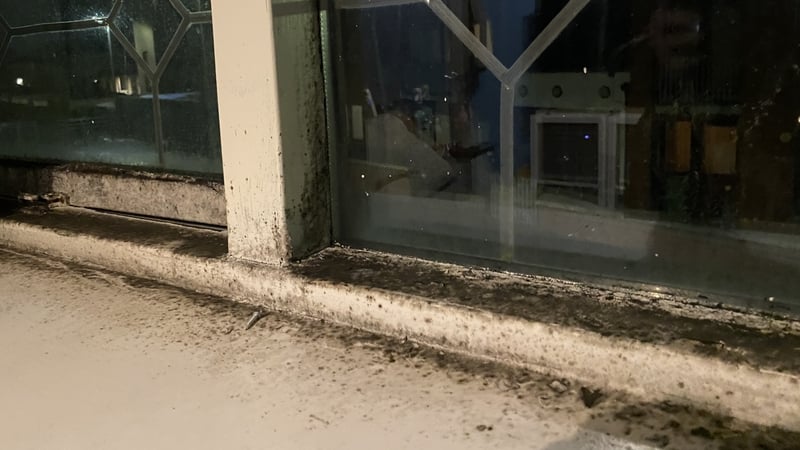
There has been damp and mould in their home every winter since they moved in several years ago.
"Now the mould is so severe that it's lifting the wood from the window ledges, and there's (a) constant damp smell in the property. If you put heating on the place just stinks of mould and musk and it's just everywhere," she said.
"We've tried to treat it. We've used white vinegar and we've used mould spray. We have treated it with mould resistant paint. It's just quite aggressive. You just can't get rid of it."
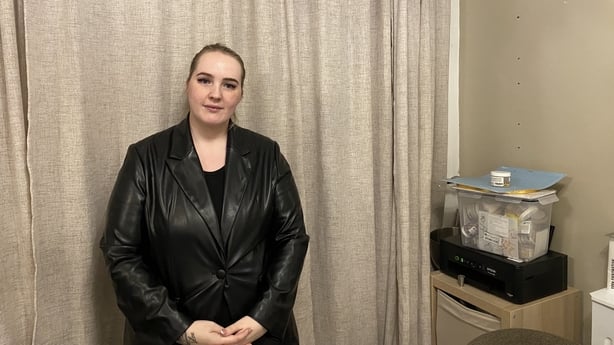
Ms Mullen Dunne's youngest child suffers with respiratory problems.
"He's still a patient at Temple Street, and to him, it's quite detrimental, he's constantly sick. He's on steroids, antibiotics, inhalers.
"He's only 16 months old as well, so it's quite heavy on his health, being that young and having to live in these circumstances."
Dublin City Council has engaged a specialist company to treat the mould, but Ms Mullen Dunne is not sure that would address the cause.
She said the house is hard to keep warm: "In the winter time, we could be putting €120 into it a week. And just because it's so cold, it doesn't retain the heat."
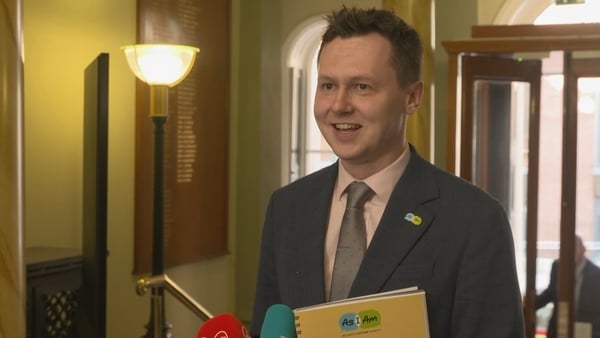
Dublin North West TD Rory Hearne has been trying to help Ms Mullen Dunne and her family. He said their circumstances are far from unique.
"There are many people who come to me on a regular basis in similar situations to Ashleigh," he said.
"We know the impacts of mould and damp, in terms of respiratory impacts, forcing people to go into hospitals requiring antibiotics."
Mr Hearne added that homes that are cold and mouldy have also have implications on older people's health.
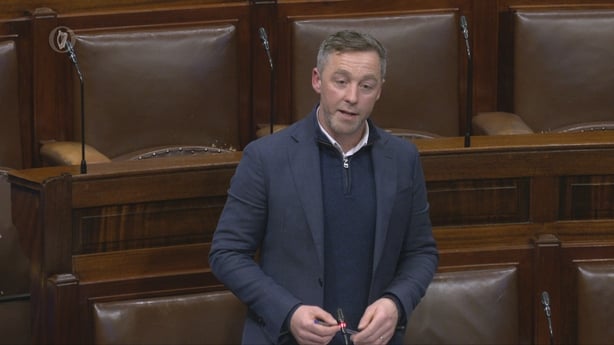
Mr Hearne, who is the Social Democrats Spokesperson on Housing, wants the Government and local authorities to work together.
"We need to look at a way in which councils can go after local areas where there are, like in Ballymun or Finglas, pockets of serious, serious mould, dampness, problems with the structure of the housing, and some of it isn't even old. It was housing that was built during the Celtic Tiger," he said.
Friends of the Earth says this is a climate justice issue.
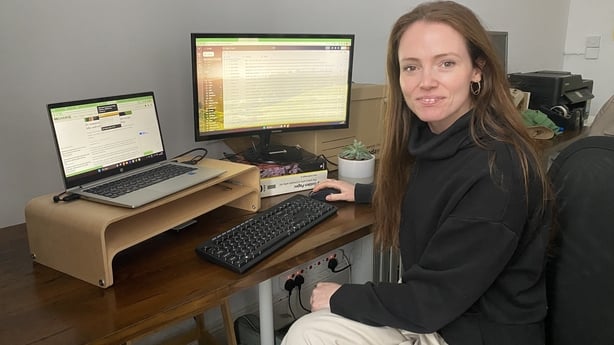
Programme Coordinator on Heat Clare O’Connor said: "There's lots of public money going into retrofitting for homeowners, but then when it comes to non-homeowners, like tenants in social housing or tenants in the rental sector. There's still a lot to be done."
Friends of the Earth has been running a "Tenants for Climate Justice" campaign, and councillors in Dublin, Meath and Waterford have passed motions calling for more funding for local authorities to retrofit the homes they own.
Ms O’Connor said that will be needed to allow them to target the worst performing homes as they are also the most expensive to upgrade.
"What we're hearing from local authorities is they want more funding, and they want to be able to plan ahead with some multi-annual funding so they can do those worst performing buildings," she said.
"For those people who are living in those really damp, leaky, mouldy homes, they're living with incredible levels of stress. The health implications are horrendous, especially for children."
Dublin City Council responded to a query from RTÉ News about the conditions in Ms Mullen Dunne’s home with a statement saying: "It is not feasible to target individual properties in any area/estate citywide.
"We endeavour to spread the works across all areas annually in an equal and fair manner where possible, the level and scale of works in each area is determined by our Departmental allocation received for the programme on an annual basis."
It said it selects homes for energy upgrades according to a circular issued by the Department of Housing which urges local authorities to "choose a mix of properties across a range of BERs so as to ensure homes which need significant expenditure are balanced out by those needing lesser spend.
"This is to achieve the overall average cost per property and delivery of retrofit works on the minimum target number of social homes within the funding envelope provided."
The Department of Housing has said: "The selection and prioritisation of individual properties is a matter for each local authority, taking account of local needs and circumstances."
It said it has increased the funding available for retrofitting local authority homes and output has increased from 900 homes in 2021 to 3,500 this year.
The Department added that it expects to achieve the 36,500 target by 2030 and "at this point in time, there are no plans to increase the target."