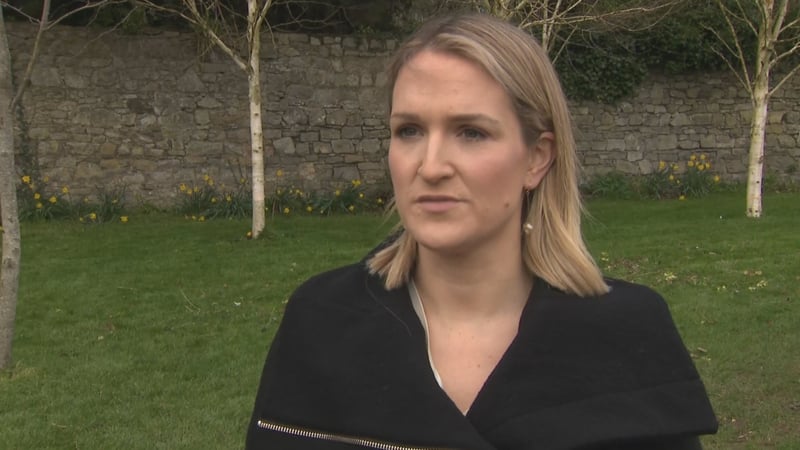

Minister for Foreign Affairs Helen McEntee has called on the estimated 20,000 Irish citizens in Gulf states to shelter in place and avoid trying to leave via land routes amid ongoing instability.
Multiple Gulf states have come under attack as Iran vowed to carry out its "most intense operation" ever in retaliation for the killing of Supreme Leader Ayatollah Ali Khamenei.
The 86-year-old was killed in a US-Israeli attack yesterday morning, raising concerns about an escalation of tensions across the Middle East.
"If you're talking about those who are resident as well as those transiting through, you are talking about up to 20,000 [Irish people in the region]," Ms McEntee told RTÉ's This Week.
"If you compare us to other countries of our size we have a very large number of people ... we have many young people teaching, working there, and so we have a much larger number than perhaps other countries of our size would have."
She said that she was not aware of any Irish citizens who have been injured or are caught up in what is happening but that she appreciates how difficult it is for those here in Ireland who have loved ones in the region.
The minister said that a large number of Irish citizens, in particular in the United Arab Emirates, have already registered with the department's citizen registration platform, and she encouraged others in the region to do the same.
"We're asking people to register so that we have a complete picture of who is there.
"We have a general sense of the numbers who are working there and are resident, however, we know there are many people on holidays who wouldn't ordinarily register, we know there are many people who would be transiting through, so this will allow us to have the information and contact details of those."
She said the department has set up a consular line that is being manned 24/7 and to check its social media platforms for the most up to date advice.
She strongly urged Irish citizens not to consider land routes to neighbouring countries, such as Oman.
"This is a unique consular situation, with a large number of citizens located in UAE in particular, and with local and regional airports shut and in some cases under attack," she said.
"As of now, there are no evacuation routes recommended for Gulf countries and so the advice is to shelter in place."
We need your consent to load this rte-player contentWe use rte-player to manage extra content that can set cookies on your device and collect data about your activity. Please review their details and accept them to load the content.Manage Preferences
Ms McEntee later said that she had spoken to the UAE's Deputy Prime Minister/Foreign Minister Sheikh Abdullah Bin Zayed Al Nahyan and expressed Ireland's condolences to the victims of attacks on the UAE over the last 36 hours.
"The UAE is an important and valued partner and many Irish people call the UAE home," she said.
"In this uncertain time, the safety of Irish citizens in the UAE and wider region is my utmost priority and I deeply appreciate the efforts of the UAE Government to keep all residents safe and informed."
Among those stranded is Patrick Lawson, a British citizen who has lived in Ireland for more than twenty-five years
The father of three who lives in Duagh in Co Kerry, is currently stuck in Doha on his way home from visiting his sister in Australia.
He said he has had no response from Qatar Airways or the Department of Foreign Affairs in his search for help.
"My family is trying to get a hold of Qatar, and we've been left on hold for hours at an end, and then the phone just hangs up.
"I did manage yesterday to change my flight for tonight, but that's been cancelled, and I'm getting nothing from Qatar Airways at all at this stage so my plan is tomorrow is to try and get to the airport again and see if I can speak to someone in person.
"I've registered with both the Irish and the UK governments. The only thing that I've got back is emails back from the UK government to say that I registered with them," he said.
Mr Lawson added: "I've nothing back from the Irish government. If they just got back and said, look, we don't know anything, that's better than being ignored, which is the way I feel right now.
"There's three other Irish people here all in the same boat."
Editor of Travel Extra Eoghan Corry said if the closure of airports in the Middle East goes on for much longer it could have implications for the travel plans of tens of thousands of people in particular those travelling between Ireland and Australia.
He said disruption would have "huge implications for connectivity, for Ireland and for connectivity from Europe".
"While February is low season in Europe, it's high season in Australia.
"So unless the airports find some way of reopening quickly, we're going to be start running into problems where we have tens of thousands of people displaced and waiting for the flight home," said Mr Corry.
He added: "There are other options for people trying to use the Middle East as a hub. For example, Qatar would have an arrangement with British Airways. So there are options to get people from Dublin to Heathrow and perhaps take those direct flights down to Perth.
"But the options are limited enough because Istanbul, which is the other major hub going in that direction, doesn't have a direct route to Australia.
"In the meantime, it's really important to get those three major international airports open, because it's February, but the numbers increase historically through March, April and May,
"If there isn't a quick resolution to getting the airports open, whatever about the rest of the conflict, the problem is just grow and grow and grow."
Meanwhile, the Irish Travel Agents Association advised people who have booked a holiday to any destination in the Middle East to "immediately check with both your travel agent and your travel insurance".
The association's president Tom Randles added: "When the DFA advise to 'Avoid Essential Travel' to a particular country, UAE in this instance, it usually means that the travel insurance policy will not cover travel to that country."
No end in sight for disruption to flights, says daa
The operator of Dublin Airport has said there is no end in sight to the disruption to flights to and from the Middle East
The daa said more than 20 flights were cancelled this weekend and that the first wave of flights between Dublin and the region tomorrow are already cancelled.
Graeme McQueen of daa said further disruption is expected, adding they are working with airlines to help those impacted.
"It’s really challenging for people trying to get through to airlines. At the moment, the call centres, the online channels, are really, really busy. So keep trying to get in contact with your airline," he said.
Mr McQueen added: "Watch the online platforms, watch the social media accounts, watch your email as well, because as soon as those flights are cancelled or the status changes, they will be getting in touch with you.
"I understand it's really frustrating at the moment, but the airlines are working really, really hard here at Dublin Airport. We are working hand in hand with those airlines as well.
"Anybody who turns up at the airport impacted by these events, we're looking after them with welfare packs and things like that. So we've extra staff on the ground to deal with this, and that will continue until there's resolution."