
It does not take long to realise that residents of Kharkiv have adapted to a strange, new reality.
Air raid alerts sound repeatedly throughout the day, yet people continue to walk calmly through their city's snow-covered streets and roads remain busy.
Buses, trams, and the metro run on time.
The whirling sound of an air alert, blaring through distant speakers, can feel ominous at first.
Often the alarm sounds for just a few minutes until the siren switches to a long, continuous tone, giving the all-clear.
Kharkiv's residents have lived in close proximity to the war for the past four years.
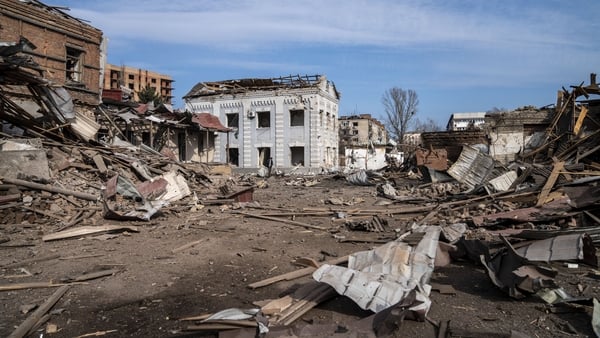
The city was bombed heavily by Russian forces at the start of the full-scale invasion and remains a daily target for Russian drone and missile strikes. Some 13,000 of the city's buildings have been damaged or destroyed.
More than 600 Kharkiv residents were killed by Russian shelling during the first three months of the invasion.
The frontline is close, only 30km to the north by road, and 20km across open ground.
At night, Ukrainian anti-air defences can be heard faintly in the distance.
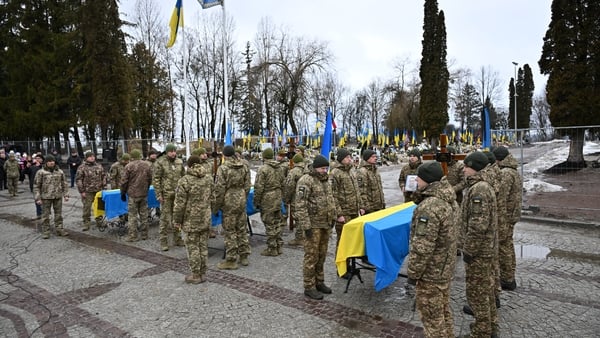
Ukrainian servicemen in combat fatigues, some with their bags slung over their shoulders can be spotted around the city - rotating in and out from the frontline.
On Thursday morning, I awoke early and checked my Ukraine Air Alert app - the go-to app for millions of Ukrainians.
It provides instant notifications of incoming Russian drone and missile threats, and instructions on where to find your nearest shelter.
There had been several attacks on the wider Kharkiv region in the early hours that morning, injuring 14 people.
Russian drones had struck three of the city’s outer districts, though no casualties had been reported.
Our team headed out to see if we could find one of locations that had been hit in the north of Kharkiv.
Driving towards the edge of the city limits, we came across a team of construction workers laying anti-drone nets along a section of motorway, only 20km from the front.
The previous day, a Russian fibre optic drone had reached the city limits for the first time - a technique that uses a wafer-thin cable to control a drone’s flight path and avoid electronic jamming by Ukrainian forces.
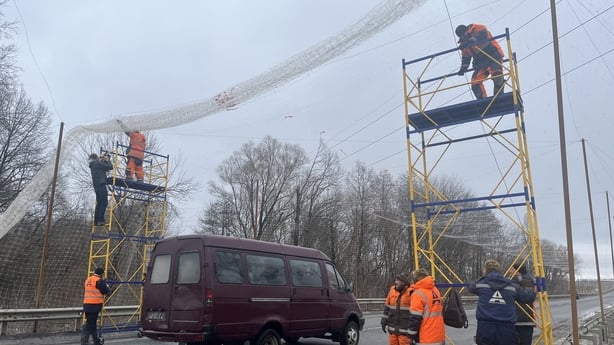
"We’re fishermen laying nets," joked one of the workers.
Even after four years of war, Ukrainians have not lost their sense of humour.
The men had laid 18km of nets along the road since the start of the year, they said, beginning close to the border with Russia and were working their way back towards the city.
Our fixer had found the address of a residential block that had been struck by a Russian drone that morning in the northern district of Saltivskyi, and we headed there.
Saltivski had been heavily shelled by Russian artillery and the Russian air force during the early months of the full-scale invasion. Scores of flats showed signs of direct strikes.
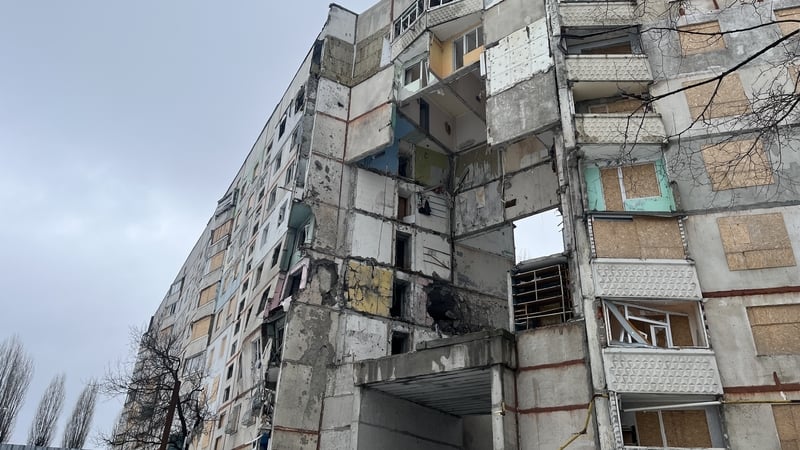
A huge section of one block was missing - the result of a Russian glide bomb that struck the building in 2023.
A lady’s coat still hung from what was now an exterior wall. Perhaps it had once been a family’s hallway.
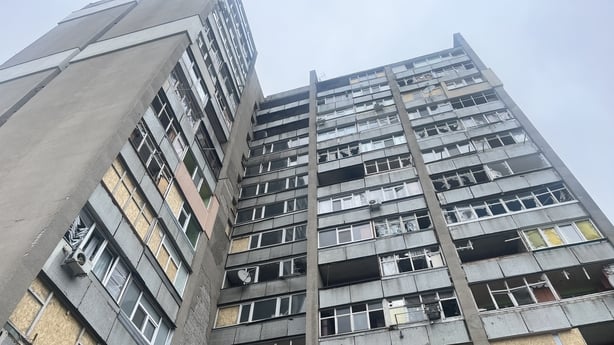
But we were looking for the site of that morning’s attack and a few minutes later, pulled up at the address we had been given, a 14-storey block of flats with almost all its windows shattered.
A Russian-launched Shahed drone had smashed into the side of the block just before 4am and had left a big crater in the external wall.
Cars outside the building had been charred.
Miraculously, there were no casualties. Had the drone’s trajectory been a few metres to the left, it would have gone straight into peoples’ bedrooms.
Scores of city council workers quickly boarded up the smashed windows and Ukrainian Red Cross staff assisted the residents.
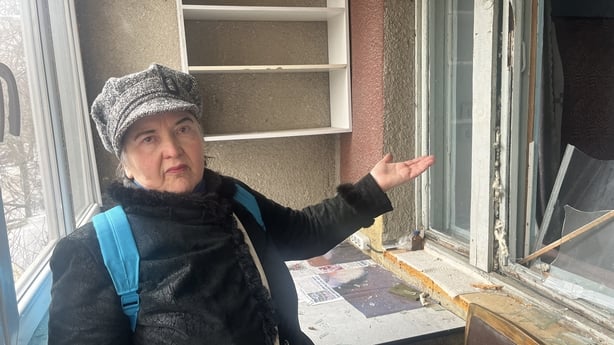
Margarita, a pensioner who told us she lives on less than €100 per month, showed us her damaged studio flat. Shattered glass covered the floor.
The war, she said, had made her a Ukrainian nationalist.
Back in the city, cafes and restaurants are open these days - proof that people in Kharkiv feel more secure than even two years ago when many of the city’s restaurants were still closed.
Russia had occupied about one-third of Kharkiv at the start of the full-scale invasion but a Ukrainian counteroffensive in the summer of 2022 regained most of that territory, removing the threat of Russian artillery strikes on the city.
A large shopping centre that Russia bombed with a cruise missile four years ago has been renovated and is open again, though some of the international brands had their shutters closed.
Children in the city attend school in underground shelters and metro stations.
"We know that the situation is awful," said Kateryna Chyryk, an English-language teacher at one of the underground schools we visited.
However, she said, the most important thing was that the children did not think about bombs because the underground schools were "really safe".

In a café, I ordered a take-away flat white just minutes after another air alert had stopped.
Young people sat calmly next to the cafe’s glass windows, chatting over coffee.
The war is now their new normal.
A bizarre reality where people get on with their lives while Russia still fires drones and missiles at their city, sometimes killing people in their sleep.
"People have mostly adapted to the war," said Natalia Zubar, a Ukrainian activist and war crimes investigator, whom we met at her city centre apartment.
She was not hopeful of a long-lasting peace agreement being reached.
"I don’t see any indication that Russia is ready to stop the war," she said.
This once predominantly Russian-speaking city remains defiant and determined that their city will remain Ukrainian.
Kharkiv’s residents want peace but doubt that Russia wants it too.
You can listen to the interviews above on today's episode of RTÉ's World Report
We need your consent to load this rte-player contentWe use rte-player to manage extra content that can set cookies on your device and collect data about your activity. Please review their details and accept them to load the content.Manage Preferences