The foreshadowing had been there.
In recent weeks, the US had been assembling what was described by analysts as the largest airpower buildup in the Middle East since the 2003 invasion of Iraq.
It included two aircraft carrier strike groups with hundreds of fighter jets, refuellers and anti-missile batteries, while thousands of additional service members were also deployed.
The threat to Iran was implicit - agree a nuclear deal or face the wrath of US military power.
Then this morning, with support from its ally Israel, the latter came to pass - marking a dark new chapter in relations between the US and Iran.
Interventions, sanctions, tensions
The tense and troubled history of US-Iran relations spans multiple decades and crises.
Key years include 1953, when a CIA-orchestrated coup, backed by Britain, toppled Iran's democratically elected government and restored the exiled monarch (Shah), Mohammad Reza Pahlavi, to the throne.
But it was in 1979 that the relationship took a particularly significant nose dive.
Following months of demonstrations and strikes against the US-backed Shah, Mohammad Reza Pahlevi was forced to leave the country.
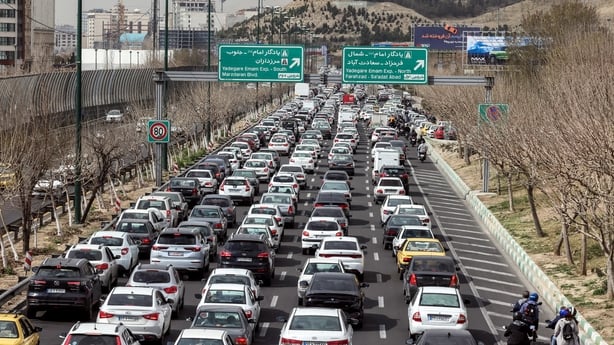
Soon afterwards, Ayatollah Ruhollah Khomeini returned from exile to lead the establishment of an Islamic Republic, replacing the monarchy with a theocratic government.
A staunchly anti-America theocratic government.
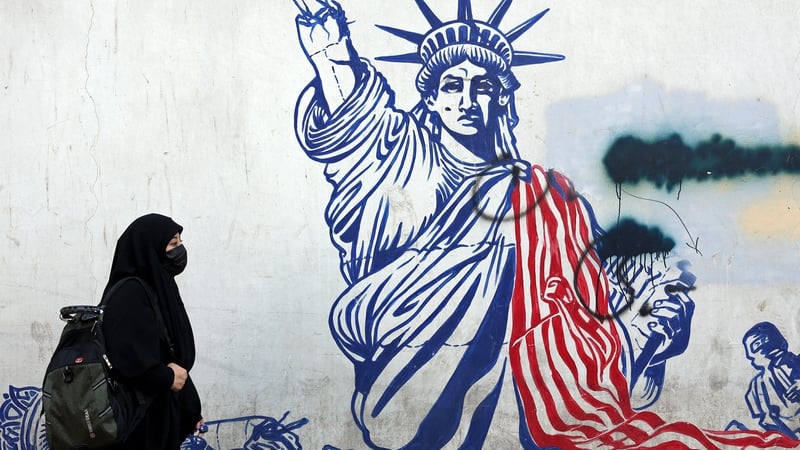
In November 1979 Iranian revolutionaries took over the US Embassy in Tehran, demanding the extradition of the Shah. 52 Embassy hostages were held for 444 days, a crisis that severely strained relations between the United States and Iran.
Since then, the two nations have been at odds over a multitude of issues, including Iran’s nuclear ambitions, Iran’s backing of proxies in the region, US interventions in the Middle East and more recently, Iran’s brutal and bloody suppression of anti-government protests.
Iran’s nuclear programme
Iran has pursued a nuclear programme since at least 1957.
The country has long maintained that it is for civilian purposes only - but analysts say Tehran has a long history of engaging in secret nuclear weapons research in violation of its international commitments.
Those concerns have prompted intense periods of diplomacy, even as US sanctions continued to adversely impact large parts of Iran’s economy.
In 2015 a nuclear agreement was reached which placed limits on Iran’s nuclear activity. However, the United States unilaterally withdrew from that deal in 2018.
In a dramatic escalation of tensions last June, US President Donald Trump authorised military strikes against Iran's nuclear programme.
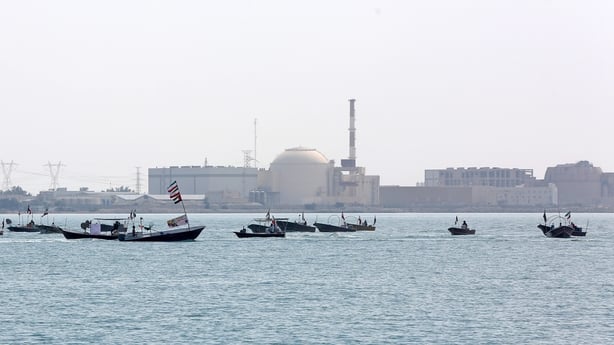
Codenamed "Midnight Hammer" the resulting war lasted 12 days - with the US and Israel striking key nuclear sites at Fordow, Natanz, and Isfahan.
Donald Trump later claimed that Iran's nuclear facilities had been "obliterated", but major concerns persisted over the country's nuclear capabilities and motivations.
Nonetheless, talks had been continuing between US and Iranian officials on a possible deal, including as recently as Thursday, where negotiators spoke in Geneva for six hours.
Iran’s regional proxies
The US government has long labelled Iran as the "foremost state sponsor of terrorism’".
It claims the regime spends more than a billion dollars on terrorist financing annually - including on military aid and training for the Palestinian militant group Hamas, Hezbollah in Lebanon and for Yemen’s Houthi rebels.
According to the US-based think tank, the Council on Foreign Relations, there are between 140,000 and 185,000 Iranian partner forces across Afghanistan, Gaza, Lebanon, Pakistan, Syria, and Yemen.
However, Israel’s recent campaigns against the Hamas and Hezbollah leadership, coupled with the downfall of the Bashar al-Assad regime in Syria, have considerably weakened Iran’s axis of resistance, according to analysts.
Crackdown on anti-government protests
Iran drew further condemnation from the United States and countries around the world last month, as reports began to emerge of a brutal crackdown on anti-government protests.
The death toll from the suppression has been difficult to verify, but the Human Rights Activists News Agency says it confirmed more than 7,000 deaths, while it is still investigating thousands more. The Iranian government has acknowledged more than 3,000 were killed.
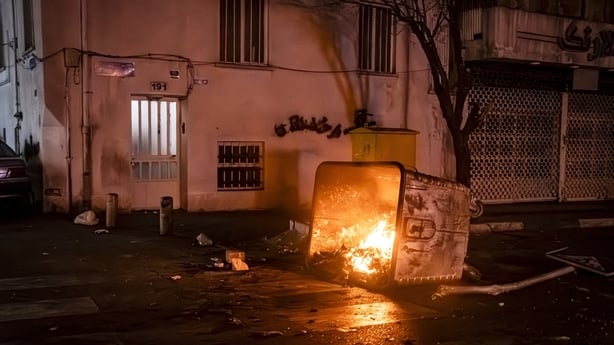
At the time, Mr Trump urged Iranians to "keep protesting" addressing them as "Iranian patriots."
He also promised them that "help is on its way".
Iranian oil
These latest strikes on Iran mark the second time Mr Trump’s administration has struck a major oil-producing country this year, after Venezuela in early January.
Home to some of the world's largest oil reserves, energy analysts say Iran’s oil fields offer a major opportunity for international oil companies to expand production, but only under the right conditions.
According to Robert Auers, a market analyst at consulting firm RBN Energy, Iran’s infrastructure is considered to be structurally sound, unlike that of Venezuela’s.
Earlier this year, the head of the US oil industry’s top lobbying group, Mike Sommers of the American Petroleum Institute, said American producers are prepared to be a "stabilising force" in Iran if the regime there falls.
A possibility that appears one step closer today, with the United States and Israel seemingly intent on bringing about the downfall of Iran's Islamic Republic.
Read more: US and Israel clear their goal is Iranian regime change