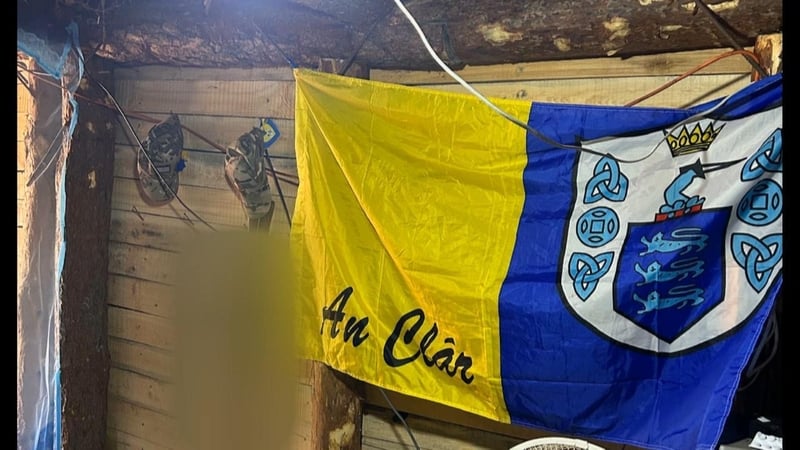
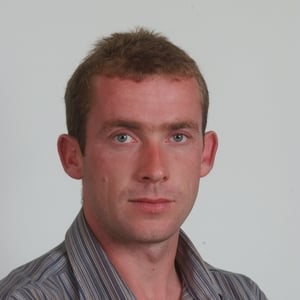
As the war in Ukraine now enters its fifth year, Irish humanitarian workers who have recently returned from Ukraine have spoken of the difficulties and challenges of working in war-ravaged eastern Ukraine.
Modern warfare technology has made humanitarian help extremely difficult and dangerous, according to volunteers.
Oran McInerney from Doonbeg in Co Clare has travelled to Ukraine on a number of occasions during the past four years.
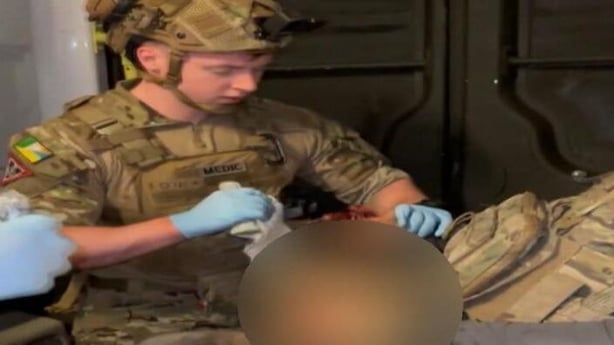
He has worked for a US-based non-governmental organisation as an emergency medical technician on the frontline of the conflict.
His work included evacuating civilians from areas such as Kramatorsk and Bakhmut.
He has also worked on the evacuation of wounded soldiers, both Ukranian and Russian from the frontline of the conflict.
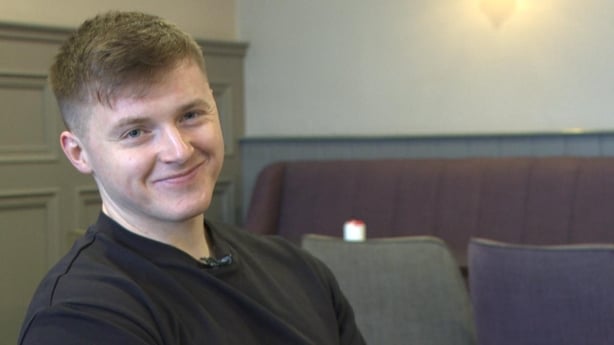
"It is extremely difficult. I think any trauma consultant would find it extremely difficult, not just the level of extreme injuries, but how pressurised and dangerous the situation is."
Mr McInerney spoke about how the use of military drones has made the work of medical personnel and humanitarian volunteers extremely challenging and dangerous.
"The extraction of wounded civilians or soldiers is an extremely dangerous operation now.
"It has to be carried out extremely rapidly due to drone operations.
We need your consent to load this rte-player contentWe use rte-player to manage extra content that can set cookies on your device and collect data about your activity. Please review their details and accept them to load the content.Manage Preferences
"Ambulances are also a target of these drones and any delay in loading a casualty can be deadly.
"The frontline of the war is now nearly 50km in width and in reach of drones, so any operations in that zone can make you a target.
"The entire length of the frontline of the conflict is over 1,000km long, so it's a huge danger zone," Mr McInerney said.
He said the work of the volunteers is greatly appreciated in Ukraine.
"A lot of people have left Ukraine and obviously a lot of people have been killed in the war so they really appreciate any help.
"One man who I was helping to evacuate said that he couldn’t believe that I had come from Ireland to help."
Speaking about fellow medical humanitarian colleagues in Ukraine, Mr McInerney said that he had made a lot of friends in Ukraine but that some of them had now been killed in the war.
"I was treated extremely well in Ukraine and I think about the ongoing situation for some of my Ukrainian colleagues who worked alongside me.
"They are today in a trench or a bunker in Ukraine facing an uncertain future.
"For me, I could leave at any time, they cannot. It is their home. That brings it to a much bigger perspective to me.
"It’s a sobering thing for me to think of."
Also in Co Clare, Declan McEvoy has recently returned from the eastern city of Kharkiv.
He volunteered to work in a kitchen in the city that provides food for emergency services and hospitals in the area.
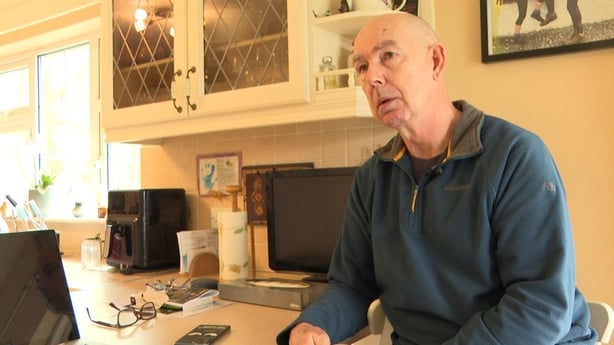
"Every night while I was there, the city was targeted by Russian missiles and drones.
"You get a message on your phone warning of an incoming missile attack and you take cover."
Like Oran McInerney, he feels that while the Ukrainian public are war wary, they are also resolute to continue the defence of their country.
He said that life has adapted to a new norm in Kharkiv.
"Life in the city of Kharkiv, aside from the incoming missiles and drones, is terribly somewhat normal.
"I struggled a bit to deal with that.
"I could be walking down the street and pop into the bank or into a shop for some crackers, meanwhile the war is going on 20km away.
"I found it difficult to get my head around that."
Both men have witnessed tributes to fellow Irish people who have travelled or died in Ukraine.
An Irish tricolour blowing in the Ukrainian breeze in Kyiv carries the names of a number of Irish men who have died in the conflict.
The Department of Foreign Affairs and Trade said that it strongly advises against all travel to Ukraine.
It said that it is aware of a small number of Irish citizens currently in Ukraine.