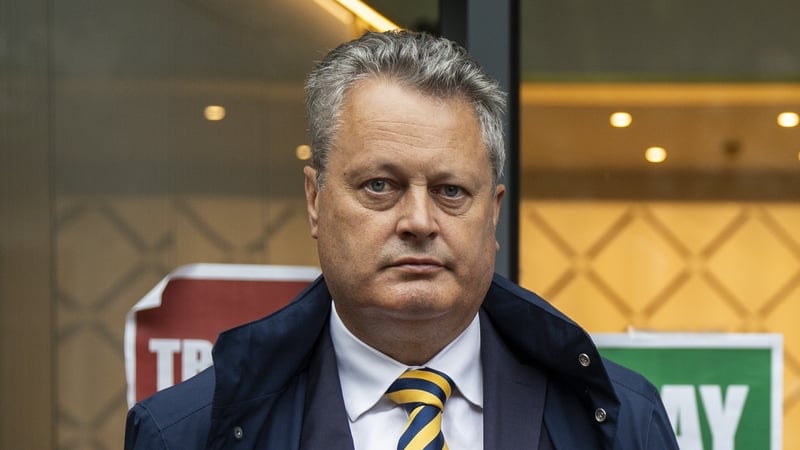

The PSNI created a detailed profile of Belfast journalist Vincent Kearney, including details of his wife and mother-in-law, as part of an unlawful campaign of monitoring, a tribunal has been told.
The court was told it was part of a "long and consistent campaign of unlawful interference" with the veteran reporter by the PSNI, MI5 and others between 2006 and 2014.
The remarks were made by lawyers for the BBC, Mr Kearney's former employers, before the Investigatory Powers Tribunal in London.
It hears cases where it is alleged the state has overstepped the rules around covert intelligence gathering.
Mr Kearney worked for the BBC in Belfast during the period and is now the Northern Editor of RTÉ News.
He has taken a case alleging that UK state agencies accessed his phone data in an attempt to uncover the sources of some of his stories.
This morning, the tribunal was told that the PSNI, MI5 and the Metropolitan Police have already made concessions that what they had done had been illegal.
Jude Bunting KC for the BBC said the tribunal had to decide on the appropriate remedy.
Mr Kearney is seeking damages.
The lawyer said there had been "considerable disclosure" in the case during pre-tribunal hearings.
It had been established that MI5 had monitored the journalist's phone data in 2006 and 2009.
London's Metropolitan Police accepted it had accessed his communications data twice in 2012 and later passed it on to another police force.
But the bulk of the admissions were made by the PSNI.
Mr Bunting said the PSNI had conceded illegality in "numerous operations" in which it had obtained and stored his phone records.
These included the investigation into the murder of PSNI officer Stephen Carroll in 2009.
Mr Kearney received the dissident republican claim of responsibility.
His phone data was also obtained in reference to a police anti-corruption probe which Mr Kearney was investigating.
It happened again over the leaking of a report from the Office of the Police Ombudsman to journalists.
Mr Bunting said despite the disclosures, Mr Kearney and the BBC still did not know how many applications to access his phone data had been made by MI5, why, over what period and what had been retained.
Mr Bunting said the scale of the admissions was "stark".
He said Mr Kearney appeared to have been targeted "more than any other journalist in Northern Ireland".
He said his clients believed that what had been disclosed was not the full picture.
He referenced the detailed profile the PSNI had created of Mr Kearney.
This included his date of birth, vehicle registration numbers, his wife's name, his mother-in-law's name and who was living with him at the time.
It also listed Mr Kearney's articles and the subject of those articles.
Mr Bunting said the "range and scale" of this personal information had caused "particular distress" to the journalist.
Monitoring had 'chilling effect' on ability to carry out journalism - Kearney
Vincent Kearney said the concessions made by the various agencies showed their monitoring had not been "an isolated event".
"They reveal a systematic and years-long pattern of accessing my journalist sources and map my professional activity.
"This was taking place on an almost annual basis between 2006 and 2014.
"I am not aware of any other journalist in the UK or Ireland who has been targeted in such a sustained way over so many years."
The tribunal was told the journalist believed what had happened had had a "chilling effect" on his ability to carry out public interest journalism in Northern Ireland.
It heard that some source relationships had been damaged and even destroyed as a result of what had happened.
Mr Bunting said the BBC had suffered an impact as a result of the monitoring of its former journalist.
RTÉ and the BBC both said they were deeply concerned by what had come to light in the case.
"The scale of the covert surveillance and accessing of journalist Vincent Kearney's communications data by British security and policing agencies is deeply concerning," said Deirdre McCarthy, managing director of RTÉ News and Current Affairs.
"Vincent's statement tells of the extent of the intrusion and covert gathering of communications data of confidential sources over many years.
"We will protect public interest journalism, enabling those involved to do their work, reporting stories without fear and undermining.
"This is particularly significant in relation to security and legacy issues in Northern Ireland.
"Any deliberate circumventing of long-established legal protections of journalists and their sources damages trust in media and ultimately our democracy."