People living with a rare neurological degenerative disease have called on the Government to make the first treatment for the disease available to them.
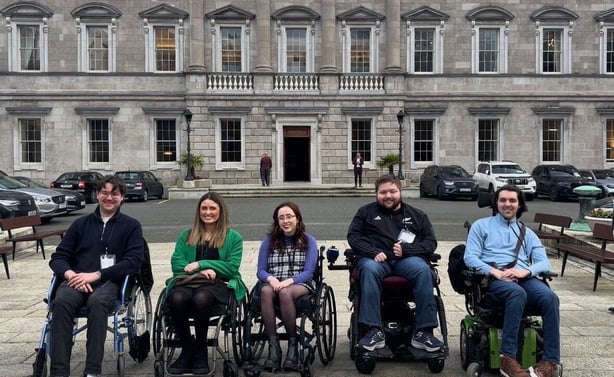
Yesterday, a group of campaigners travelled to Leinster House and met Minister for Health Jennifer Carroll MacNeill.
Around 200 people in Ireland live with Friedreich's Ataxia (FA).
They say a drug called Skyclarys (omaveloxolone) would slow the progression of the condition.
A report from the National Centre for Pharmaeconomics (NCPE) in December recommended against reimbursing the drug, however a final decision has not yet been made.
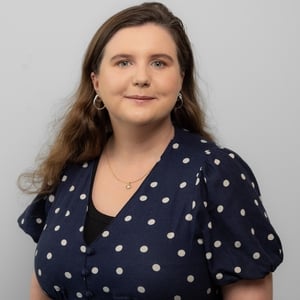
Emily Felix, 28, a trainee solicitor from Co Kilkenny, has Friedreich’s Ataxia and feels the drug would buy patients valuable time.
Ms Felix says she is losing mobility and neurological function "every month" and "every year".
"I have so much to say, but physically, I'm very restrained"
"A delay has actual, real-life consequences. We can't just wait and see what happens and what drug comes our way.
"Having this particular drug to pause the progression gives me time.
"It gives me hope that when eventually a cure does come, I will be able to benefit from the cure, that it won't be too late for me."
Ms Felix said her speech is now rapidly deteriorating.
"I have so much to say, but physically, I'm very restrained... I haven't had speech therapy in over two years.
"My swallow is also affected. I have frequent choking, and I now have to use a straw for drinking," she said.
The young woman has made the difficult decision to use a voice-banking app, to preserve the sound of her voice.
"How can someone put a number on someone's life? Why is my life being reduced to a number on a spreadsheet?"
She said she originally saw this as a "very big sign of defeat" that she would no longer be able to use her voice.
"But eventually I realised that it's not for me, it's for my family, and it's for my family to still have a piece of me when I can no longer speak like myself," she added.
Ms Felix said she has to use her voice to "fight to get any service" and to raise awareness about the rare disease.
She is currently studying for her FE1 examinations to become a solicitor and said she does not want her study and hard work to be "in vain".
"I would ask the Minister for Health to please believe that our lives are worth saving," she said.
She said she needs "this treatment now or else it might be too late".
"We do not have the luxury of time."
Ms Felix said the NCPE recommendation on 16 December - her birthday - was like a "slap in the face".
"What upsets me most about this recommendation is that I have been reduced to a cost-effectiveness figure.
"How can someone put a number on someone's life?
"Why is my life being reduced to a number on a spreadsheet?"
We need your consent to load this rte-player contentWe use rte-player to manage extra content that can set cookies on your device and collect data about your activity. Please review their details and accept them to load the content.Manage Preferences
90% cut in price needed, says NCPE
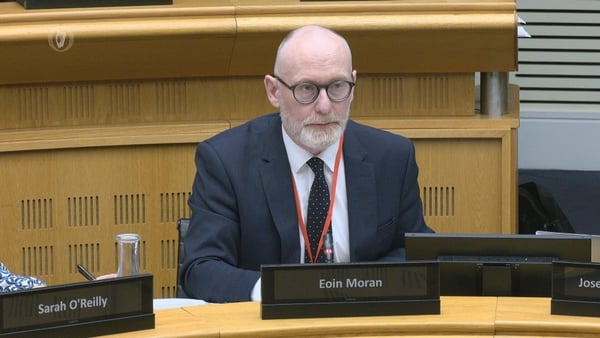
Professor Michael Barry, Clinical Director of the National Centre for Pharmacoeconomics, said it recognised the importance of the new therapy but that it was "very, very expensive".
"When we looked at the health outcomes of this medication, we found that it did improve things … It improved on a scale. On a rating scale of 93 points, it improved by 2.4 points.
"We're very clear that this is not a cure, but it does improve patients' outcomes," he said.
However, he said the medication is "approximately €280,000 per patient per year" and that the budget impact would be "very high".
He added: "We estimated a five-year budget impact at about €130m.
"It could be even more than that. It could be closer to €168m, depending on the number of people that are treated, even with the applicant's own figures and indeed our own, this drug is not cost effective, and it would require a very large price reduction of the order of 90% to render it cost effective".
Prof Barry said, however, that a final decision has not been made.
"There is a way to get medications reimbursed in this country, and that's to price them fairly"
"It's the HSE leadership team that makes the final decision on the reimbursement of this drug, and indeed, any other drug," he said.
He added: "I think the system does work.
"There is a way to get medications reimbursed in this country, and that's to price them fairly.
"And I don't think that's the case at this point," he said.
Biogen, the company that makes Skyclarys, said it continues to engage with the Health Service Executive.
"We remain fully committed to collaborating with health authorities to achieve a positive outcome for people living with Friedreich’s Ataxia and the broader community," it said.
When asked whether it is considering a review of the drug’s price, Biogen declined to make further comment.
'Groundbreaking' development, says neurologist
The co-director of the National Ataxia Clinic said Skyclarys is "ground-breaking" and an "exciting development".
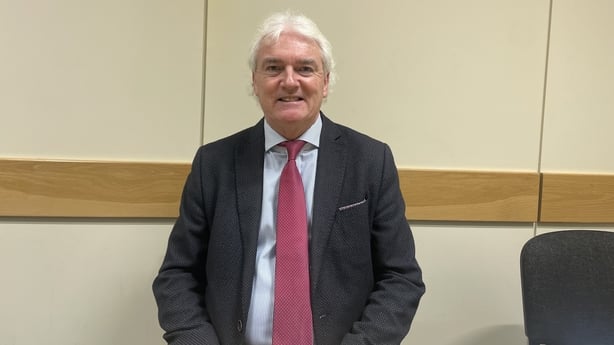
Neurologist Dr Richard Walsh said it is the "first approved drug, both in the US by the FDA, and by the European Medicines Agency", for FA.
He said Friedreich's Ataxia is a "very debilitating chronic progressive illness that typically starts in childhood years".
"Up to now, we unfortunately have only been able to document relentless progression."
Dr Walsh said he would prescribe the medication for his patients if it was available on the Irish market.
"We're coming from a point where we've had absolutely nothing," he said.
Dr Walsh said data so far shows the rate "of progression of the movement disability and the coordination disability experienced by these patients seems to be halved year on year".
"The expected progression that we have learned by observing this condition for years in the absence of treatment every year is reduced by about 50% and that can be the difference between a person with Friedreich's Ataxia being able to pick up a spoon and feed themselves or communicate effectively".
He said that while the drug does not "halt the course of the disease", the "rate of progression, importantly, is slowed down".
HSE trying to 'stretch resources as far as possible'
In response, both the HSE and Department of Health said they try to make sure they get value for each medicine so as many people as possible can benefit for treatments.
The Department of Health said HSE decisions on which medicines are reimbursed by the taxpayer are made on "objective, scientific and economic grounds".
It said it had commissioned a full Health Technology Assessment (HTA) from the NCPE on omaveloxolone (Skyclarys) in September 2024.
It said the NCPE’s reports are reviewed by the HSE Drugs Group along "with the outputs of commercial negotiations, and any patient group submissions received".
It said the HSE Drugs Group included public interest members, considers all of the evidence and makes a recommendation to the HSE Senior Leadership Team.
The HSE said in its decisions it considers the health needs of the public, the cost-effectiveness of meeting health needs, the availability of items, the proposed costs and benefits, the clinical need for a medicine, the level of clinical supervision required, a drug’s performance in trials and the resources available.
It said the HSE Senior Leadership Team has the "final decision-making authority on the reimbursement of a drug and the recommendation from the National Centre for Pharmacoeconomics is one of a range of inputs considered by the Senior Leadership Team before making a final decision".
It added that Skyclarys remains under active consideration by the HSE.
Meanwhile, Ms Felix says she wants to live not just survive.
She says she wants to "travel the world" and to "live for as long as I can", but said that without urgent treatment, "my life won’t be worth living".